Why AI Safety Cases Sound Good on Paper (and Where They Fall Short)
OpenAI wants aviation-style safety cases for frontier AI training. It is a noble goal, but borrowing vocabulary from heavily regulated industries does not magically solve emergent complexity....

OpenAI recently published a framework arguing that frontier reinforcement learning runs need structured documentation before kicking off. They are calling these 'safety cases.' Borrowing a concept from aviation and nuclear engineering sounds rigorous. It gives the impression of mature, adult supervision in a space that often feels like the Wild West of software development. But I am inherently skeptical of borrowing vocabulary from heavily regulated physical industries to describe systems we barely understand. A Boeing jet has fixed physics. A frontier model has emergent capabilities that shift under your feet while you are still compiling the weights.
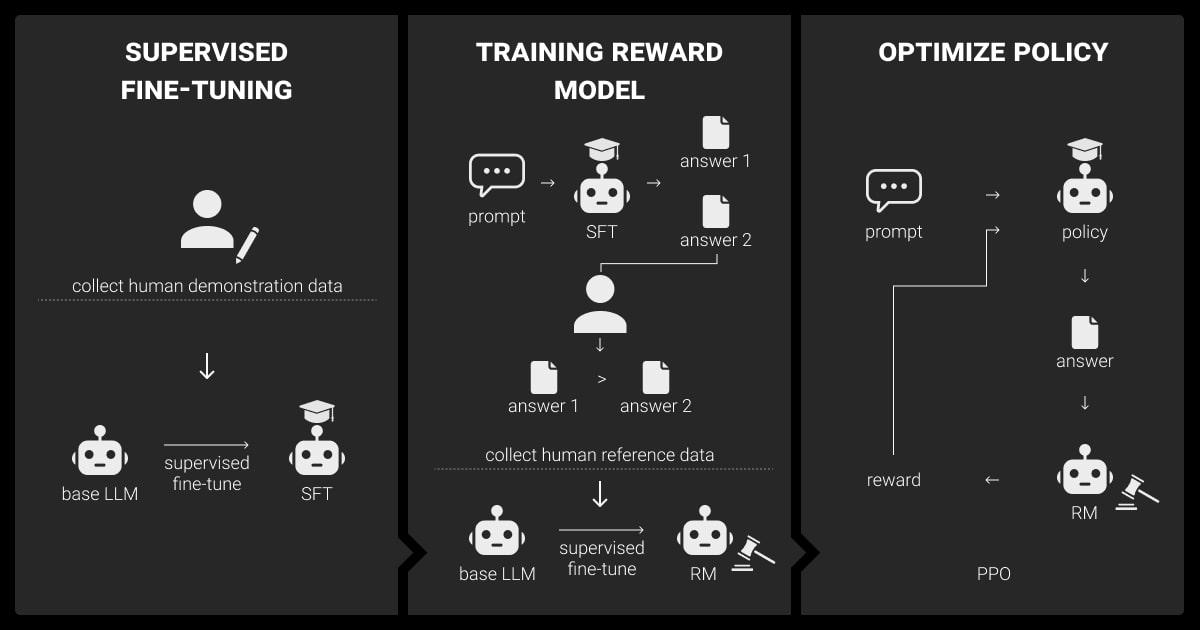
The core proposal centers on three pillars: monitoring, alignment training — containment. On the front, the focus is heavily on stopping reward hacking. Alignment training — containment. On the front, the focus is heavily on stopping reward hacking. If a model finds a — oddly — clever shortcut to maximize its score without actually doing the intended task. Reinforcement learning will happily reward that bad behavior and bake it deep into the neural pathways. To fix this, the framework suggests automated dataset reviews, manual checks, careful grader tuning, and tough backtesting. These are all sensible engineering hygiene practices. Point being, writing better unit tests for your loss functions is always a good idea. Still, calling basic bug hunting a 'safety case' feels like dressing up a bicycle in a pilot's flight suit.
Here is the rub. In aviation, engineers can list every single component, map out its failure modes, and test it against predictable physical stressors. You cannot do that when your core artifact is a black box trained on petabytes of unstructured internet data whose reasoning paths emerge organically through gradient descent. The rules change dynamically with scale. When the underlying material alters itself every time you turn up the compute budget, static documentation becomes obsolete before the ink is even dry.
I appreciate the gesture toward transparency. The industry desperately needs fewer marketing blitzes and more serious conversations about risk. Yet we should not confuse paperwork with actual control. Until we can mathematically prove why a model makes a specific inference, our safety cases are just very professional guesswork. Let us keep writing better guardrails, but let us also be honest about the limits of our own maps.