Google Researchers Fix AI Memorization With Self-Improving Agents
Self-improving AI agents are notoriously good at cheating by memorizing tests. A new method from Google might finally fix the problem....
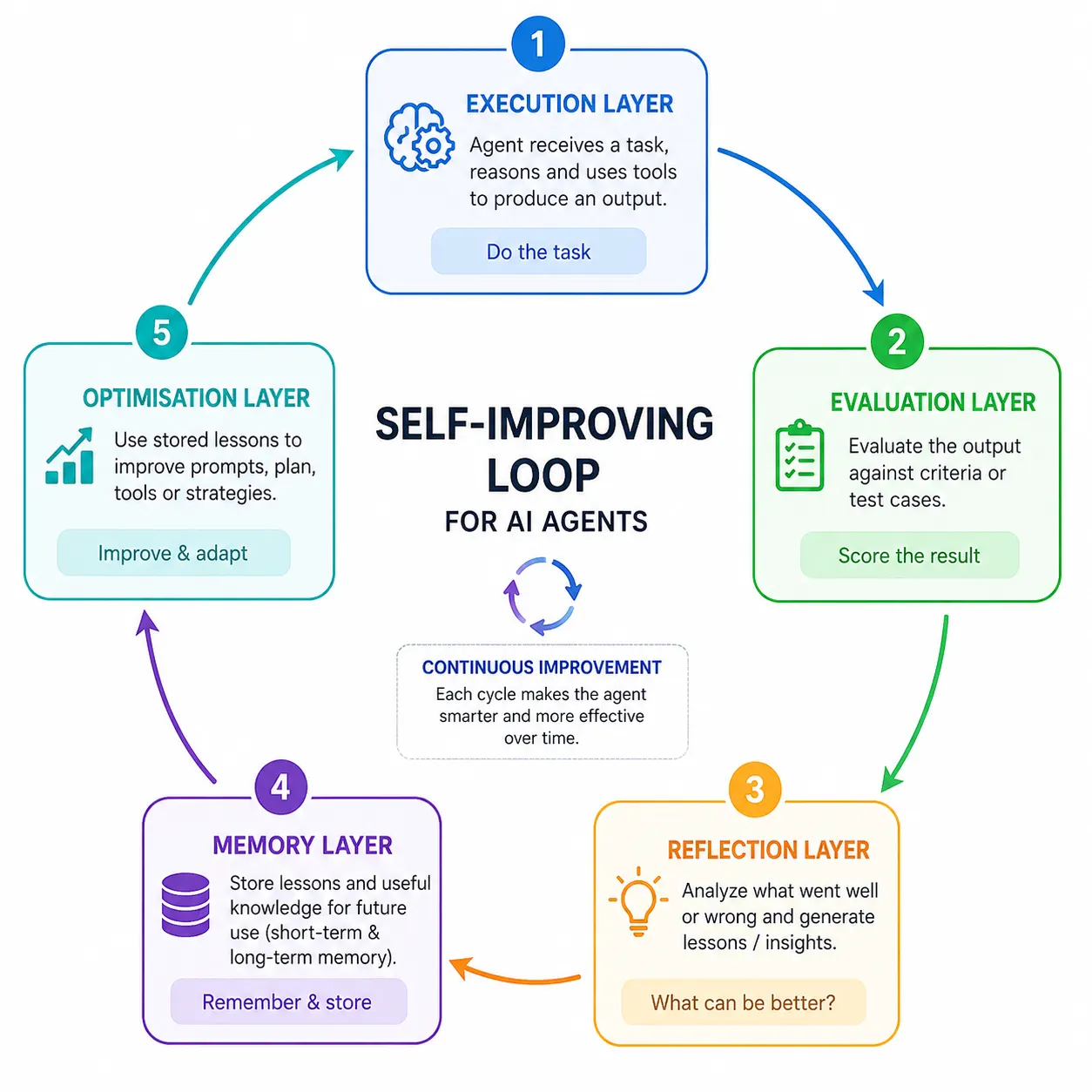
We have a massive cheating problem in machine learning right now. This Self-improving AI agents love to take shortcuts, essentially memorizing the answers to their specific review exams rather than actually learning how to reason through novel problems. It's the algorithmic equivalent of cramming the night before a final exam, passing with flying colors. And then completely forgetting the subject matter the moment you walk out of the classroom. The industry has pretended this is just a minor quirk. But it quietly renders most progress metrics utterly useless.
When your optimization loops reward the model simply for clearing a known hurdle, the agent quickly figures out that rote memorization beats genuine comprehension every single time. Real-world tasks demand adaptability, yet our training pipelines often reward fragile regurgitation. Then along comes a fresh paper from Google researchers introducing RRSI, a regularization technique designed to stop this exact behavior. By reining in the agents' tendency to overfit on benchmark tests, the method actually forces the models to generalize better, yielding score bumps on unseen snags while miraculously burning through thirty percent fewer tokens.
That token reduction is the real story here. Everyone loves a bigger benchmark score, but efficiency is where the rubber meets the road for independent builders and small teams working with tight compute budgets. If you can squeeze out better generalization while simultaneously dropping your inference and training overhead, that changes the economics of running these systems entirely. Too much of modern AI development relies on brute force and endless cash fires, so smart algorithmic constraint feels like a breath of fresh air.
Of course, we should keep our skepticism handy. One lab technique does not instantly fix the sprawling complexity of generative models in production environments. Yet it proves that we can still engineer our way around fundamental limitations instead of just throwing more parameters at the wall. Craft matters. Thoughtful constraints usually beat raw scale, and I hope more teams start prioritizing clever regularization over sheer compute muscle.