Mastering the Modern CUDA Toolbox for High-Performance GPU Code
Writing fast GPU code used to mean wrestling with raw pointers and silent memory corruption. Thankfully, the modern CUDA toolbox makes hardware optimization straightforward....
Let's be honest about low-level GPU programming. For years, writing performant code meant staring at raw pointers, guessing at memory layouts, and praying your hand-rolled algorithms didn't quietly corrupt state somewhere deep in device memory. It was an exercise in pure frustration. The modern CUDA toolbox has finally evolved past those archaic dark ages.
Speaking of which, NVIDIA's updated stack actually helps you write safer, cleaner code without sacrificing a single cycle of raw compute power. Right. If you're still relying on legacy patterns from a decade ago, you're leaving massive results on the table. Today, we're looking at how a few strategic upgrades – like the modern CCCL API. Truth is, Compute Sanitizer, and CUB primitives – turn fragile spaghetti code into a maintainable, high-throughput machine.
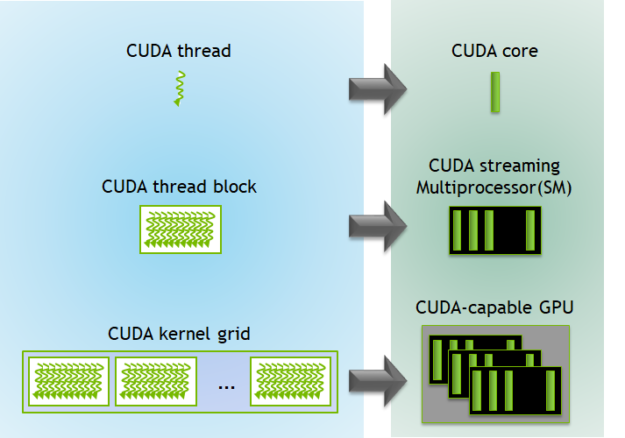
Consider the standard image processing pipeline. A naive approach involves manually calculating global thread indices, writing custom sorting loops for pixel tiles, and handling memory transfers with zero instrumentation. By swapping hand-rolled sorts for block-level CUB algorithms and injecting NVTX markers into Nsight Systems, you stop guessing where bottlenecks live and start seeing the actual hardware profile. Pinning your host containers and streaming asynchronous tasks across distinct execution streams changes the game entirely, hiding latency where it hurts.
Good engineering isn't about memorizing obscure hardware quirks or clinging to hyper-complex manual optimizations that break the moment you update your driver. It's about use mature tools that let you focus on the actual problem you are trying to solve. Clean up your pipeline. Use the right primitives. Your hardware will thank you.