Why Alibaba's Qwen3.8-Flash-Next Changes the Game for Agentic Coding
Alibaba's new model preview tackles the massive KV cache bottleneck with a hybrid architecture, making 1M-token context windows actually practical for real-world developer workflows....
Most language model releases are just incremental parameter bumps wrapped in aggressive promo, but every once in a while, an architecture drops that genuinely tackles basic engineering limits. Alibaba just released weights for Qwen3.8-Flash-Next, a preview of their upcoming Qwen4 generation. And it finally goes after the silent killer of long-context LLMs: the KV cache explosion that grinds complex developer loops to a halt.
If you've ever built an autonomous coding agent that needs to ingest an entire legacy codebase. You know the exact pain point. As the prompt window stretches toward a million tokens, memory bandwidth chokes the system and attention compute spirals completely out of control. Now, Instead of throwing raw silicon brute force at the problem, Alibaba engineered a clever hybrid layout combining Gated DeltaNet with Qwen Sparse Attention. Hard to say. Compressing historical state on the fly while preserving pinpoint retrieval accuracy across massive context depths.
Three out of every four layers in this model rely on — oddly. Gated DeltaNet to non-stop squeeze the historical context into a fixed-size recurrent state, well flatlining memory growth no matter how deep the session goes. Meanwhile, the remaining layers use block-level sparse attention to slash indexing overhead, yielding benchmark speedups that genuinely change what you can build on a Tuesday afternoon rather than just looking good on a slide deck. Yielding measure speedups that genuinely change what you can build on a Tuesday afternoon rather than just looking good on a slide deck.
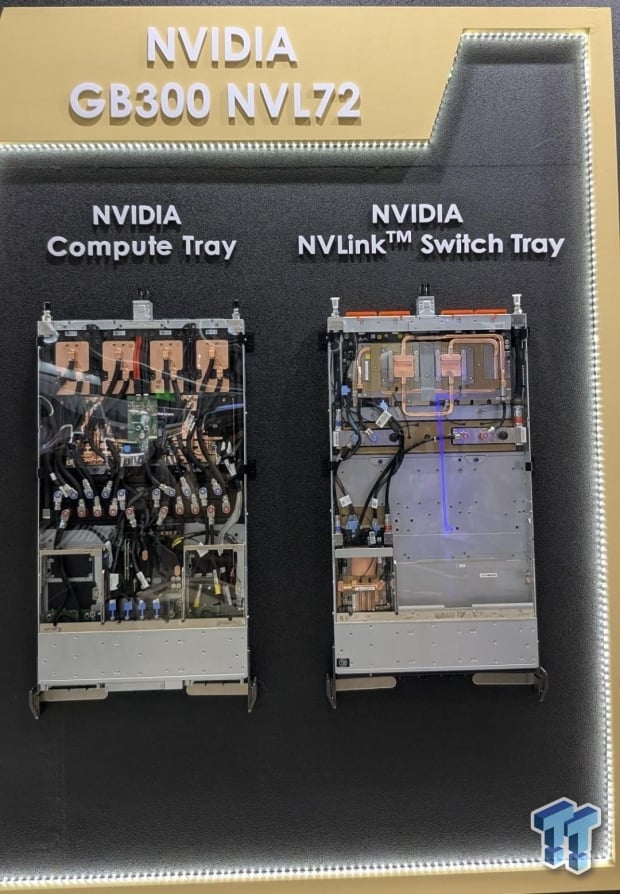
Running this beast on high-end hardware like the GB300 NVL72 unlocks staggering throughput, yet the real victory here isn't locked behind massive rack-scale gear alone. The ability to prototype serious agentic workflows locally on workstation-class GPUs means small teams can finally experiment with massive context windows without needing a cloud budget the size of a small nation's GDP. That is the kind of progress I can get behind.
In the end, this release feels like a realistic step toward software engineering agents that actually remember the whole repo without collapsing under their own weight. Still, we've a long — to be fair — way to go before AI tools stop hallucinating edge cases. Smarter attention ways give us a fighting chance.









