Scaling UMAP Across Multiple GPUs Changes the Rules for Large Datasets
Waiting hours for dimensionality reduction is dead. Multi-GPU UMAP processing brings massive datasets down to minutes without sacrificing accuracy....
Exploratory data analysis relies heavily on speed. If your feedback loop takes hours, you lose your train of thought, momentum dies, and intuition stalls out. Dimensionality reduction tools like Uniform Manifold Approximation and Projection are notorious bottlenecks when datasets bloat into the tens or hundreds of millions of vectors. For years, running massive-scale UMAP meant grabbing a coffee, stepping away from the desk, and hoping the single-GPU setup wouldn't OOM halfway through an all-neighbors kNN graph construction.
Hardware limitations used to dictate our workflows. Single-card memory ceilings forced engineers into awkward out-of-core workarounds, splitting transform steps while training remained stubbornly bottlenecked on one processor. It was frustratingly slow. But the latest updates to cuML and cuVS change the math entirely. By decentralizing the heavy lifting of graph construction, NVIDIA has finally figured out how to distribute the load cleanly across multiple GPUs.
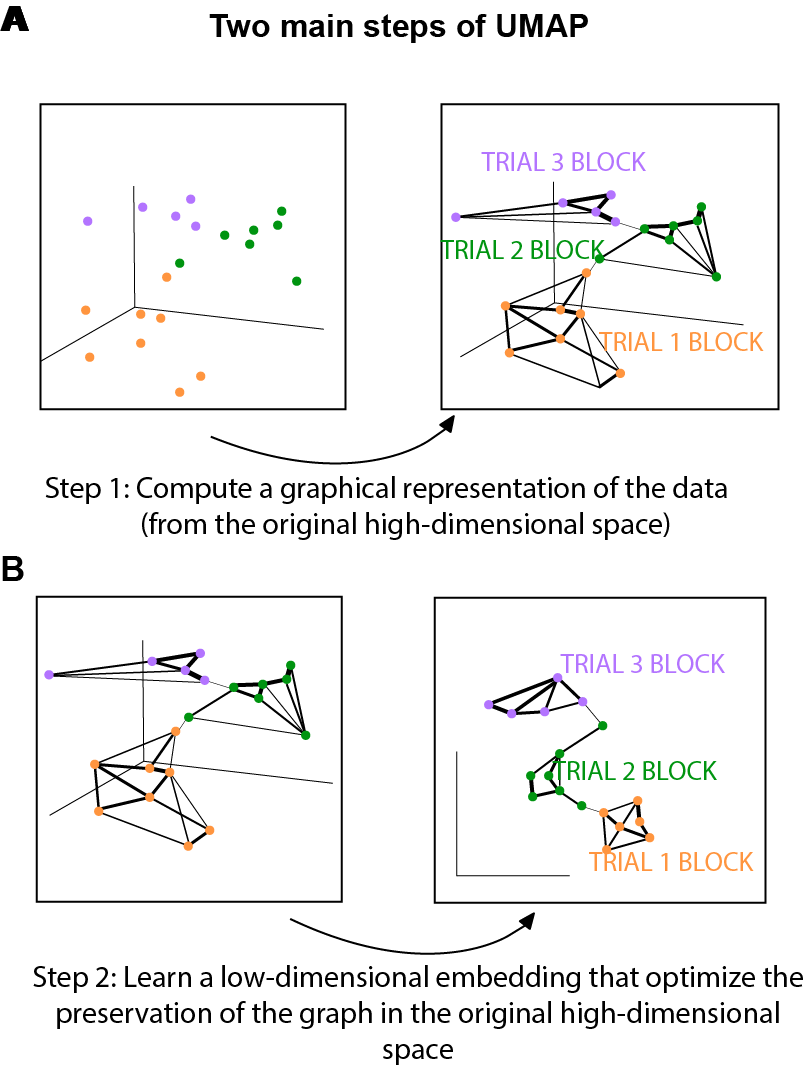
The engineering behind this is wonderfully straightforward in concept. Instead of trying to cram an impossibly massive dataset into a single memory space, the algorithm partitions the data into balanced clusters. Local kNN graphs get computed independently before merging into a global structure. Because these clusters live in isolation, farming them out to separate hardware nodes requires virtually no complex synchronization overhead.

Minutes instead of days. That isn't marketing fluff; it's the stark reality of what happens when you remove artificial architectural limits. Processing hundreds of gigabytes of high-dimensional data interactively opens up entirely new avenues for exploratory work that used to be economically or temporally unviable. Real-time iteration is back.
We need more tools that respect our time. When infrastructure gets out of our way, craft improves. If you've been putting off massive embedding projects because the runtime math didn't pencil out, it's time to revisit your stack.