Finally, We Can Stop Fighting the GPU: A Look at Green Contexts
GPU resource contention has plagued high-performance applications for years. NVIDIA's green contexts finally offer a sane way to partition hardware without the heavy overhead....
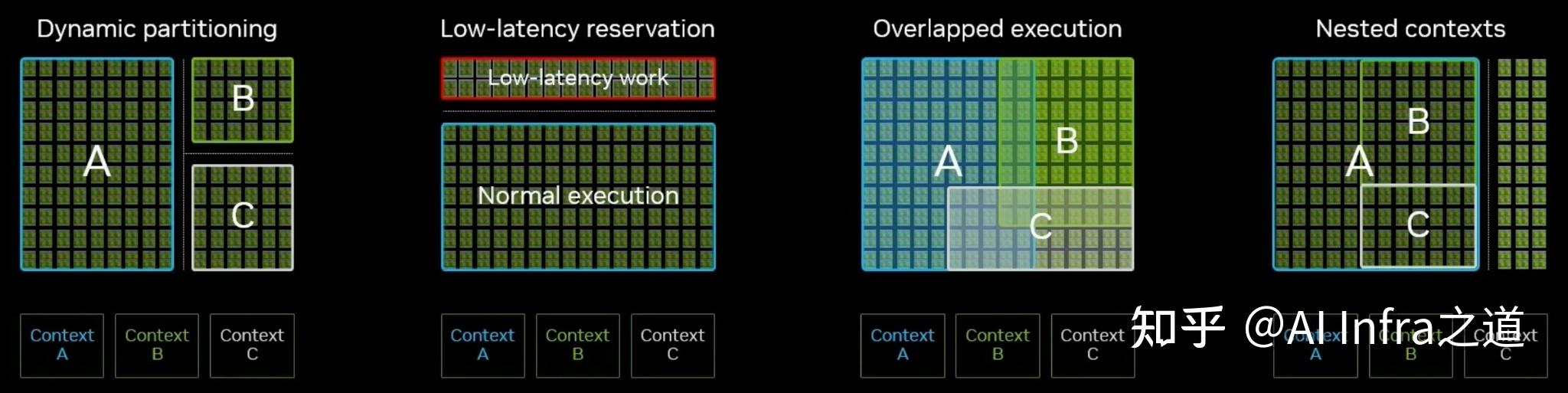
If you have ever tried running a latency-sensitive operator alongside a heavy background kernel on a single GPU, you know the pain. It is messy. Traditional CUDA setups assume your application is a monolithic block of compute, happily hogging every available cycle while everything else starves or stutters in the queue. Reality is much messier these days. We run preprocessing pipelines, tokenizers, and heavy inference models inside the exact same process, hoping the hardware scheduler plays nice. Spoiler alert: it usually does not.
Hardware scheduling is a black box. Contention happens everywhere. For years, we relied on crude workarounds to carve up execution resources, mostly because old-school CUDA contexts were too heavyweight to juggle dynamically. They carried massive context-switch overheads rooted in an era when GPUs were simple graphics accelerators rather than the general-purpose compute monsters they are today. You either gave up control to the driver, or you built brittle, overly complex multi-process architectures that wasted memory and complicated your deployment pipelines just to keep workloads from stepping on each other's toes.
Enter green contexts. Starting with CUDA 13.1 in the Runtime API, we can finally partition streaming multiprocessors and provision isolated workqueues directly. This is a massive shift. Instead of crossing your fingers and hoping independent streams map cleanly, you explicitly carve out execution slices. Work targeted to a green context runs on its designated SMs, bypassing the silent serialization bottlenecks that plagued older APIs. Best of all, creating and destroying these contexts is remarkably lightweight, meaning you can adapt your hardware footprint on the fly without dragging down unrelated execution threads.
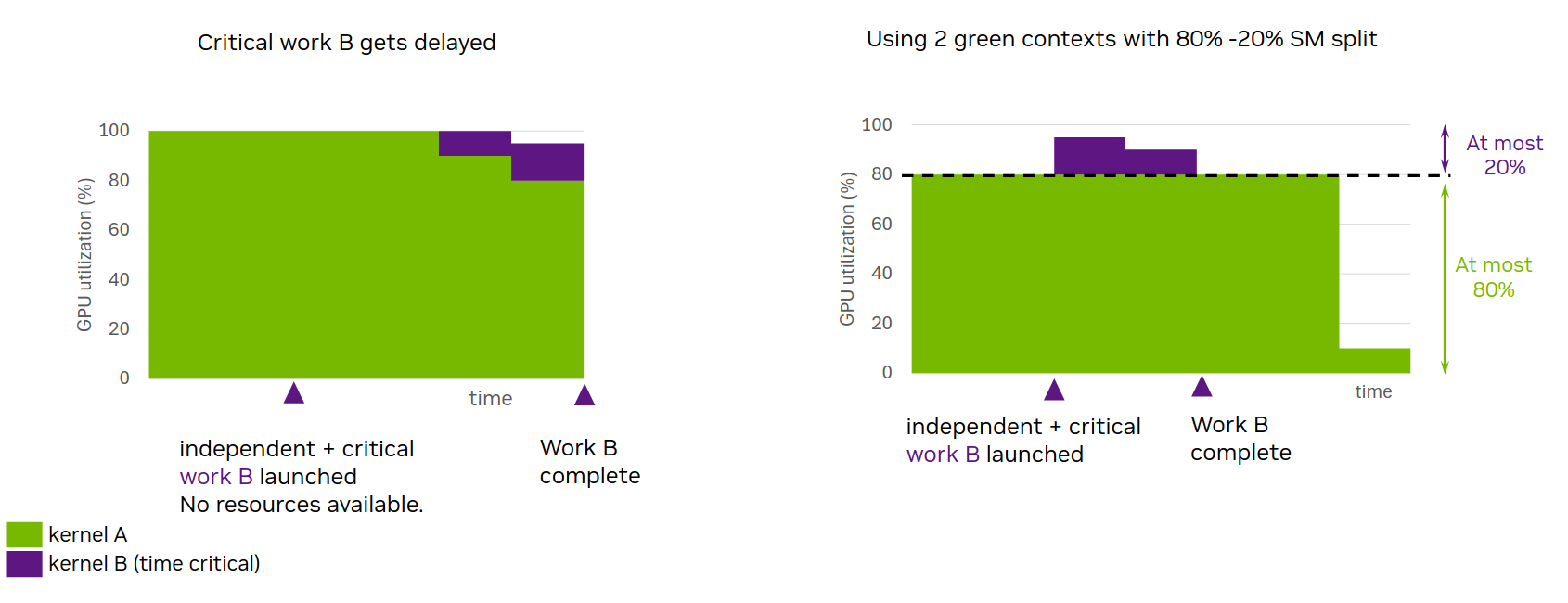
This is what good systems engineering looks like. It replaces implicit magic with an explicit programming model where you define precisely where your work lands using clean abstractions like `cudaExecutionContext_t`. We do not need more opaque layers of wrapper code pretending to optimize our workloads. We need better primitives that respect the metal. NVIDIA finally gave us one. Now it is up to us to use it and build software that stops fighting the hardware underneath.
Expect to see early adopters refactoring their inference engines over the next few months. If your stack juggles background tasks with tight real-time constraints, it is time to take a serious look at how you manage your compute units.