Making AI Benchmark Results Reproducible Is Finally Happening
Model evaluations have long been a chaotic mess of unrepeatable claims. A new partnership between the UK AISI and EvalEval aims to fix this....

We need to talk about how broken AI evaluation has become. Every week brings a fresh cascade of press releases claiming some new model has shattered previous records on elite benchmarks. Yet, try to replicate those exact findings yourself, which you hit a wall of proprietary test use, vague prompt configurations, and undocumented hyperparameters. It's a reproducibility crisis disguised as scientific progress.
That's why the recent co-op between the UK AI Safety Institute and EvalEval caught my attention. They're tackling the root cause of the noise by pushing for standardized reporting schemas like Every Eval Ever and open Evaluation Cards. Instead of — or — to be exact, more precisely, trusting a black-box percentage point on a promo slide. I mean, researchers finally get structured context, configuration files — and verified results for heavy-hitting benchmarks like FrontierMath and Humanity's Last Exam.
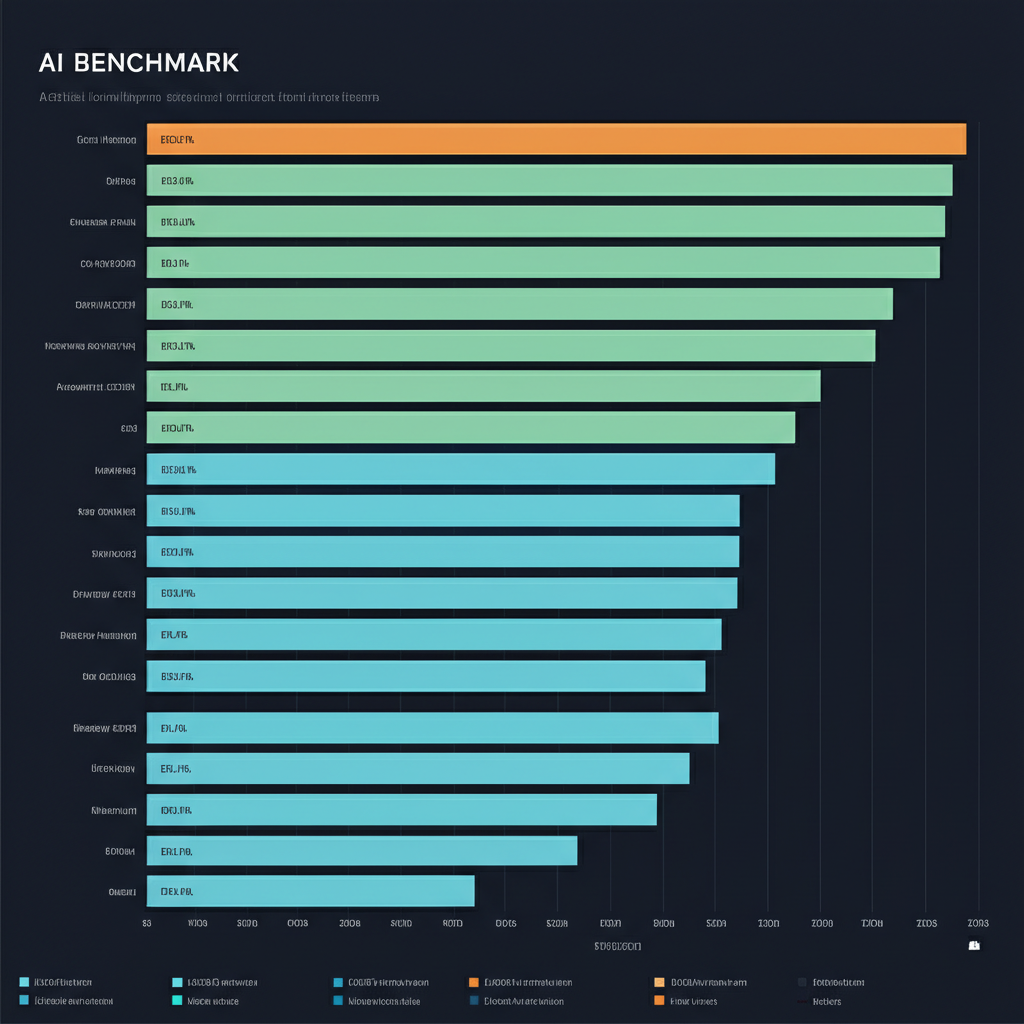
What makes this particular push matter to builders is the inclusion of inference-time compute variables –. Perhaps. Sure, it shifts wildly depending on token budgets, execution environments — whether an oracle is feeding it correctness feedback mid-stream. The of, a model's score isn't just a static property its — and this matters — weights anymore. By open-sourcing these (worth noting) granular execution details alongside raw measure data. We move closer to honest comparisons in a market flooded with hype.
Real engineering requires verifiable ground truth, not hand-wavy benchmarks designed to make a sales deck look good. If this shared infrastructure forces the industry to adopt actual scientific rigor, it will be the most important release of the year.