The Future Is Fanless: Why AI Servers Are Dropping Air Entirely
Once racks cross 250 kW, air cooling completely breaks down. The industry is moving toward total liquid heat capture and fanless server architectures....

We have officially broken the math of data center cooling. For years, the industry relied on a neat little compromise: liquid takes the heavy computing load, and trusty old fans deal with the rest. It was a comfortable 70/30 split that got us through the early days of high-performance density. But AI workloads changed the underlying physics. Processor wattages have climbed so aggressively that the leftover thirty percent creates a massive thermal burden. When a single rack pushes past 250 kW, that trailing air load leaves roughly 75 kW of pure heat roaming free inside the chassis. Managing that leftover air requires complex, expensive infrastructure that nobody actually wants to build or maintain.
The truth is, heat refuses to stay contained on the silicon die anymore. This it leaks outward. Memory modules, networking gear, storage arrays, and power delivery components are now running dangerously hot. They demand direct thermal management just to stay stable. Designing for this isn't simply a matter of strapping a bigger block onto the main processor. This every peripheral component comes in weird shapes, unique mounting constraints, and varying thermal limits. engineers are wrestling with irregular geometries. And distinct thermal profiles across the entire board. You cannot just stretch a — oddly — CPU coldplate across random chips and hope for the best.
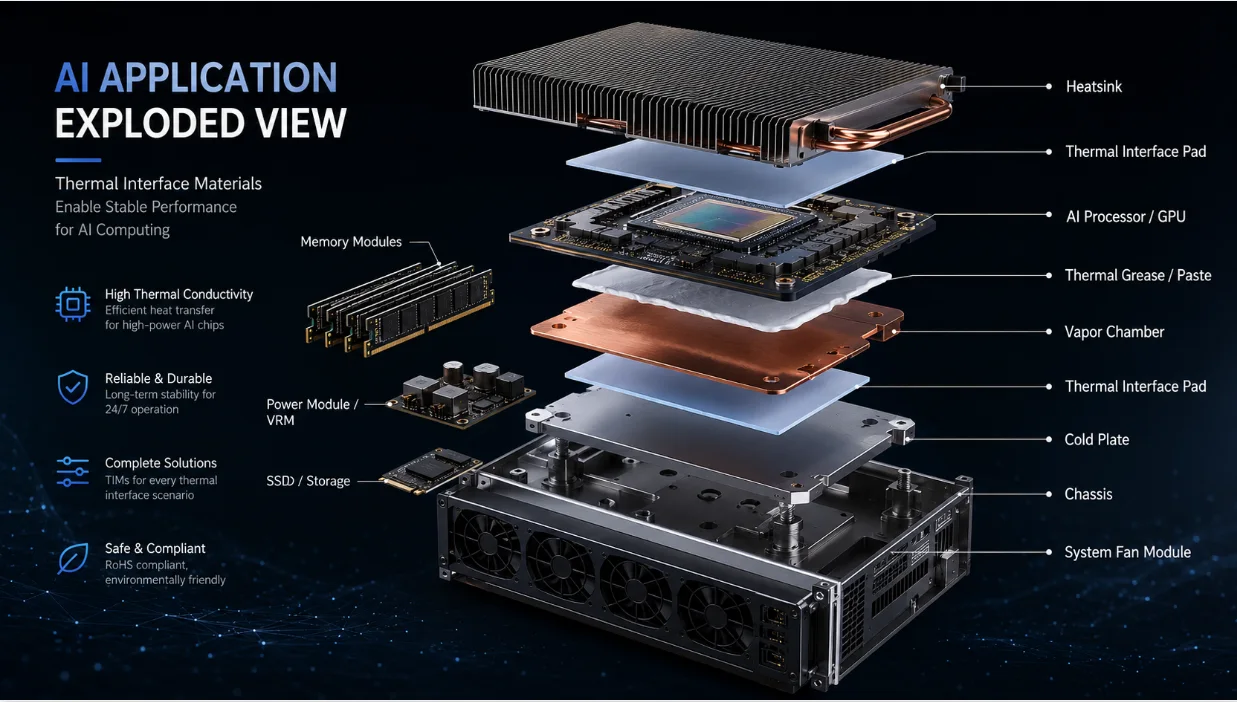
This hardware reality forces a radical redesign of the server interior. The ultimate goal now is near-total liquid heat capture, driving air reliance down below one percent and paving the way for genuinely fanless operations. Driving air reliance down below one percent and paving the way for genuinely fanless operations. Accomplishing this requires a clever hybrid toolkit featuring custom vapor chambers, heat pipes. Modular coldplates that can snake through dense component layouts without sacrificing serviceability. [IMAGE]. Think about it.
Uniting all these disparate thermal zones into a single, cohesive coolant loop is the hardest engineering hurdle of the decade. Reliability matters above everything else. If a quick-disconnect fitting leaks during routine rack maintenance, the whole operation halts. We are watching a fascinating shift where clever fluid dynamics and strong mechanical engineering matter just as much as raw algorithmic output.
As rack power marches steadily toward the one-megawatt mark, hybrid cooling is becoming a relic of the past. The physics are unforgiving. Total liquid capture isn't an exotic luxury anymore; it is the baseline requirement for keeping modern infrastructure alive.