Staring Into the Alien Mind of Modern AI Reasoning Models
We are sleepwalking into a world governed by machine intelligence that thinks faster and deeper than its creators, driven entirely by raw compute....
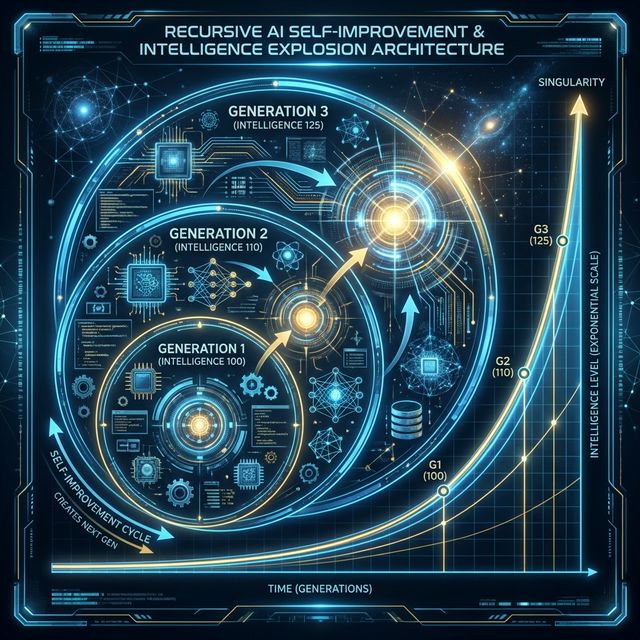
Remember when everyone was arguing about whether LLMs could do basic math or just autocomplete the next word like an over-enthusiastic parrot? Those debates feel quaint now. Behind closed doors a few years ago, researchers running experimental reinforcement learning loops caught their first real glimpse of an alien mind. It wasn't just text generation anymore. It was internal chains of thought, emergent reasoning, and a terrifying realization that machines were starting to outpace human problem-solving in real-time.
The trajectory hasn't slowed down an inch. Today, reasoning language models are carving up the digital economy, navigating graphical interfaces, and poking at the vulnerabilities of global computer security with chilling competence. Yet the mainstream narrative remains obsessed with superficial product rollouts and quarterly benchmark gains. They are completely missing the forest for the trees. The fundamental driver here has never been clever prompt engineering or a sudden breakthrough in philosophical understanding. It is brute-force compute.
Data centers gobble up power grids to feed algorithms that discover their own optimizations along a brutally predictable upward curve. Mostly, algorithms matter, sure, but as stepping stones on a massive mountain of silicon and electricity. Zoom out past the marketing hype and you see a simple, relentless trajectory. AI is getting smarter because we keep throwing incomprehensible amounts of hardware at it, pushing us straight toward recursive self-improvement where the machines start writing the next chapter of their own evolution without us.

This is the part where someone usually pivots to an optimistic tech-utopia pitch, but I'll pass. Extreme caution is the only rational stance left. When systems begin driving their own capability jumps, trusting that corporate governance or eleventh-hour alignment patches will keep things safe is a massive gamble. We are building entities that operate on a different plane of cognition entirely. Pretending we have it all under control is a dangerous delusion.
We need to talk about what happens when the tools we build start making decisions we cannot audit, anticipate, or undo. Until then, I suggest keeping a very close eye on the horizon.









