Why 3D CT Reasoning Finally Matters for Medical AI
Medical AI has mostly ignored volumetric imaging, but new open chain-of-thought models like NV-Reason-CT are changing how developers build for radiology....
Most medical AI news reads like a hype cycle designed for investors who have never looked at a patient chart. We get endless breathless announcements about 2D vision models spotting nodules on a flat chest X-ray. Yet. Real clinical work lives in three dimensions. While general-purpose vision language models choke on the spatial complexity of a routine abdominal CT study, radiologists sift through massive stacks of volumetric scans every single day.
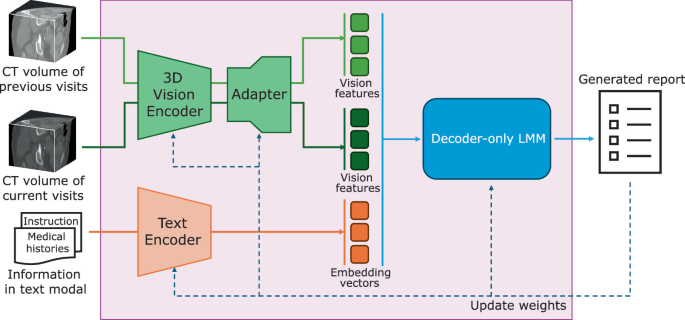
That is why NVIDIA dropping NV-Reason-CT as an open research base actually caught my attention. The it isn't another closed-source black box promising magic diagnosis. Instead, it tackles the brutal engineering reality of volumetric data. Oddly enough, completely, a typical scan — oddly — contains hundreds of axial slices where anatomical context matters. The treat them as independent 2D frames. And you lose the spatial continuity that defines a mass, an effusion, or an infiltrate. Good engineering starts by respecting the actual domain.
Beyond raw perception, the real bottleneck has always been reasoning. Radiologists don't just spit out flat diagnostic labels. They build systematic anatomical reviews, weigh complex differential diagnoses, and question their own assumptions iteratively. If an AI model cannot articulate its chain-of-thought, clinicians have no way to audit it, trust it, or safely integrate it into a high-stakes workflow. Giving developers an open foundation that emulates this internal monologue changes the game.

Of course, this is an open research and development toolkit, not an autonomous clinical product ready to replace human judgment. Precisely, and that is why it matters. By providing a dedicated 3D vision transformer encoder paired with a reasoning-focused language model, it hands builders the right primitives. We need fewer flashy demo apps and a lot more solid infrastructure designed for the messy, multidimensional truth of actual medicine.