Why the New Decisions API Signals a Shift Toward Specialized AI
OpenAI just dropped the Decisions API, trading open-ended generation for strict, typed, lightning-fast categorization....
For years, forcing large language models to behave like reliable software classifiers felt like hammering a square peg into a round hole. You asked for a simple yes or no — or a clean category choice, and instead you got two paragraphs of polite conversational preamble wrapped in fragile JSON. It was bloated. OK so it was expensive, and frankly, it wasted precious compute cycles on text nobody ever read. That's why the sudden appearance of the Decisions API in public beta caught my eye this week.
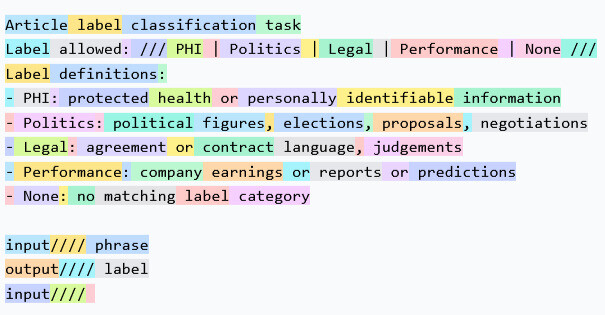
Instead of trying to generate whole sentences, this new endpoint focuses purely on structured evaluation. It spits out typed answers roughly ten times faster than the standard responses path by narrowing its scope down to three specific primitives: predicates for true-or-false checks, explicit choices for fixed categories, and weighted scores for things like severity rubrics. Under the hood, it relies on a dedicated model called gpt-6-luna, cutting out all the conversational cruft to deliver raw, probabilistic classifications.
Parsing messy user uploads – or trying to automate content moderation inside a tight use loop. You don't need a chatbot when you're routing incoming support tickets. You required a reliable pipeline that turns chaotic unstructured inputs into clean data types instantly. Natively, by handling the heavy lifting and returning calculated probabilities rather than guessed strings, this approach respects the realities of systems engineering.
Away, it's a refreshing pivot from raw hype toward practical utility. We are finally moving past the era where (to be fair) every single problem gets solved by throwing a chat interface at it. If you build software that's to make automated choices at scale, this endpoint is worth testing today — more or less.