Vibe-Coding an Operating System From Scratch Sounds Crazy, Until It Boots DOOM
Someone just used an LLM to build a working, bare-metal operating system called Ember from the ground up—and yes, it plays DOOM....
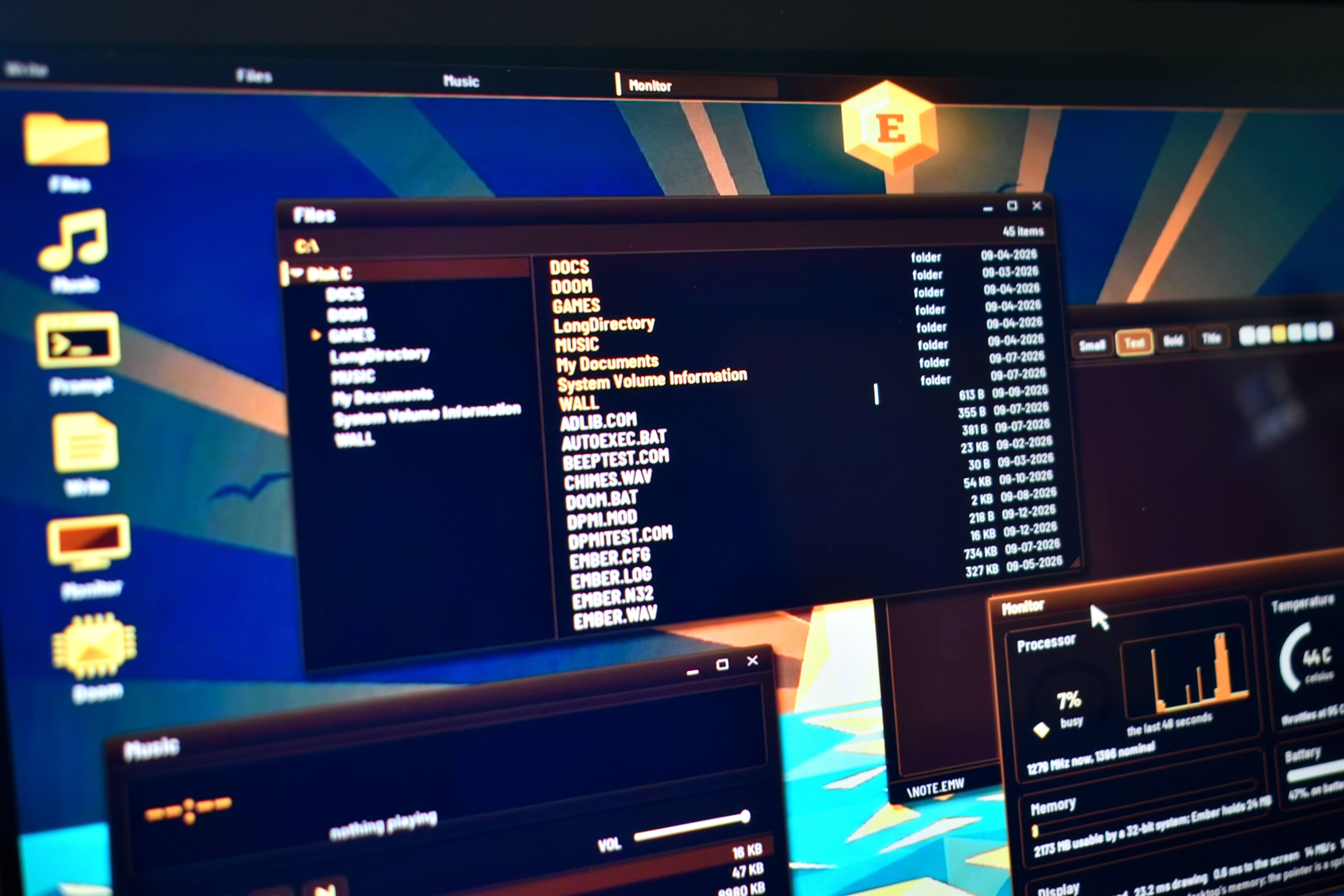
Software development is undergoing a strange model shift right now, and the latest proof point is equal parts terrifying and fascinating. Someone just built a functioning operating system straight from an AI prompt loop without hand-writing a single line of its underlying assembly code. Let that sink in.
The project, dubbed Ember, — oddly — is no trivial Linux wrapper or cheap FreeDOS skin. It's an test, bare-metal OS running a tiny 16-bit kernel that boots straight off a USB stick onto legacy hardware. It features a custom desktop, touchscreen drivers, DOS compatibility, and actual Sound Blaster audio emulation. And naturally, because the internet demands it, it runs DOOM.
Of course, calling this purely magical hype-ware ignores the grueling reality of what actually happened. The creator didn't just type 'build me an OS' and walk away to make coffee. It was an iterative slog of debugging memory faults, interpreting scrambled framebuffers, feeding crash logs back into Claude, and patiently steering the AI out of its own algorithmic ditches over weeks of testing.
Close, this is where the term vibe-coding starts to fall apart under inspection. Not always. The still, you need to understand computer setup. Oddly — deeply enough to know why a bootloader failed or how hardware interrupts actually function. The LLM acts as an ultra-fast typist and tireless assistant, but you remain the architect. The thing is, without that tough feedback loop, you just get a very confident heap of corrupted bytes.









