Why Topology-Aware Workload Scheduling is the Missing Link in AI Clusters
Throwing more silicon at AI clusters won't fix poor network locality. We need to talk about how topology-aware workload scheduling actually keeps expensive GPUs fed....
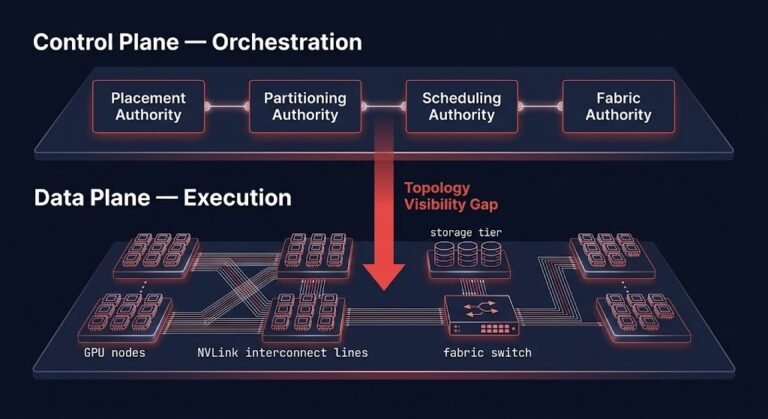
We've spent years obsessing over raw clock speeds, tensor cores, and memory bandwidth, yet we routinely ignore the asphalt our data drives on. When you spin up a massive cluster for heavy training or inference, your hardware is only ever as fast as its communication paths. If a distributed job gets scattered arbitrarily across disparate racks, expensive silicon spends half its lifecycle sitting idle, idling on packets stuck in transit while burning a hole through your utility budget. It is an engineering tragedy.
Think of your GPU fabric like a congested downtown core during rush hour. High-end interconnects like NVLink offer blisteringly fast, dedicated lanes locally, but crossing boundaries into the wider scale-out network introduces bottlenecks if the scheduler is flying blind. A standard treats nodes like interchangeable Lego bricks. It doesn't care if two communicating GPUs are sitting on the same switch or stranded across distant topology domains, which immediately murders throughput and jacks up job costs.
Enter topology-aware workload scheduling, a long-overdue sanity check for modern infrastructure. NVIDIA's Topograph toolkit attempts to solve this by automatically mapping how cluster hardware is actually wired, scrubbing cloud APIs and on-premises fabrics to build a unified model that orchestration layers can digest. Instead of relying on brittle, manually maintained static snapshots that go stale the second someone plugs in a new rack, this utility feeds live, accurate topology data directly into Kubernetes, Slurm, or Slinky.
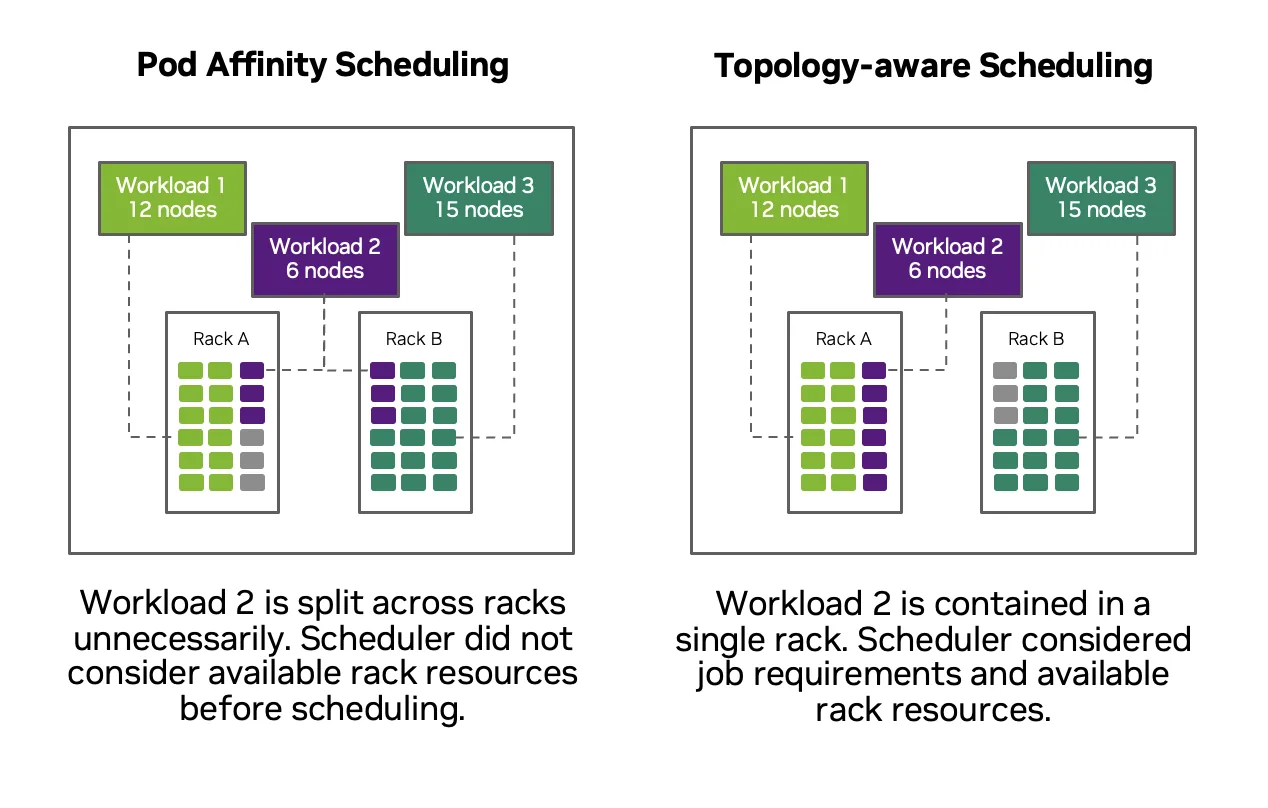
This matters because the gap between local NVLink speeds. Which shared network hops is widening every single hardware generation. As clusters scale into thousands of nodes, a smart scheduler that respects locality isn't a luxury optimization – it's the baseline requirement for keeping your compute efficient. A smart scheduler that respects locality isn't a luxury boosting – it's the baseline need for keeping your compute efficient – in a way. If orchestration layer cannot see the physical reality of the metal beneath it. You are essentially driving a hypercar with the parking brake on. If orchestration layer can't see the physical reality of the metal beneath it, you're essentially driving a hypercar with the parking brake on.
Ultimately, good engineering is about respecting constraints rather than pretending they do not exist. We can keep buying faster accelerators until the power grid begs for mercy, but until our schedulers learn how to place workloads with geographical common sense, we will keep tripping over our own cables.