Why Multi-Vector Embedding Models Are Finally Fixing Semantic Search
Single vector embeddings force too much nuance into a tiny numerical box. Multi-vector models change the math entirely....
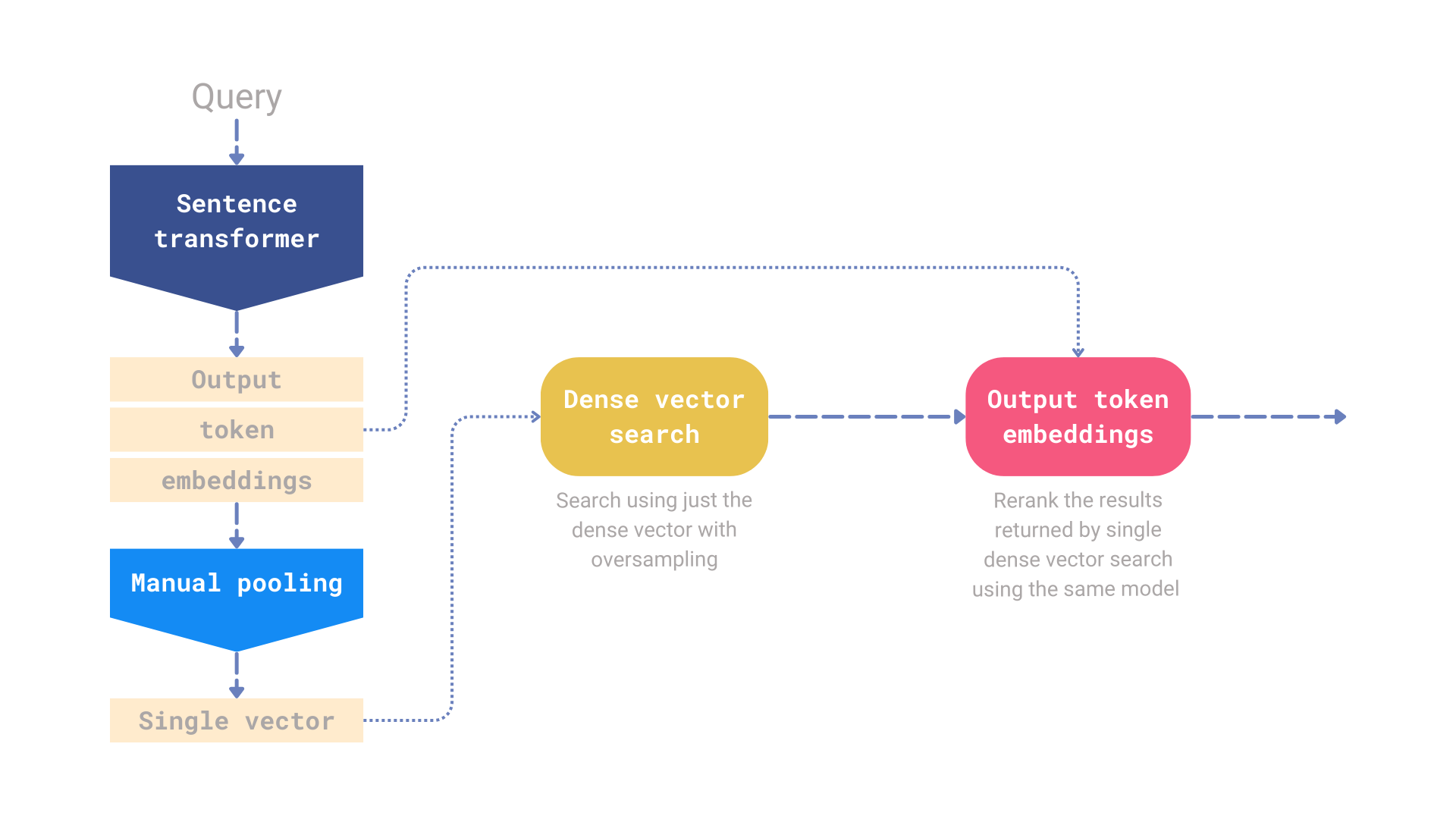
For years, we have built search stacks around a fundamental compromise. You take a dense embedding model, feed it an entire paragraph, and watch it compress all that rich semantic texture into a single, uniform vector of fixed dimensions. It is clean. It is fast. But it is inherently lossy. When a rare entity, a specific part number, or a complex multi-part constraint all have to fight for real estate inside the exact same numerical summary, important details inevitably get smoothed away. You ask for a green velvet sofa with polished brass legs, and the system cheerfully hands you a green sofa with wooden feet because the vector mathematics could not hold both requirements at once. We accepted this limitation because the alternatives were brutally slow, yet the mismatch frustration kept growing.
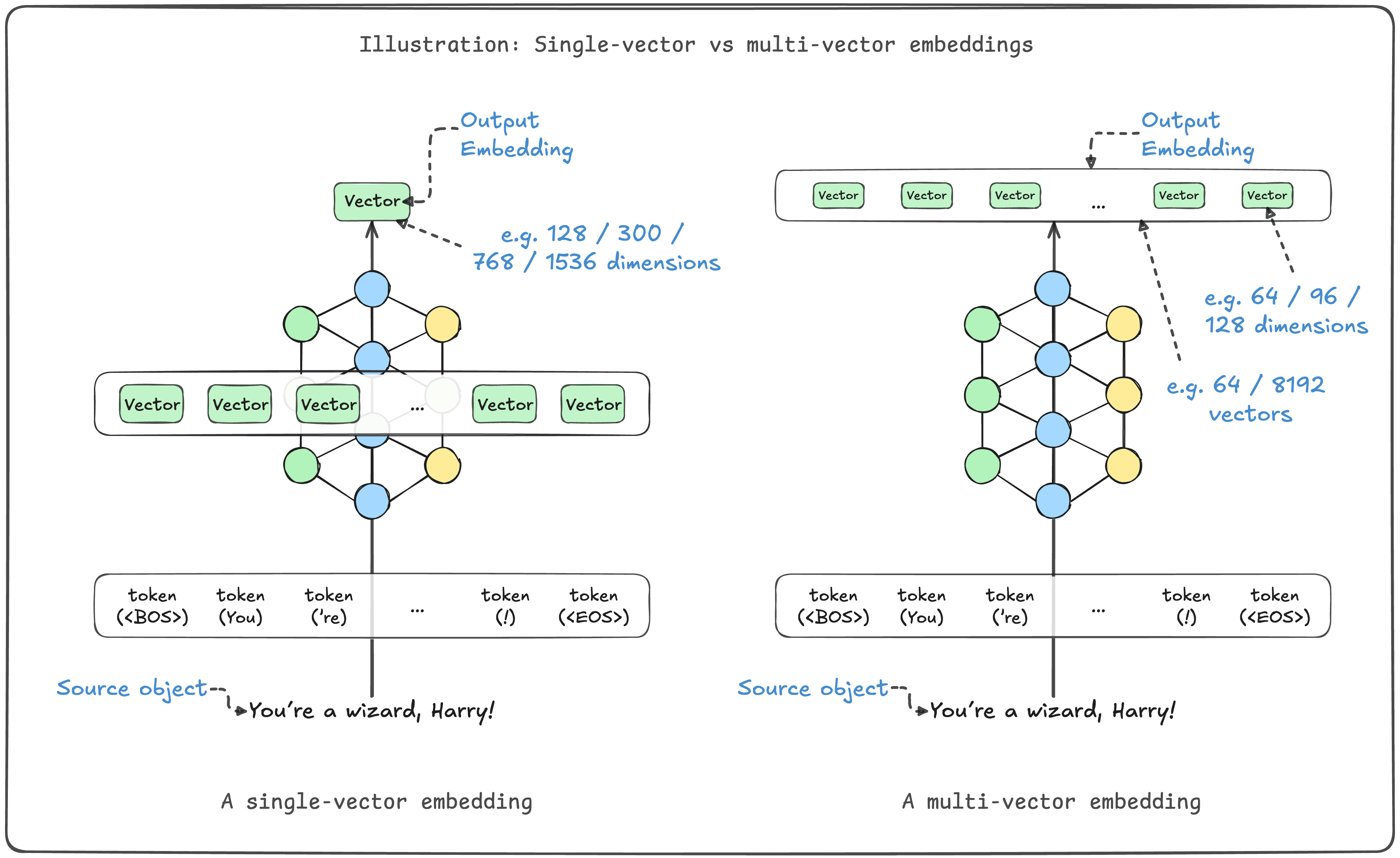
That's exactly why the arrival of multi-vector embedding models in Sentence Transformers feels like a genuinely key shift rather than just another incremental library update. Thing is, the Instead of flattening a document into one summary vector! The a late-interaction setup – heavily inspired by the ColBERT lineage – preserves an individual vector for every single token. But why? OK so i think, a nine-word sentence becomes a matrix of coordinates rather than a single compressed point. Until scoring time, using operators like MaxSim to compare token against token, the heavy lifting of matching queries against documents is deferred. You avoid the crushing compression of classic bi-encoders without tumbling into the (and this is key) data nightmare of running a full cross-encoder over your entire database for every single search query.
This approach also breaks down historic walls in multimodal retrieval, particularly for visual document systems like ColPali. You can finally match text queries directly against raw page images without jumping through the fragile, lossy hoops of traditional OCR pipelines. Real talk: mainly for visual document systems like ColPali. You can finally match text queries directly against raw page images without jumping through the fragile, lossy hoops of old OCR pipelines. The system looks at the layout, typography — and visual cues alongside text tokens natively.
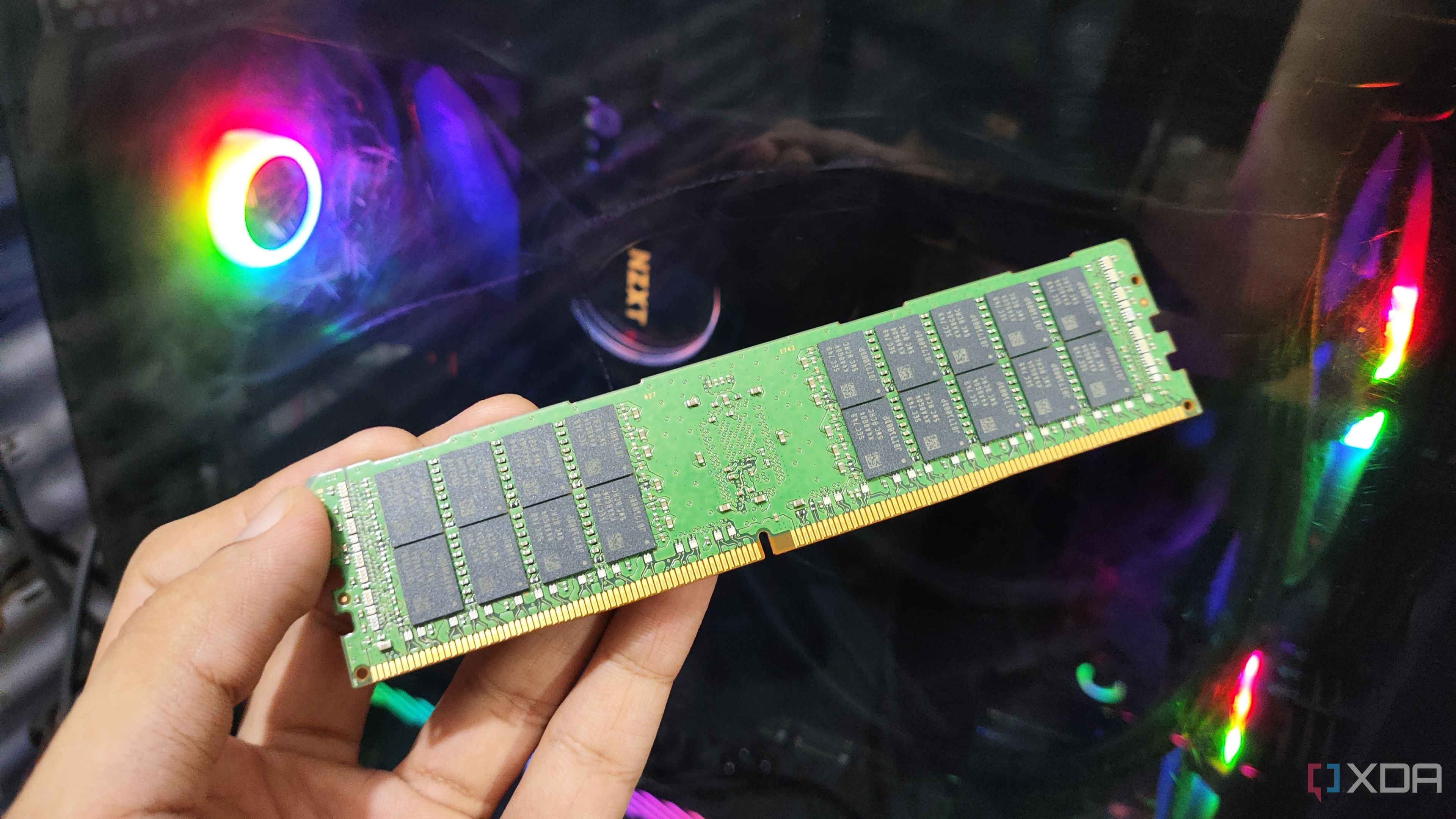
Of course, there is no free lunch in engineering. Keeping a full matrix per token means your index size balloons, demanding more RAM and smarter storage strategies. But storage is cheap, and missed subtle is expensive. If you are building search infrastructure that actually understands what users mean instead of just guessing based on broad thematic vibes, it is time to throw out the single-vector bottleneck and rethink your pipeline.