Making Knowledge Distillation Cheap Enough to Run at Scale
Model distillation used to demand hundreds of GPUs just to keep the teacher and student in memory. A clever rewrite changes the math entirely....
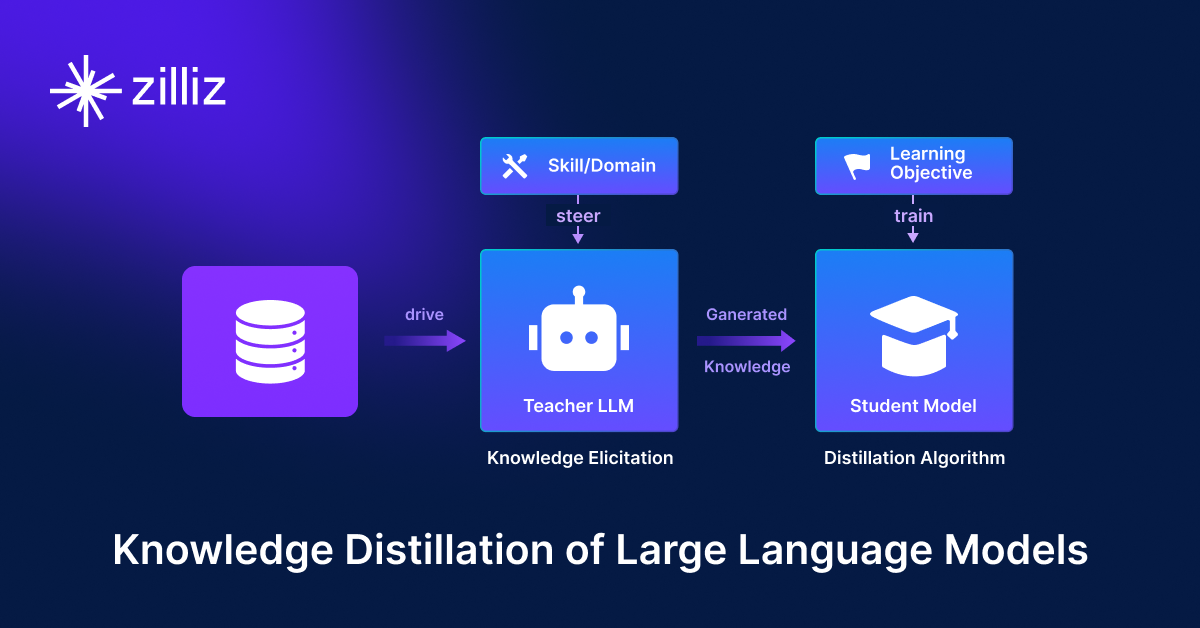
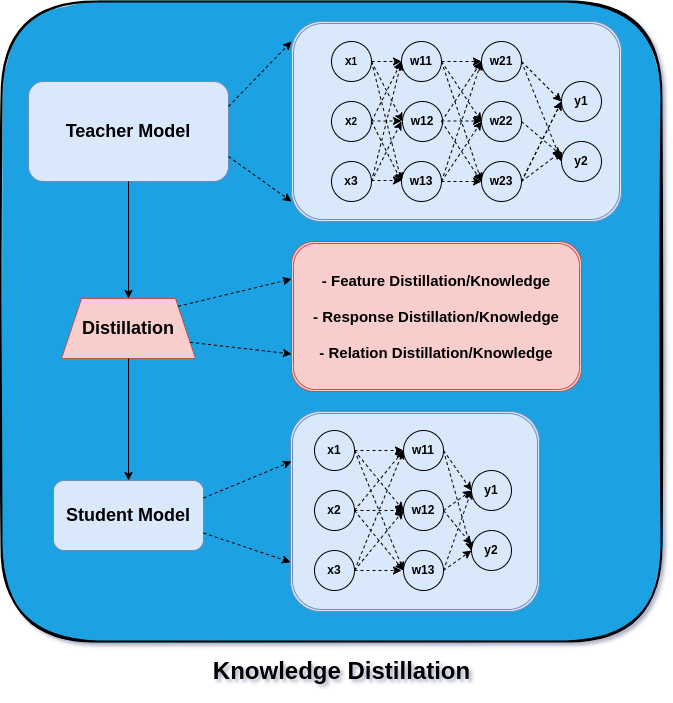
We are currently drowning in a sea of trillion-parameter models. Sure, the raw intelligence packed into behemoths like Kimi-K3 or massive open-weight releases is undeniable, but actually running them in production requires infrastructure that only trillion-dollar balance sheets can comfortably afford. This reality has pushed engineering teams to rely heavily on knowledge distillation, compressing these massive teacher models into nimble student models that retain most of the capability without the crippling latency or memory footprint. It sounds great on paper.
Historically, the catch is that distillation has been an absolute nightmare to compute. Simultaneously, if you want a student model to truly absorb the subtle of its teacher, standard online distillation demands that both models stay loaded in memory. At every single training step, the teacher fires up a massive forward pass to generate probability distributions across the entire vocabulary for every token. When your vocabulary spans hundreds of thousands of tokens and your context window stretches to 32K, the intermediate tensors alone swallow dozens of gigabytes. Add gradients, model weights. Optimizer states, and you are suddenly staring at VRAM requirements that flat-out exceed what a single bleeding-edge enterprise GPU can handle.
That's precisely why Hugging Face's recent breakthrough on efficient knowledge distillation caught my attention. Instead of treating the teacher as a live, burning furnace that must be fed compute on every single iteration, they decoupled the process completely. By caching the teacher's top-K logits ahead of time, the massive teacher model is banished from memory during the actual student training run. Combine that with a fused, chunked KL divergence loss that deftly sidesteps materializing the full vocabulary-by-sequence matrix, and the memory profile plummets from an impossible 250GB down to something that runs comfortably on standard hardware.
This changes everything for independent builders and small engineering shops. It for years, fine-tuning distilled models meant renting out sprawling multi-GPU clusters just to run the baseline training pipeline, pricing out anyone without VC backing. By ruthlessly stripping away redundant compute and rethinking how we handle massive probability distributions. Research like this hands powerful fixing tools back to the individual developer. Real progress isn't about throwing more silicon at an inefficient loop. It's about finding the clever engineering shortcut that makes a heavy process lightweight enough for everyone to use.









