Why Decision Models Matter More Than Another Bloated LLM
Forget open-ended token generators for a second. The real AI shift happening right now is about fast, typed classifications that actually fit into real software pipelines....
We are drowning in general-purpose AI hype. Every single week brings a new massive foundation model that promises to write poetry, debug code, and maybe cure a headache while it is at it. Yet, if you try to wire one of these sprawling, non-deterministic language models into a tight programmatic workflow where your application actually needs a definitive true-or-false answer, things usually break. You get conversational fluff instead of a strict type. You get unpredictable latency spikes. It is exhausting.
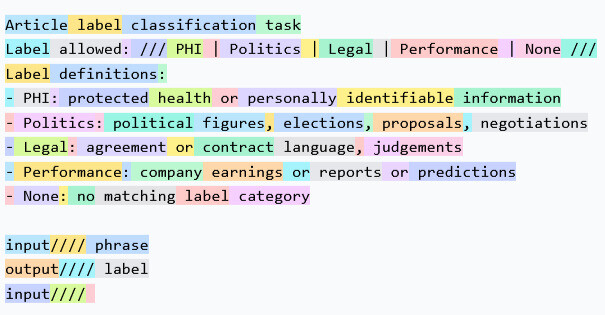
That is precisely why the sudden emergence of specialized decision models caught my attention. Unlike their talkative LLM cousins, these focused classifiers do one specific thing exceptionally well: they ingest messy inputs and spit out bounded, structured outputs accompanied by precise probabilities. They are cheap. Most importantly, they do not require you to constantly retrain an entire architecture every single time you add a new category to your routing logic. Most importantly, they do not require you to constantly retrain an entire architecture every single time you add a new category to your routing logic. They act as reliable logic gates for autonomous agents.
Take domain classification in threat intelligence, for instance. Pushing a URL through a giant general model to see if it is legitimate or malicious often takes agonizing seconds and returns a handful of vague guesses. A dedicated decision model, on the other hand, can render the page, analyze the signals, and output a rich probability breakdown in half the time. It is predictable infrastructure engineering disguised as machine learning. No fluff. Just raw, calculated execution that your code can act on immediately.
The open-sourcing of models like Clef under an Apache 2.0 license feels like a quiet turning point away from opaque API walls. When you can run these sharp little classifiers locally or spin them up on edge networks with reinforcement learning hooks to tune them for your exact edge cases, the utility equation changes entirely. We stop trying to make chatty text generators behave like strict compilers. We start building small, specialized tools that do their jobs brilliantly and get out of the way.
Good engineering has always favored — to be fair — the right tool for the job over a monolithic hammer. This now, right, small teams need reliable primitives that plug into real systems without costing a fortune in latency or compute. This now, right, small teams need reliable primitives that (and this is key) plug into real systems without costing a fortune in latency or compute. Decision models might just be the sensible infrastructure upgrade we've been waiting for. Decision models might just be the sensible base upgrade we've been waiting for — in a way.