Fine-Tuning NVIDIA Nemotron for Regional Dialects Is the Real Test of ASR
Global speech models look great on paper until they hit the messy reality of regional dialects. Here is how fine-tuning NVIDIA Nemotron fixes that gap without breaking a sweat....
Global speech models look great on paper until they hit the messy reality of regional dialects. You can train a massive architecture on petabytes of pristine studio audio, but the second it encounters a local street corner in Riyadh or a bustling market in Jeddah, things fall apart. Modern Standard Arabic or textbook English is easy. Najdi and Hijazi speech? That is where most automatic speech recognition pipelines quietly die.
The core issue isn't a lack of raw intelligence in the base weights. It is catastrophic forgetting. If you blindly fine-tune a multilingual powerhouse like NVIDIA Nemotron on a hyper-specific regional corpus, you fix the local accent problem only to break its comprehension of everything else it already knew. You take two steps forward with Najdi and three steps backward with English.
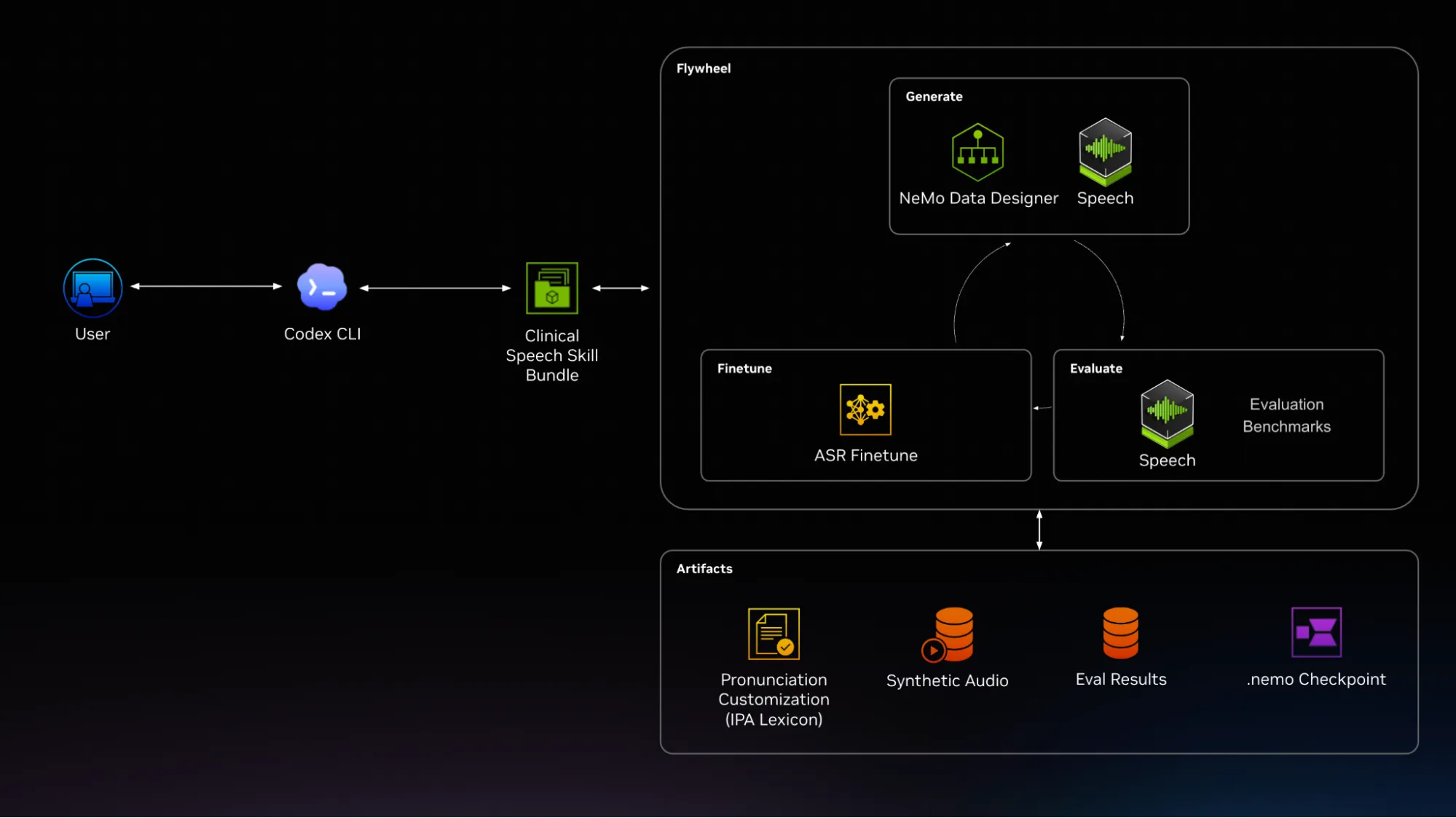
Solving this requires deliberate engineering rather than brute force. NVIDIA's recent NeMo framework walkthrough offers a practical blueprint: curate your low-resource dialect data carefully, use weighted replay mixes to anchor prior knowledge, selectively freeze encoder layers, and use length bucketing so your streaming architecture doesn't choke on memory overhead.
This is the unglamorous reality of building with AI today. Hype tells you that giant foundation models understand humanity out of the box. Experience tells you that real utility lives in the margins – the fine-tuning, the data curation; the careful balancing acts required to make global tech speak the local language.
If you are deploying speech tech into the real world, stop trusting benchmark averages. Look at the edge cases, respect the craft of targeted model adaptation, and build systems that can actually hear the people using them.