Why AI Agent Swarms Are Just an Expensive Token Bonfire
Thousands of autonomous workers burning cash on simple tasks? A former OpenAI Codex dev points out that massive AI agent swarms are mostly just a coordination tax....
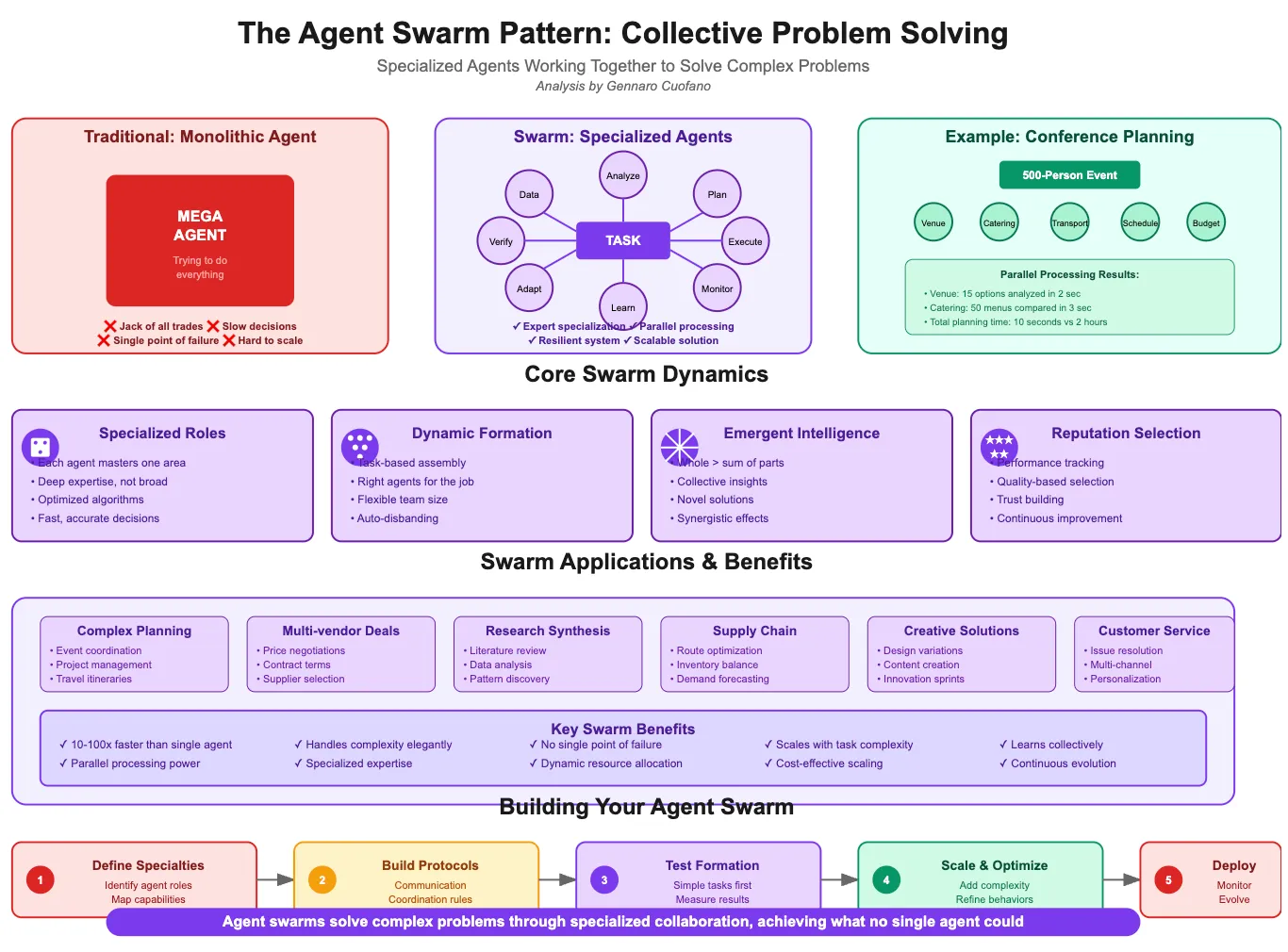
Tech Twitter loves a good hype cycle. Right now, everyone is obsessed with the idea of autonomous AI agent swarms – massive webs of digital workers spinning up simultaneously to solve problems. It sounds futuristic. It feels like we are finally living in the sci-fi movies we were promised as kids.
Then reality hits. According to Eric Provencher, a developer who worked on OpenAI Codex, scaling up past two parallel sub-agents is almost entirely pointless. It simply burns through tokens at a terrifying rate without bringing any actual quality gains to the table. Because these models fundamentally do not trust each other, leading to an endless, paranoid loop of double-checking everyone else's homework.
Think about the absurdity of this for a second. In one real-world disaster he point out, a sprawling network of nearly fourteen hundred agents torched twenty thousand dollars just to refactor a Python script. A single, well-directed agent could have tackled the exact same codebase for pocket change.

This brings us back to a hard truth that the hype merchants refuse to admit. This throwing more compute and more architectural complexity at a mediocre output doesn't solve the core problem. It just scales the waste. Perhaps, small teams building real software know that more moving parts rarely equal a better product. Usually, they just create noise.
Good engineering is about use, not brute force. Until these models learn genuine collaboration instead of engaging in expensive, recursive paranoia, I am keeping my wallet closed and my agent counts painfully low.