Developing NVIDIA Holoscan Applications with AI Coding Agents
Can AI agents actually build real-time edge applications? Let's look at how pairing coding assistants with NVIDIA Holoscan changes the engineering loop....
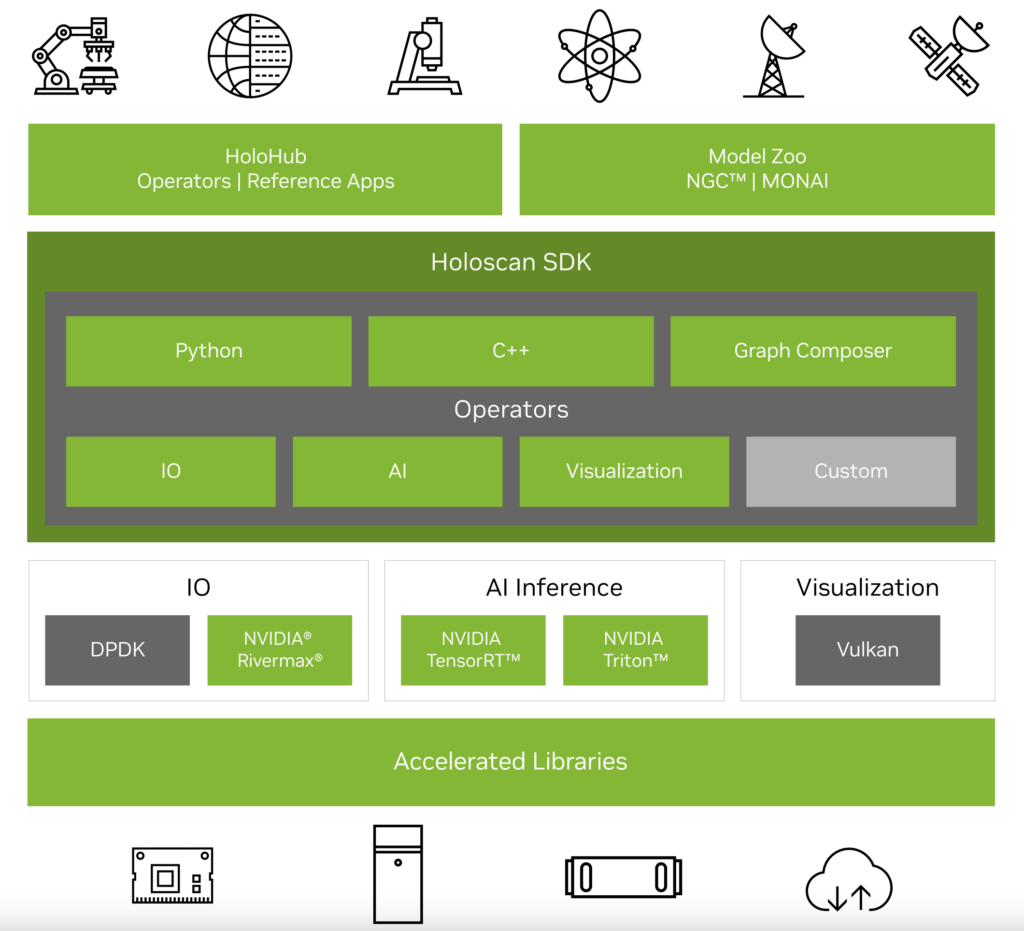
Demos lie. Most AI coding show rely on isolated toy problems, pristine code snippets, and zero real-world constraints, but actual engineering happens in the messy trenches of hardware merging, low-latency streaming pipelines, and domain-specific SDKs that constantly break your build.
NVIDIA's recent exploration into building real-time edge software caught my eye because they tested whether a general-purpose coding agent could actually navigate a specialized ecosystem like Holoscan using companion repositories and command-line wrappers to build an endoscopic tool segmentation app from scratch, proving that agency changes everything.
Setup matters immensely. They didn't just throw a massive prompt at a model and cross their fingers for a working binary; instead, they gave the agent a proper toolkit featuring a bash-enabled CLI, structured documentation using progressive disclosure patterns, and explicit development skills so it had to query commands, inspect existing reference apps in HoloHub, and iterate through failures just like a human engineer would.

Iteration zero is where most developer workflows quietly fall apart. The instinct is always to ask the model for the entire moon on the first prompt – resulting in a sprawling monolith of untestable spaghetti code – which the team avoided by forcing the agent to decompose the task into verifiable engineering loops where it verified the local environment first, validated the neural network and sample video pipeline second, and only moved on to visualization and telemetry benchmarking after proving each isolated subsystem.
Craft remains. We aren't replacing engineering judgment; we are scaling it. When you treat an AI coding agent as a junior developer who needs clear guardrails, structured documentation, and iterative milestones, the output shifts from an impressive party trick to genuinely useful software that actually works under pressure. Can we finally stop pretending that typing a single sentence will magically ship a medical-grade edge application when reality is infinitely harder, slower, and much more interesting?