Google Home Opens Up to Claude and OpenClaw via MCP
Google is finally letting third-party AI agents like Claude control smart homes through the Model Context Protocol, and it's about time....

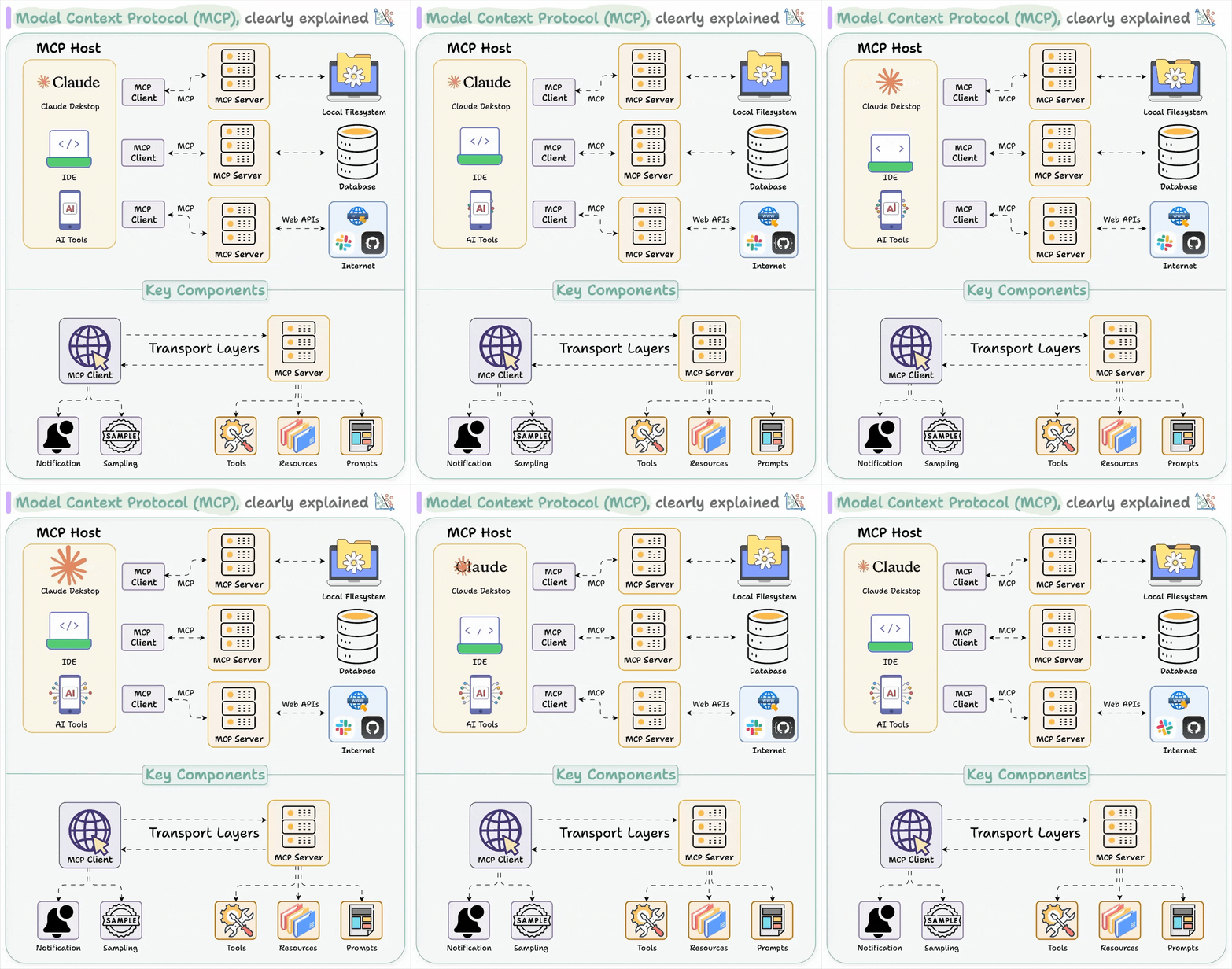
Monopoly is dead. Or at least, walled gardens are getting a few much-needed windows knocked into them. Google just announced that the Google Home ecosystem is opening its doors to third-party AI agents, specifically naming Anthropic's Claude alongside open-source tools like OpenClaw and Hermes. Instead of forcing everyone to route every smart light toggle and thermostat adjustment through Gemini, Mountain View is leaning on the Model Context Protocol to let users pick their preferred intelligence. It is a surprisingly pragmatic move from a giant that historically prefers keeping users trapped inside its own software playground.
Let us be honest about why this matters. Gemini for Home has plenty of rough edges. It stumbles over subtle multi-step commands and occasionally forgets how to interact with perfectly functional hardware sitting right on the local network. By hooking into MCP, you can now swap out the default voice layer for something vastly more competent. Imagine using Claude's conversational subtle to query security camera logs or orchestrating complex local weather automations through OpenClaw without fighting a stubborn proprietary assistant.
Naturally, there is a catch. This isn't an open-source charity drive. You need a twenty-dollar monthly subscription to access these early-access features, and the rollout is currently gated to US-based premium accounts. Early adopters should expect plenty of friction, weird edge cases, and bug reports. I am also deeply skeptical about the promises of custom AI-generated dashboards replacing polished native interfaces; vibe-coded control panels usually collapse the moment you try to troubleshoot a broken routine at midnight.
Even with the caveats, this represents a massive win for open tooling and interoperability. Software ecosystems are at their best when builders and users can mix and match components rather than submitting to a single vendor's vision. If Anthropic or independent developers can deliver a fundamentally more reliable smart home experience using open standards, Google just handed over the keys to its own house. And honestly? It's about time.