Why the AI Governance Gap is Killing Enterprise Tech ROI
Billions in enterprise AI investments are failing to move the needle. The missing link isn't better algorithms; it's actual governance....

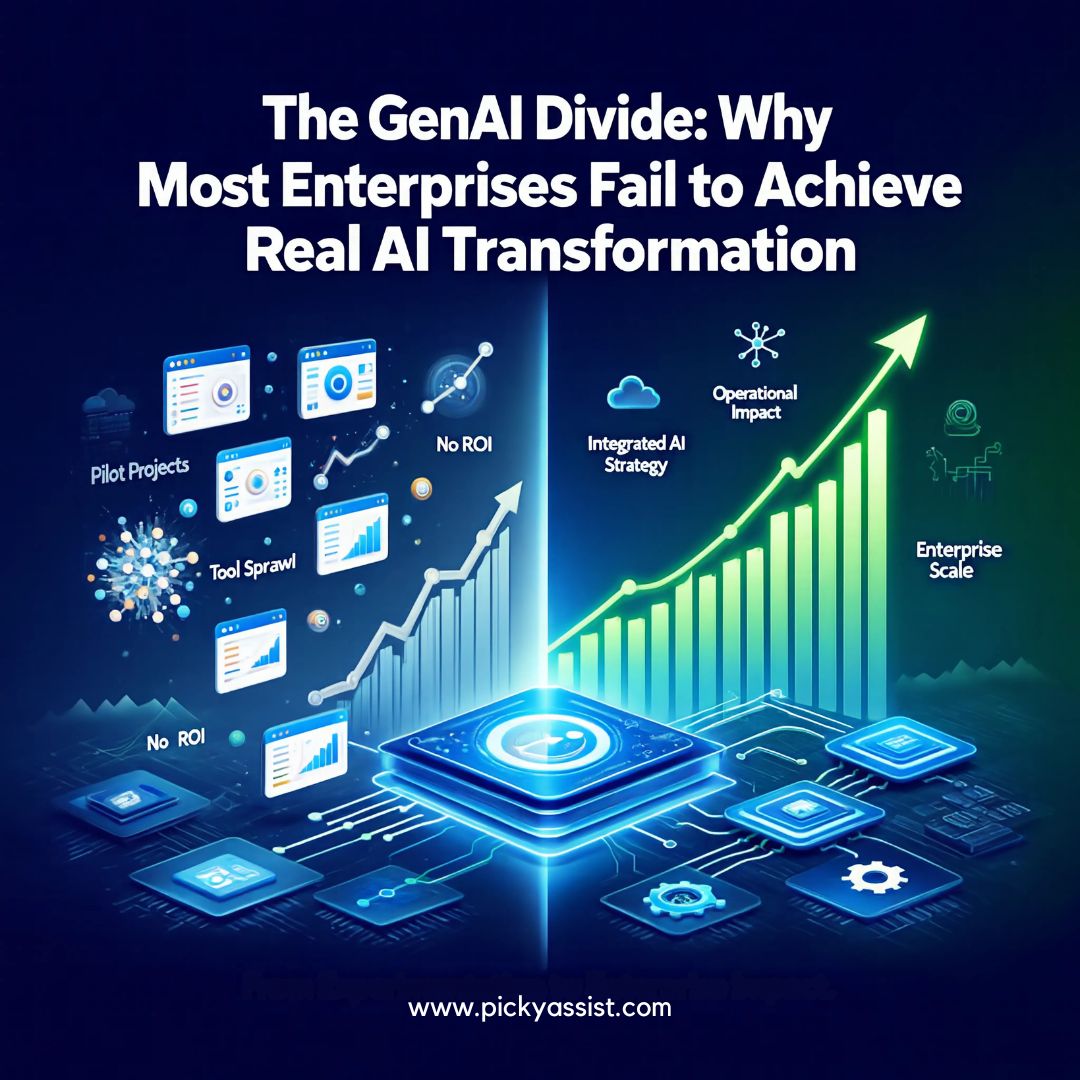
We spent the last few years throwing capital at artificial intelligence like it was a magic wand. It enterprises poured tens of billions — oddly — into generative models, expecting instant bottom-line shift, only to hit a wall. According to recent MIT research, roughly ninety-five percent of these integrated pilots fail to generate any measurable profit or loss impact. Not necessarily, think about that for a second. Billions vanished into thin air, yielding little more than expensive chat interfaces that write slightly better corporate emails.
The usual narrative blames the technology itself. That is a cop-out. The models driving the five percent of successful deployments are the exact same ones everyone else is licensing. The real problem isn't the underlying math or the parameter counts. It is a profound lack of operational direction. Most organizations simply do not know how to steer these systems, let alone take responsibility for the synthetic sludge they occasionally produce.
Instead of use automation to build better things, many engineers and operators have devolved into human middleware. You know the drill. You spend your Tuesday copying text out of one proprietary tool, massaging it to fit another dashboard, and routing the artifact to a Slack channel just to prove you did something. We built pipelines meant to eliminate toil, yet we trapped ourselves in an administrative nightmare of our own design.
This brings us to what I call the governor shift. True engineering leadership today isn't about writing every single query or manually executing every task. It requires setting strict intent, defining hard boundaries, and deciding precisely which autonomous decisions an agent is permitted to make before it must ping a human. If you cannot establish those guardrails, you do not have an automated workflow. You have a liability.
Fixing this mess demands brutal honesty about craft and accountability. Stop chasing the hype cycle and start defining the rules of engagement. The AI divide will only widen until small teams and enterprise builders alike learn to govern their models with the same rigor they apply to production code.