Why Edge Agentic Benchmarks Change the Game for Local AI
Running heavy LLM agents locally just got a massive reality check. Here is why the latest MLPerf edge benchmarks matter for builders....
We've been living in a chatbot world for too long! This single prompts and neat (oddly enough) little text boxes are fine for summarization. This but real software engineering agents live and die by multi-step loops, tool calls, and ballooning context windows. Shifting that kind — and this matters — of workload out of massive cloud data centers. Sounds familiar? Turns out, also, directly onto physical hardware feels like a fever dream. Yet, the newly released MLPerf Edge Agentic benchmark figures show that local edge inference is maturing faster than anyone anticipated. And it's entirely necessary if — and this matters — we want systems that actually do work instead of just chatting about it.
Actually, consider what an agent demands from a processor. It isn't just spitting out a handful of tokens at a reasonable speed. It means handling thousands of tokens of shared conversation history, evaluating raw tool outputs. And generating valid function calls repeatedly without melting the silicon. When NVIDIA ran Qwen3.6-27B through their TensorRT Edge-LLM stack on a Jetson AGX Thor dev kit, the results were staggering. We're looking at a 6.4x (interestingly) speedup over standard reference runs. That is the difference between a tool you can actually build products around and a slow-motion experiment that tests your patience. That's the difference between a tool you can actually build products around. And a slow-motion experiment that tests your patience.
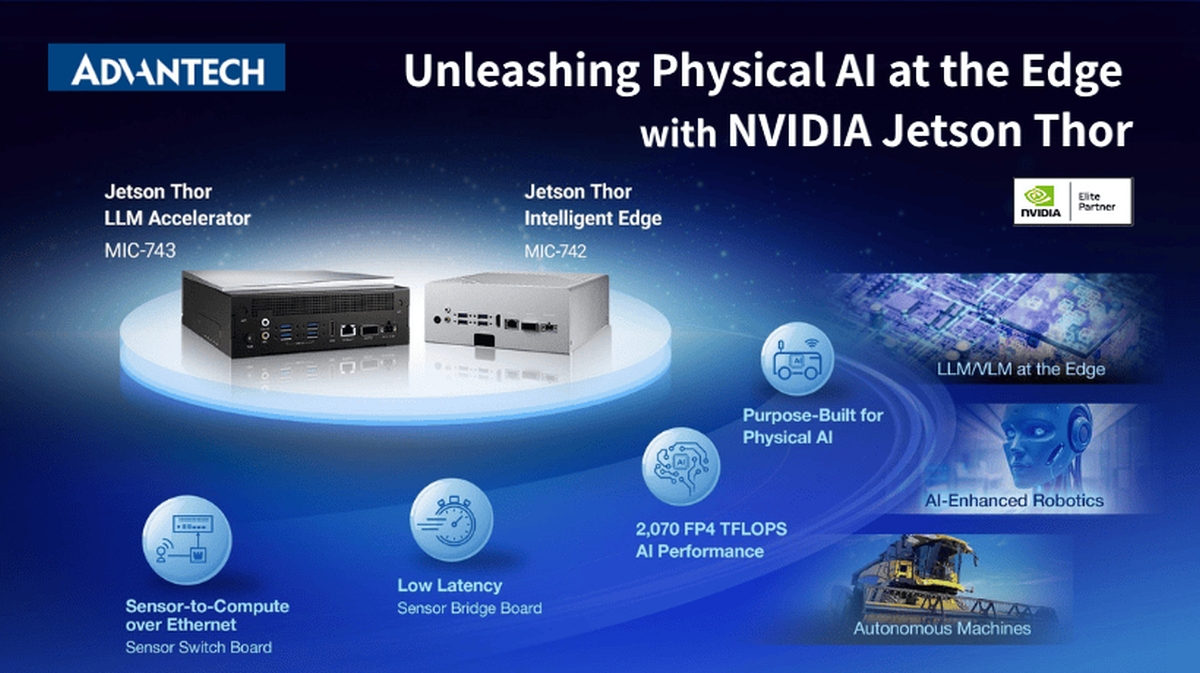
Much of this leap comes down to raw engineering fundamentals rather than flashy marketing fluff. By leaning into NVFP4 quantization, smart tree-based multi-token prediction, and relentless KV cache reuse, the system mitigates the brutal DRAM bandwidth bottlenecks that usually choke low-batch edge decoding. When memory footprint shrinks without destroying accuracy, local execution stops being a theoretical compromise. It becomes a viable architecture.
Building for the edge has always meant making painful sacrifices. You trade parameter counts for latency, or battery life for compute power. But seeing a 27-billion parameter model clear over fifty tokens per second while maintaining solid function-calling accuracy changes the calculus. For small teams building autonomous systems, robotics, or specialized local software agents, this is the kind of practical hardware-software teamwork that actually moves the needle.









