Scaling Federated Learning Without Destroying Your Infrastructure
Federated learning usually breaks down when you try to force heterogeneous teams onto the exact same infrastructure. NVIDIA FLARE finally fixes that bottleneck....
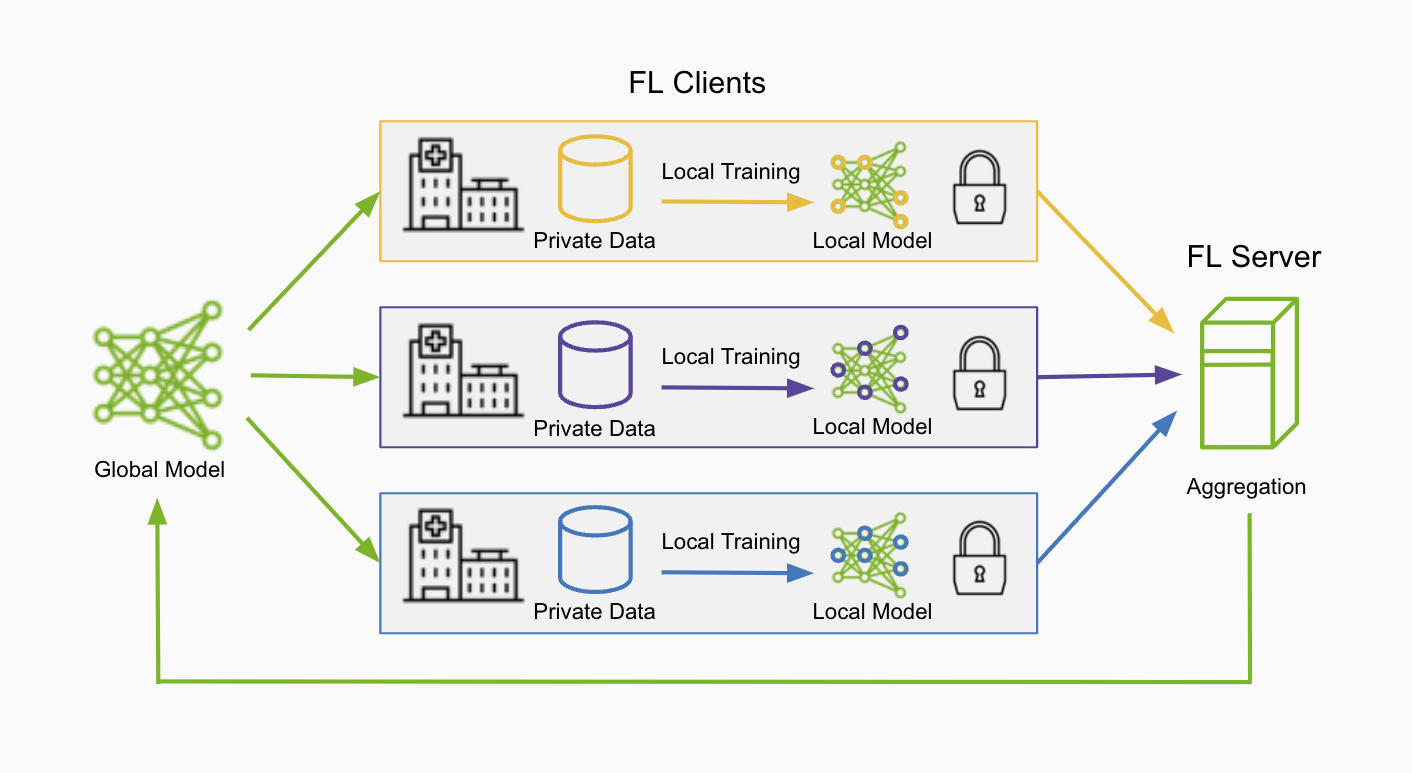
Most distributed machine learning projects start small and deceptively simple. You set up a single coordinator server, hook up a handful of clients, and call it a day. But the moment you try to scale out, the illusion shatters. Suddenly, you aren't writing clever algorithms anymore; you are drowning in complex operational sludge. You have to figure out how to allocate GPUs dynamically, keep competing research studies strictly isolated from one another, and respect the strict data sovereignty boundaries of every participating organization. It is an absolute nightmare.
Hugely, the friction multiplies when other sites use completely incompatible environments! It one university lab runs everything on a scrappy Docker host under a desk. See the pattern? A corporate partner relies heavily on a massive Kubernetes cluster. OK so meanwhile, a national supercomputing center schedules its heavy GPU workloads exclusively through Slurm. In the past. Platform standardization was the forced must-have for co-op. Just, you'd to bully everyone into adopting your exact stack to share a model. That is a terrible way to build software.
NVIDIA FLARE takes a refreshingly pragmatic approach to this mess by separating persistent federation services from actual job execution. It the setup (oddly enough) relies on a clean, two-layer design. Long-running parent processes handle the tedious business of login and federation coordination without squatting on expensive hardware — if that makes sense. When a data scientist finally submits — oddly — a job, those parent processes spin up isolated workers on demand. [IMAGE]
This decoupling means a single global study can smooth span wildly different backends. A job description declares resource intent – like requesting specific GPU counts or memory limits – rather than hardcoding platform specifics. Local site operators then translate those requirements into whatever runtime they already trust, whether that is a standard Docker container, a Kubernetes pod, or a native Slurm allocation. Local control stays entirely intact.
Good setup design gets out of your way and respects the reality of how teams actually work — or so it seems. Forcing synthetic uniformity on distributed partners is a losing battle that kills momentum before it even starts. By letting every node use the exact execution backend that fits its space. Realistically, tools like this make cross-organizational effort feel less a bureaucratic hostage negotiation and more like to engineer.









