Why I'd Never Buy an Nvidia Founders Edition GPU
Nvidia's Founders Edition cards win on aesthetics every single time, yet I've exclusively bought chunky aftermarket variants. Here is why thermal headroom beats sleek minimalism when you actually build and use the machine....
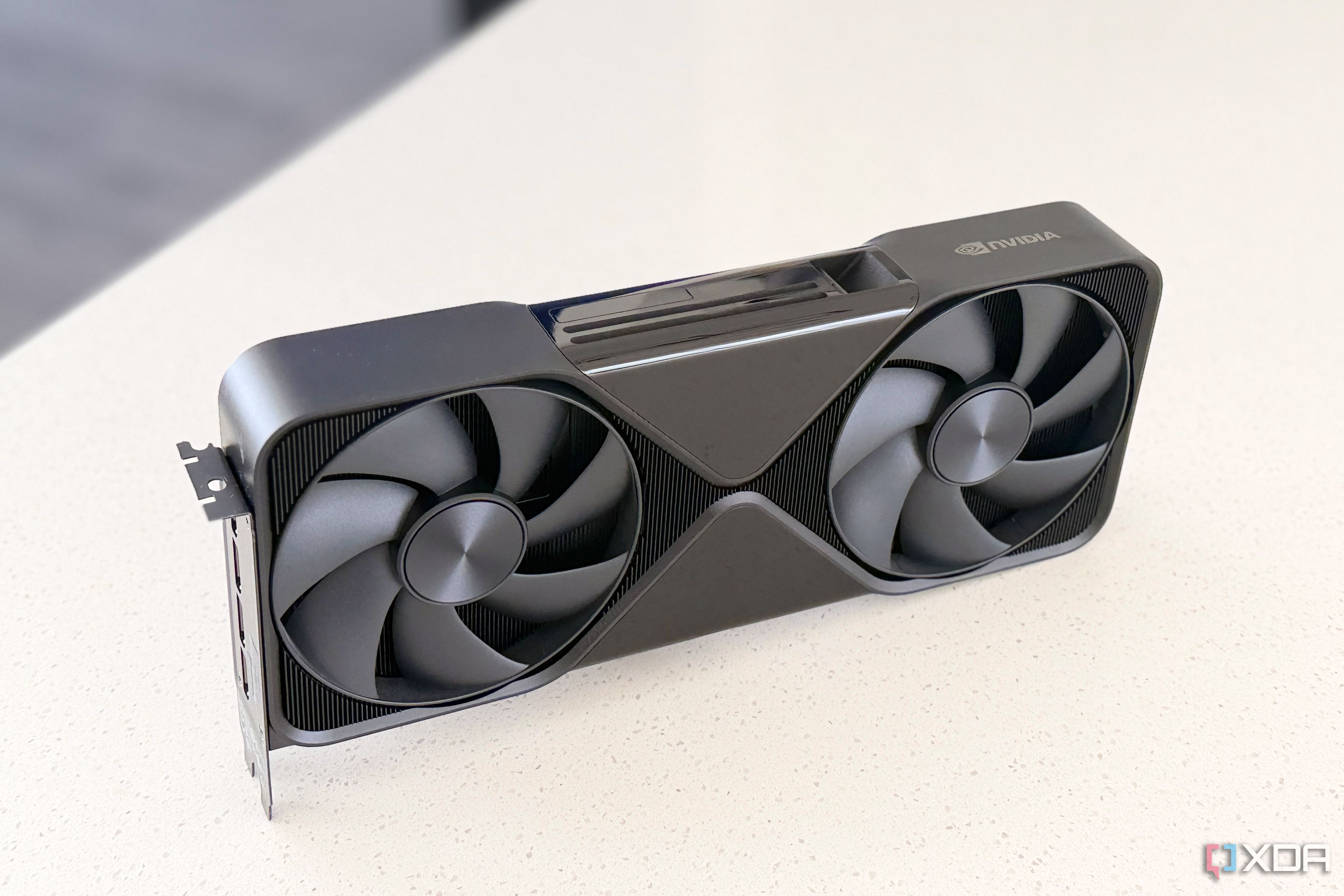
Let’s get the obvious part out of the way first. Nvidia’s Founders Edition GPUs look phenomenal. Their minimalist, all-metal industrial design leaves heavy, aggressive aftermarket triple-fan shrouds looking like over-engineered plastic toys. If we were judging purely by how a rig looks sitting on a desk through a tempered glass side panel, Jensen Huang’s team would win the design award every single generation. Yet, looking back at every build I have put together since 2012, I have never once purchased a stock reference card. Not for my old GTX 680, not when I moved up to a 1070, and certainly not for my current heavy-hitting setup.
Aesthetics stop mattering the exact second you boot up a demanding modern game and the silicon starts pulling hundreds of watts. Thermal performance rules everything. It is the only metric that truly dictates long-term stability and sustained clock speeds, especially if your room runs warm or you live in a genuinely hot climate. Nvidia designs the Founders Edition to strike a delicate balance between compact form factor efficiency and acceptable thermal limits. They crammed a monstrous 575-watt flagship GPU into a surprisingly slim dual-slot footprint this generation. That is an undeniable engineering marvel on paper.

In practice, however, that clever space-saving choice means you immediately once trade away vital thermal headroom! This massive aftermarket cards embrace bulky heatsinks and oversized fans simply because raw physical mass disperses heat better than clever metallurgy alone — in a way. This when I look at benchmarks, those extra few degrees matter. But is it really that simple? So that gap buys me peace of mind, acoustic headroom. Degrees, my current liquid-cooled setup sits comfortably ten cooler under sustained, brutal full-load conditions compared to stock reference boards. Sustained results when rendering or gaming for hours on end.
Then you factor in the ecosystem of hardware extras that board partners include to justify their price tags. We get dual-BIOS switches for instant firmware fail-safes, dedicated board-level fan headers, and a lot beefier power delivery limits that let enthusiasts push silicon further than the reference spec allows. Founders Edition cards are sleek, beautifully machined collector's items. But when I build a machine, I want maximum thermal overhead and engineering pragmatism over a pretty minimalist silhouette.









