Running NVIDIA Cosmos 3 Edge for On-Device Robot Control Changes the Game
NVIDIA's new 4B world model brings edge intelligence to robotics, letting hardware run complex manipulation policies locally without cloud lag....

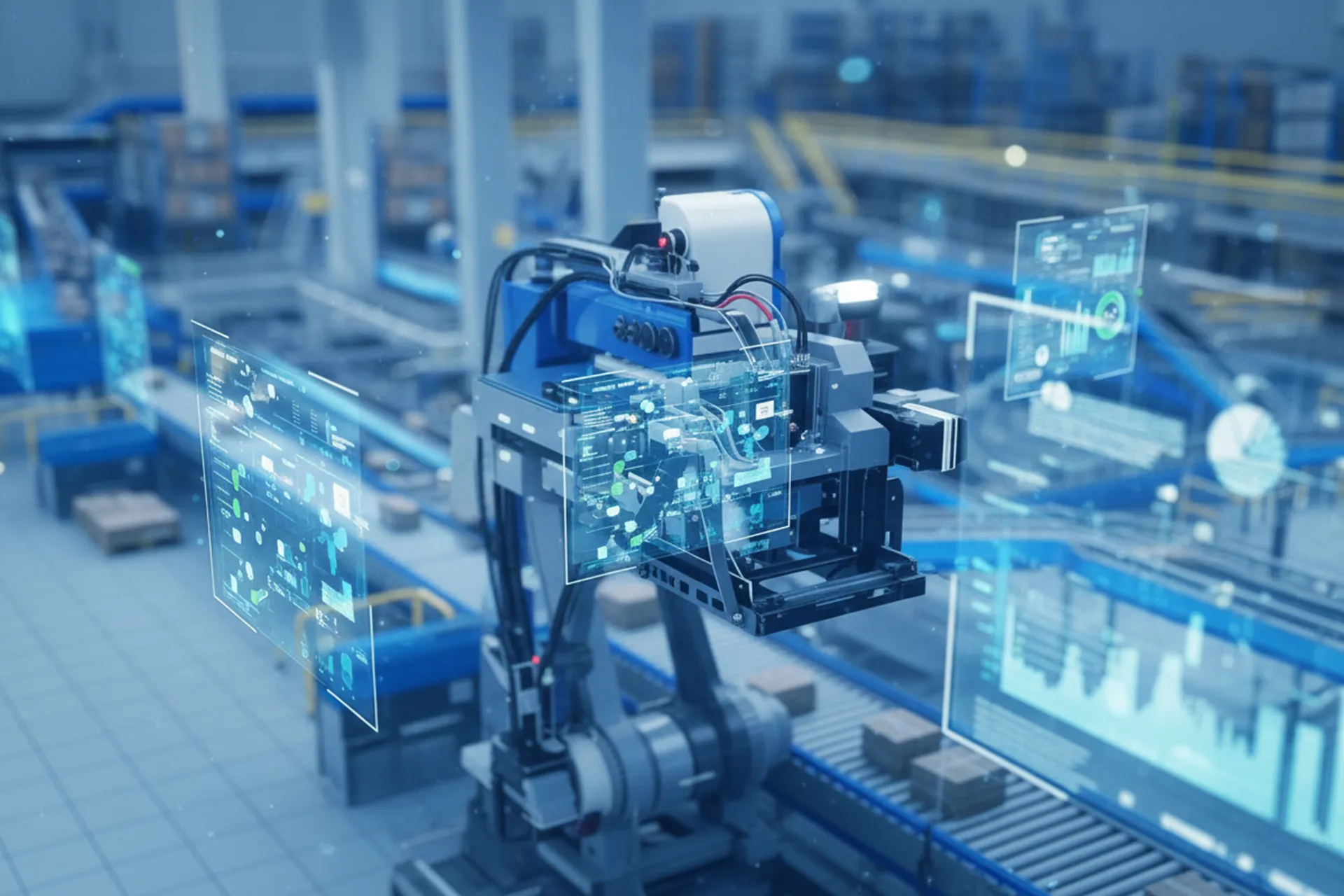
For years, robotics has suffered from a painful compromise. You either build massive world models that demand cloud-scale data-center GPUs to function, or you scale everything down to tiny, brittle heuristics that fail the second a lighting condition shifts. That tension has always felt unnecessary. We have watched teams burn endless engineering months trying to stream heavy inference payloads over fragile local networks just to get a robotic arm to pick up a plastic cup without crushing it. It is clumsy. It is slow. And honestly, it misses the entire point of autonomous hardware.
That is exactly why NVIDIA Cosmos 3 Edge caught my attention. Weighing in as a 4 billion parameter omni-model paired with a 2 billion parameter reasoner. Oddly enough, it occupies a remarkably sweet spot. It is compact enough to run directly on a Jetson Thor board yet rich enough to inherit the deep physical intuition of its larger siblings. Instead of starting from scratch and forcing a network to learn gravity, friction, and momentum from a few hundred clumsy demonstration runs. From what I can tell, you inherit a model that already understands how objects slide, fall, and collide in the real world.
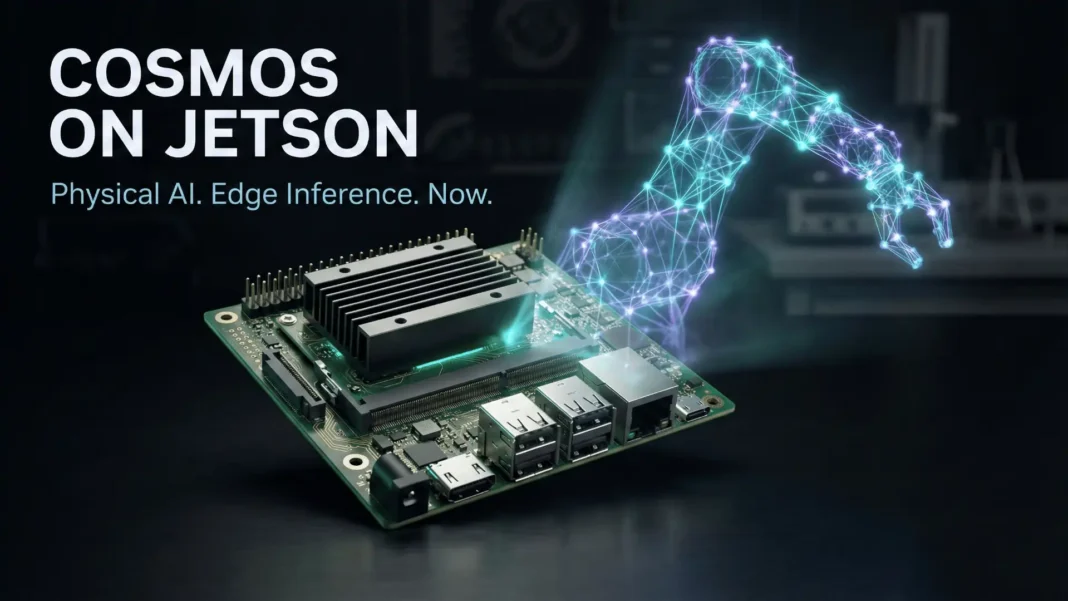
The real engineering breakthrough here isn't just the parameter count or the clever use of a Nemotron-based reasoner. It is the latency profile. When you look at the numbers, they actually make sense for physical deployment. Generating action chunks in roughly 1.5 seconds while streaming at fifteen hertz means the system can pipeline its execution loops effectively. The hardware plans its next movement window before the current buffer expires, resulting in fluid. Continuous motion that doesn't stutter or stall waiting for an API response from some distant server.
Of course, nobody is claiming this solves every handling problem overnight. From what I can tell, it a 22.9 percent success rate in closed-loop RoboLab evaluations tells you we are still at the start of this architectural shift, not the end. But the model has clearly flipped. We are finally moving away from tethered computing toward true edge autonomy, and that is a future worth building for.