Frontier Reasoning Reaches the Edge: Running Large Models on NVIDIA Jetson
Cloud-dependent AI is finally losing its grip. You can now run heavy-duty reasoning and agentic loops locally on NVIDIA Jetson hardware....

We've relied on data centers for reasoning models for too long! The it required a round-trip to the cloud if your agent needed to think through a multi-step problem. But why? But that meant latency, recurring API costs, which a total dealbreaker for disconnected environments — at least for now. Actually sending sensitive telemetry over the (oddly enough) internet just to get a diagnostic output never felt right anyway. The, thankfully, the architectural scene of open-weights AI has shifted a lot over last few months.
Compact open models are punching way above their weight class now. They deliver complex inference capabilities that used to demand massive server clusters, yet they fit comfortably on modern edge hardware like the NVIDIA Jetson. This is not about squeezing toy models onto constrained silicon anymore. We're talking about genuine localized reasoning, making autonomous systems workable in remote field operations, autonomous robotics, and real-time industrial telemetry where a dropped Wi-Fi signal used to break the entire architecture.
Deploying these systems successfully requires viewing the hardware-software handshake. Dense architectures like Qwen3.8-27B treat every single parameter as active cargo, demanding raw memory bandwidth, whereas Mixture-of-Experts alternatives like Nemotron 3.5 Lightning activate only a tiny fraction of their total parameter count per token to accelerate throughput. Pairing these models with vLLM, usinging clever tricks like NVFP4 quantization, and applying speculative decoding transforms sluggish prototype setups into blazing-fast edge production environments.
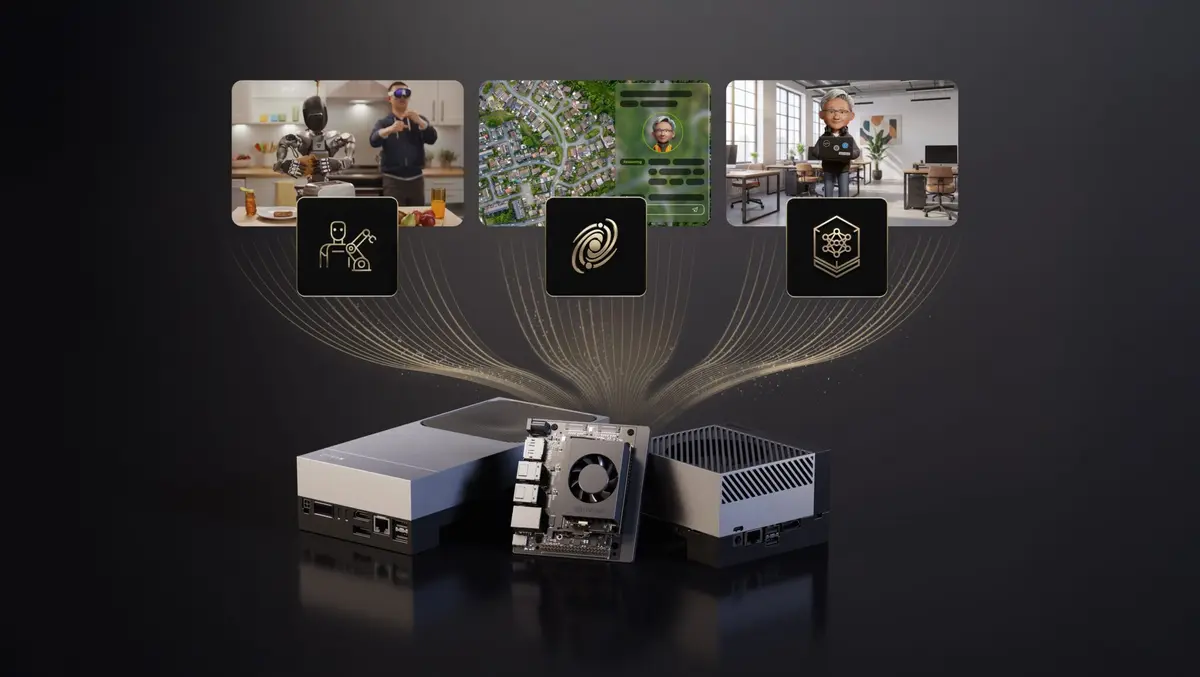
Getting this right takes patience and tough benchmarking. You cannot just copy-paste a cloud deployment script onto an embedded board and walk away expecting it to perform under load. You need to prove memory footprints, watch your thermal throttles, and test how long-running agentic loops behave when sensors flood the device with raw data. But the payoff is immense: fully autonomous, localized intelligence that stays entirely under your control.
The perimeter has moved. Edge computing is no longer just for dumb classification tasks and simple pattern matching. By bringing actual reasoning loops down to the silicon on our desks and in our machines, we open up an entirely new tier of software design. Less latency. Zero cloud bills. Complete privacy. It is time to rethink what local hardware can actually handle.