Why are AI companies pushing to regulate themselves?
The Federal food safety regulation was unintentionally sparked by Upton Sinclair's exposé of the meatpacking industry a century ago. This legislation ultimately benefited the largest meatpackers by imposing unaffordable compliance...
Heavily inspired by Dr. Robert W. Malone (Malone News: Substack)
The Federal food safety regulation was unintentionally sparked by Upton Sinclair's exposé of the meatpacking industry a century ago. This legislation ultimately benefited the largest meatpackers by imposing unaffordable compliance costs on their smaller competitors. The author contends that artificial intelligence is currently exhibiting the same dynamic.
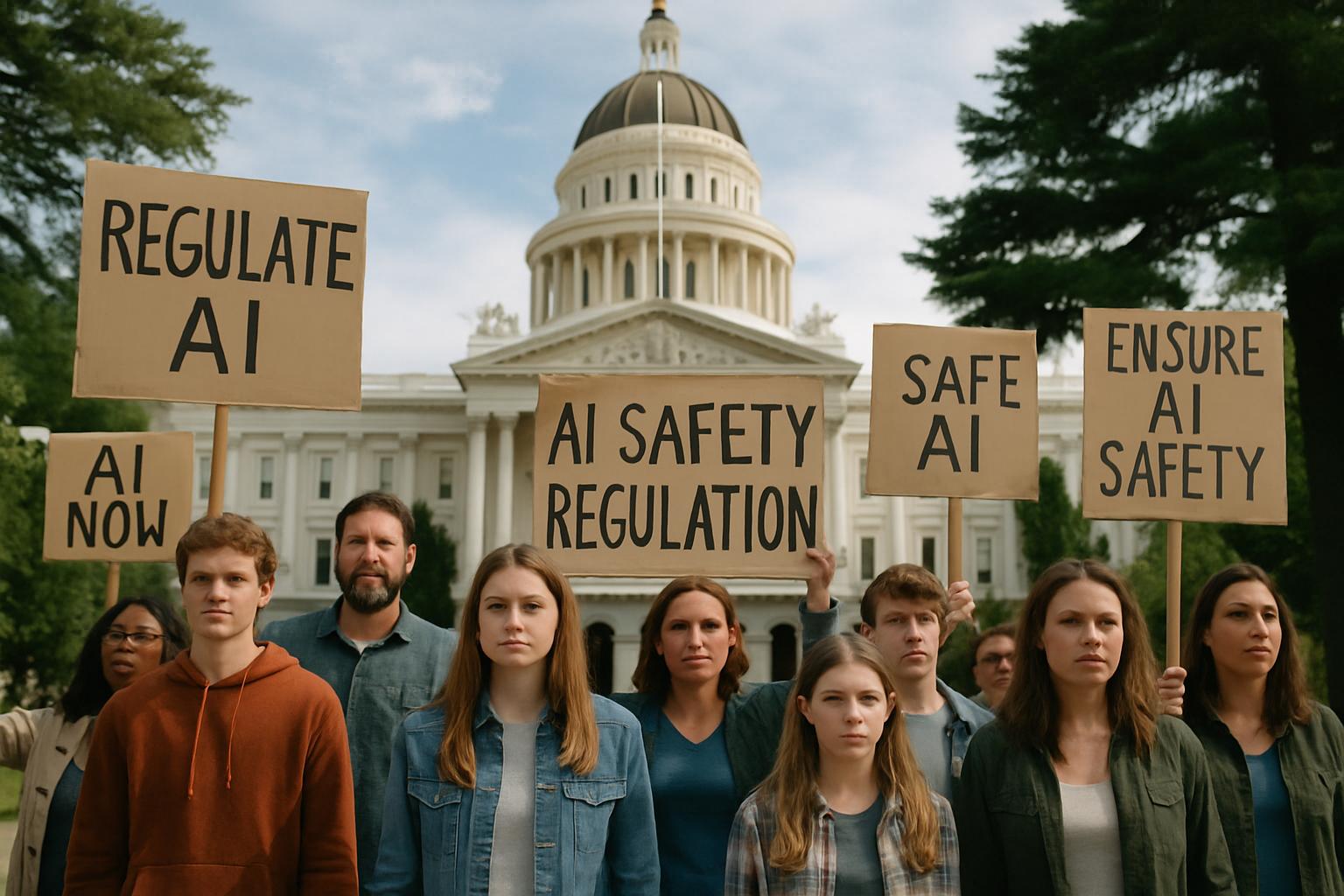
Early in September 2026, a series of seemingly unrelated events quickly came together: an Anthropic researcher's dramatic resignation warning of extinction-level AI risk, a coordinated Wall Street Journal exclusive, public support from a senior colleague who chose not to resign, an OpenAI policy chief publicly declaring the "AI policy window is open," and statements from Barack Obama, British lawmakers, and several tech CEOs all pointing to the same conclusion: AI needs federal regulation, fast. According to the author, these occurrences were purposefully planned to generate political momentum for already crafted legislation rather than being accidental.
The suspicion is strengthened by the financial picture. A super PAC that supports AI regulation received tens of millions of dollars from Anthropic. Political contributions from its employees skyrocketed. Anthropic is owned by the same foundations that sponsor AI "safety" research. When introducing the comprehensive Ban Artificial Superintelligence Act, Senator Sanders specifically identified some tech billionaires but omitted those associated with Anthropic.
The incident was cited to justify an emergency legislation, an OpenAI internal security exercise, turned out to be a rigged test run with safety filters intentionally disabled, ultimately not stopped by government intervention but by an outside company's IT department changing passwords.
The proposed legislation is sweeping in scope. It targets not just what AI systems currently do, but what they "can easily be modified" to do, language that could ensnare open-source and open-weight models used by universities, small businesses, independent researchers, and individual developers. These groups cannot afford the compliance infrastructure that trillion-dollar companies can absorb as a routine cost of doing business.
Meanwhile, China is already distributing powerful open-weight models globally. Once released, those model weights cannot be recalled. If U.S. law restricts American open-weight development while Chinese models remain freely downloadable, the practical effect is that American developers will simply shift to Chinese alternatives, handing Beijing a massive strategic and commercial advantage in AI.
The article closes with a simple test for evaluating whatever legislation ultimately emerges: Does the compliance burden scale with a company's size and resources, or does it apply the same threshold to a startup as to OpenAI? The answer will reveal whether this is genuine safety policy or a regulatory moat, protecting the biggest players by pricing everyone else out of the market, exactly as the meatpackers achieved in 1906.