Bridging the Gap: From Hugging Face Hub to Robot Hardware with Strands and LeRobot
Wiring together simulation, hardware, and machine learning pipelines for physical robots used to require a fragmented mess of incompatible tools. Now, a leaner approach is finally emerging....

If you have ever tried teaching a physical robot a new trick, you already know the pain. Today, that simple ambition demands an absurd stack of completely isolated tools. You need one utility just to record demonstration data, another separate framework to train your model, a third for simulation testing, custom glue code for deployment, and yet another piece of software entirely if you happen to manage more than a single machine. They all do their individual jobs reasonably well. Unfortunately, none of them actually talk to each other.
that's exactly why the new blend between AWS's Strands Agents and Hugging Face's LeRobot ecosystem caught my attention. It Instead of building another heavy, opinionated monolith that tries to own every layer of your stack. Truth be told, it Instead of building another heavy, opinionated monolith that tries to own every layer of your stack. It exposes robot abstractions and the entire LeRobot training stack as modular AgentTools. The agent loop acts purely as the connective tissue. It exposes robot abstractions and the entire LeRobot training stack as modular AgentTools. The agent loop acts purely as the connective tissue. Letting you effortlessly arrange data recording, simulation, policy inference — and fleet coordination without rewriting your core logic.
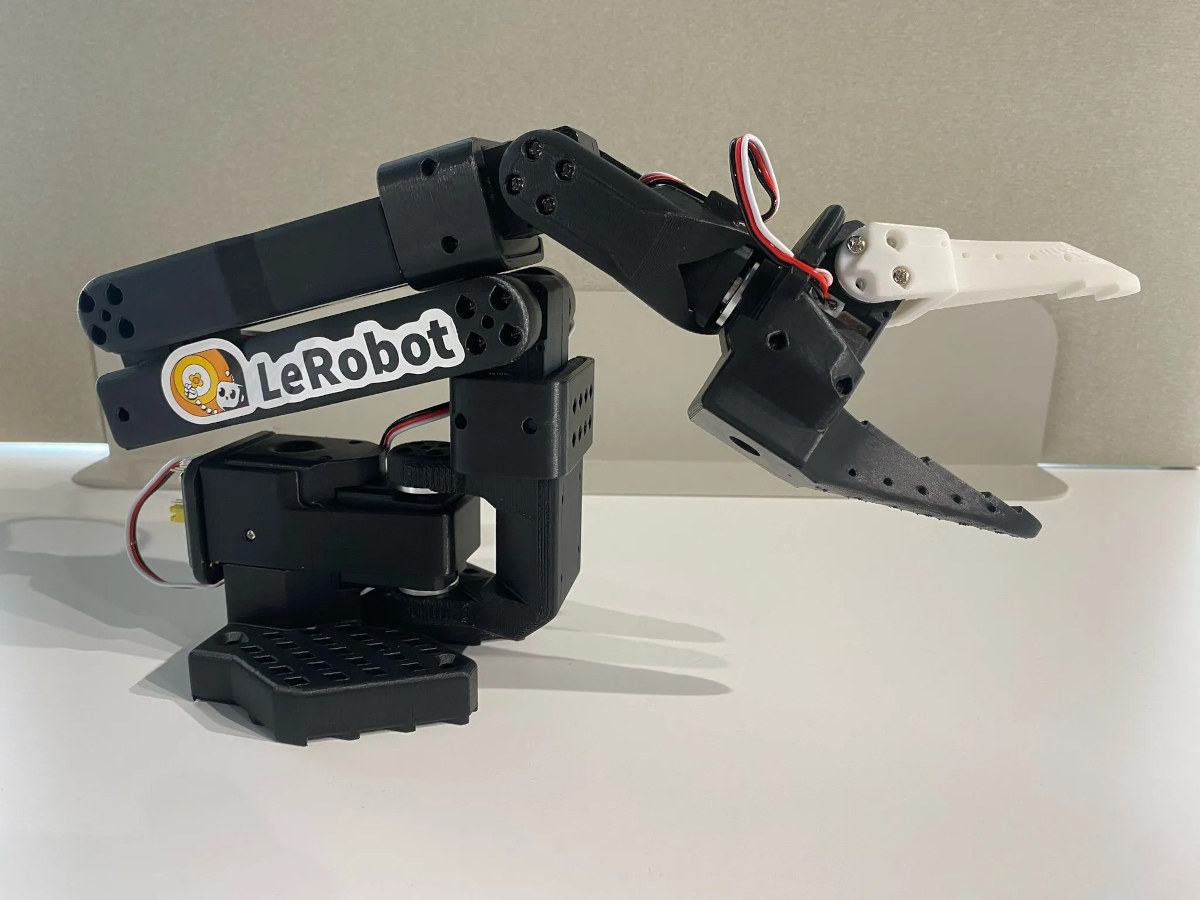
Here, the real genius lies in the software design; this when you instantiate your. To be fair — robot, it defaults safely to a MuJoCo-backed simulation. This when you instantiate your — to be fair — robot, it defaults safely to a MuJoCo-backed simulation. In a way, and test policies on your laptop without touching a single piece of physical hardware, risking a motor burnout. Also, test policies on your laptop without touching a single piece of physical hardware, risking a motor burnout — here's the thing, or even needing Hugging Face credentials for the default path. When you are finally confident in your setup. Swapping `mode="real"` instantly targets physical hardware like an SO-101. The underlying LeRobotDataset format remains identical whether the data came from a physics engine or real-world actuators. The underlying LeRobotDataset format remains identical whether the data came from a physics engine or real-world actuators.
Small teams and builders don't need more complex hype cycles. This we wanted better, more cohesive plumbing. And, by using a thin merging layer, a peer mesh for remote fleet broadcasting. This setup strips away the tedious boilerplate that usually kills robotics projects before they leave the bench. For what it's worth, it respects the craft of engineering by letting the right tool handle job, proving that messy toolchains aren't an inevitable law of physical computing.