Teaching a Fruit Fly Brain to Play Balatro
Someone used a digitized fruit fly brain connectome to play Balatro. Before you panic about insect overlords, let's look at what's actually happening here....
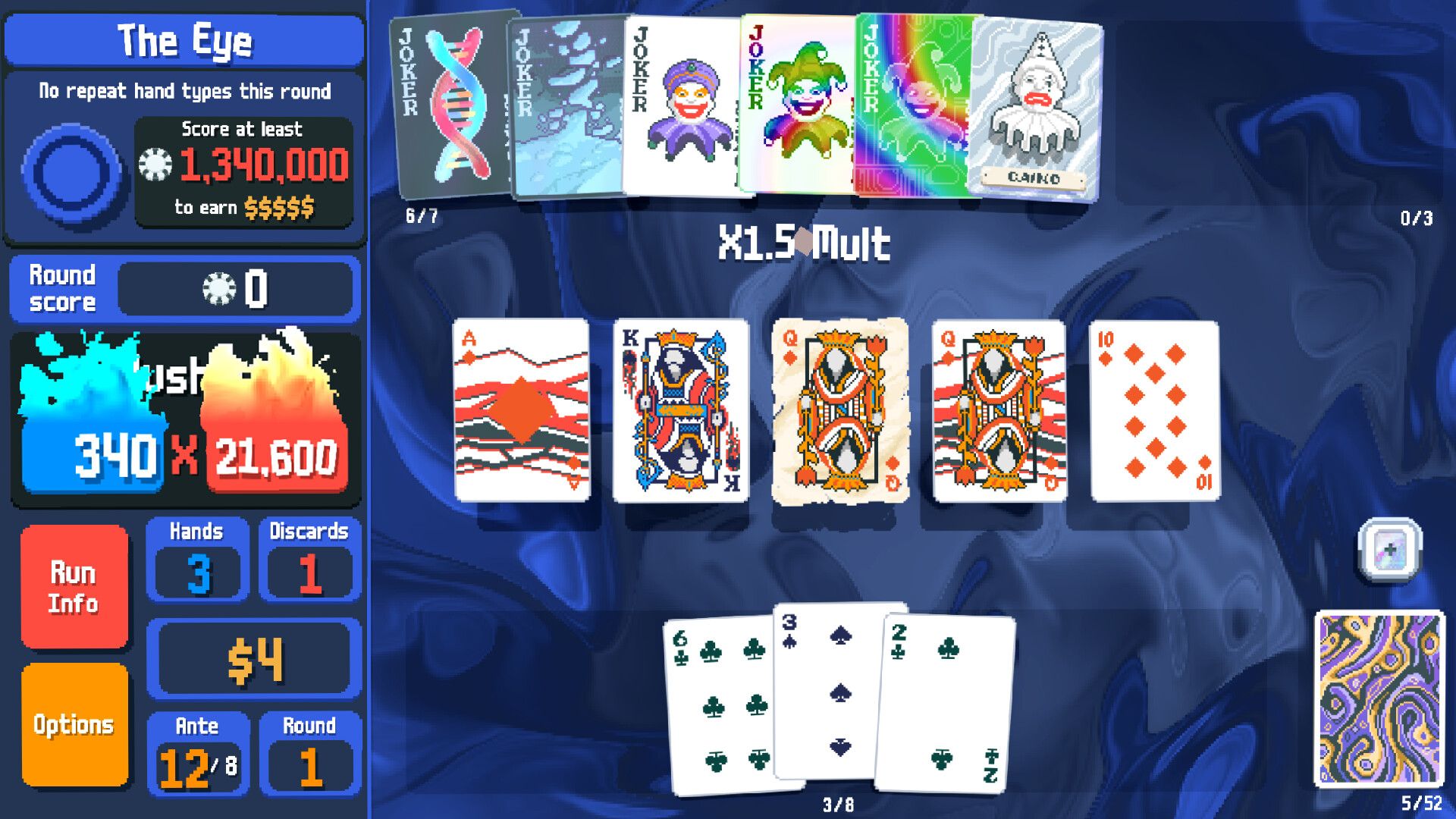
Give humanity a complex dataset and a bit of spare time. Also, someone will invariably try to make it play a poker roguelike. That is precisely what happened when a Reddit user took Google’s recently published fruit fly brain connectome, hooked it up to a custom training algorithm, and taught the simulated insect how to play Balatro. It currently clears the easiest stake about twenty percent of the time. This is equal parts absurd and fascinating, sitting somewhere at the bleeding edge of curious engineering and late-night hacker science.
Let’s maintain some perspective here. A twenty percent win rate on White Stake with the Red Deck is not exactly dominating the meta. For context, massive LLMs have already chewed through the brutal Gold Stake difficulty using the Black Deck. But nobody is doing this because they need a competitive edge in single-player card games. They are doing it because building weird bridges between biology and reinforcement learning is wildly entertaining. The creator fed reward signals into a digital recreation of Drosophila melanogaster's central nervous system, effectively letting a virtual fly stumble its way through flush builds and joker synergies using only what it could see on screen.

Truth be told, Balatro is a deceptively hostile environment for automated systems. The basic poker math is trivial, sure. Yet the chaotic web of joker interactions, persistent positioning rules, hand-ordering quirks, and punishing boss blinds creates a combinatorial explosion of edge cases that routinely trips up human players who aren't paying close attention. Getting a simulated biological neural net with a fraction of a percent of a human's neuron count to grasp engine optimization at even a rudimentary level requires some clever scaffolding.
Of course, we should keep our skepticism handy. The project lacks an open-source repository or granular technical documentation at the moment, leaving plenty of room for onlookers to question the exact mechanics under the hood. Even so, I love seeing this kind of independent tinkering. While massive tech labs burn billions chasing generalized intelligence through sheer brute-force compute, some anonymous developer in a forum is teaching an artificial fruit fly how to gamble. That is real hacker culture.









