Why I Finally Ditched Gmail for Thunderbird on Android
Tired of bloated AI prompts and slow cloud processing, I ditched the official Gmail app for Thunderbird on Android. Here is why the desktop legend actually nails mobile....
Software used to respect our time. For, now, every single tool we open feels desperate for our attention, packing half-baked generative features we never asked into interfaces that used to just work. I reached my absolute breaking point this month with the official Gmail app. Instead of a straightforward client for reading and sending messages. Opening my inbox feels like navigating a digital showroom for Google's latest machine learning experiments.
Every tap triggers another cloud-side check, a pop-up prompting me to let an algorithm write my thoughts, or a robotic reply suggestion that sounds nothing like an actual human being. It is heavy. It is slow. Worst of all, it fundamentally misunderstands what a utility app should be: a fast, invisible conduit for communication rather than an intrusive personal assistant pushing unwanted cognitive load into your day.
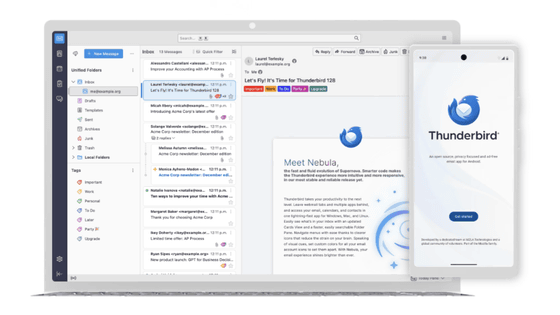
Switching my mobile workflow to Thunderbird on Android was an immediate. Visceral relief. [IMAGE] Without servers constantly trying to second-guess my sentences or guess my intent, the entire practice feels shockingly snappy and local-first. The results materialize instantly because the data actually lives on my hardware instead of a remote firm cluster when I search for a tracking number or a buried PDF receipt.
What seals the deal is how gracefully the project bridges the gap between other operating systems without sacrificing raw results or deep customization. Instantly, setting up the mobile client took seconds via a quick —. And this matters — QR sync from my desktop. Mirroring the complex folder structures I rely on daily to keep my freelance projects and personal life separated.
We need to stop accepting bloat as the inevitable cost of modern software engineering. The good design gets out of your way, respects your device assets. Also, treats you like an adult who knows how to type their own emails. Worth noting. Thunderbird proves that open-source utilities — and this matters — can outclass Silicon Valley giants simply by remembering what users actually want.