EmbeddingGemma 2 Makes Local Multimodal Search Actually Viable
Google just dropped EmbeddingGemma 2, a sub-1B multimodal embedder that handles text, code, audio, and vision entirely on consumer hardware....

Most AI tooling assumes you have a cluster of expensive H100s sitting in a rack somewhere humming away while burning through your cloud budget. The Am exhausted by the constant push toward centralized, latency-heavy architectures for problems that could easily be solved locally if the models weren't bloated monsters. That's why it's refreshing to see Google release EmbeddingGemma 2. For what it's worth, an open sub-one-billion parameter model that treats local hardware as a first-class citizen rather than an afterthought.
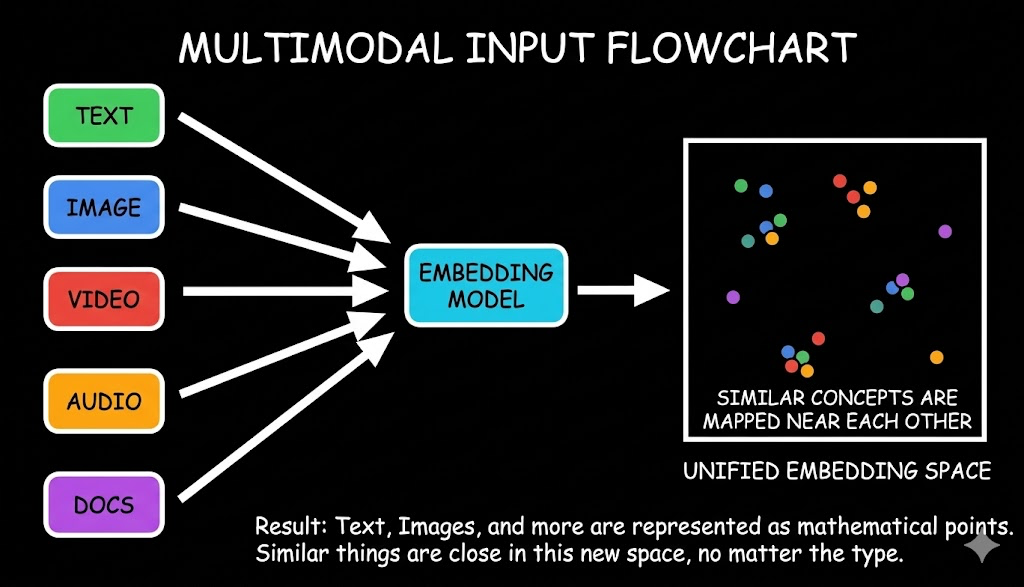
Realistically, clocking in at 740 million factors, this model isn't just another incremental bump. It unifies text, code, images, video, and audio into a single shared embedding space while keeping memory footprints remarkably small. You can drop it onto a phone or an edge device, use quantization to shrink the footprint down to under 600 megabytes for the full multimodal stack. And suddenly build privacy-first RAG pipelines that don't leak user data to some third-party API.
What I appreciate most here is the modular architecture combined with Matryoshka Representation Learning. If your app only needs text. You can strip away the vision and audio encoders to save even more overhead. In fact, dynamic vector truncation lets you chop those 768-dimension vectors all the way down to 128 dimensions without completely ruining your retrieval accuracy. That's clever engineering.
The benchmarks look (to be fair) solid, showing massive leaps in code retrieval! This also, multimodal comprehension that punch way above their weight class. See, but why? Still, well, an eight-kiloton context window means you can feed it decent chunks of data, audio clips. In a way, or interleaved frames locally without breaking a sweat. It is practical, open under an Apache 2.0 license, and built for builders who actually ship products to real devices. It's practical, open under an Apache 2.0 license, and built for builders who actually ship products to real devices.
We need more tools designed around resource constraints instead of ignoring them. If you are tired of cloud dependencies and want to spin up fast, local semantic search across messy, mixed-media datasets, grab the weights and see how it performs.