Stop Calling Them Watermarks. They Are Spymarks.
When big tech hides tracking payloads inside your images and text, calling it a watermark is just a clever magic trick....
We need to talk about a rebrand that nobody asked for, except for the massive conglomerates quietly embedding surveillance tools into the digital media we generate every single day. For centuries, a watermark meant a simple stamp of authenticity or a subtle copyright logo gracing the corner of a photograph. It was transparent, honest, and entirely upfront about ownership. But the tech industry has weaponized this benign concept, morphing traditional authentication into something deeply invasive and entirely clandestine. They want us to keep using the comforting old terminology while they quietly wire our digital output for sound.
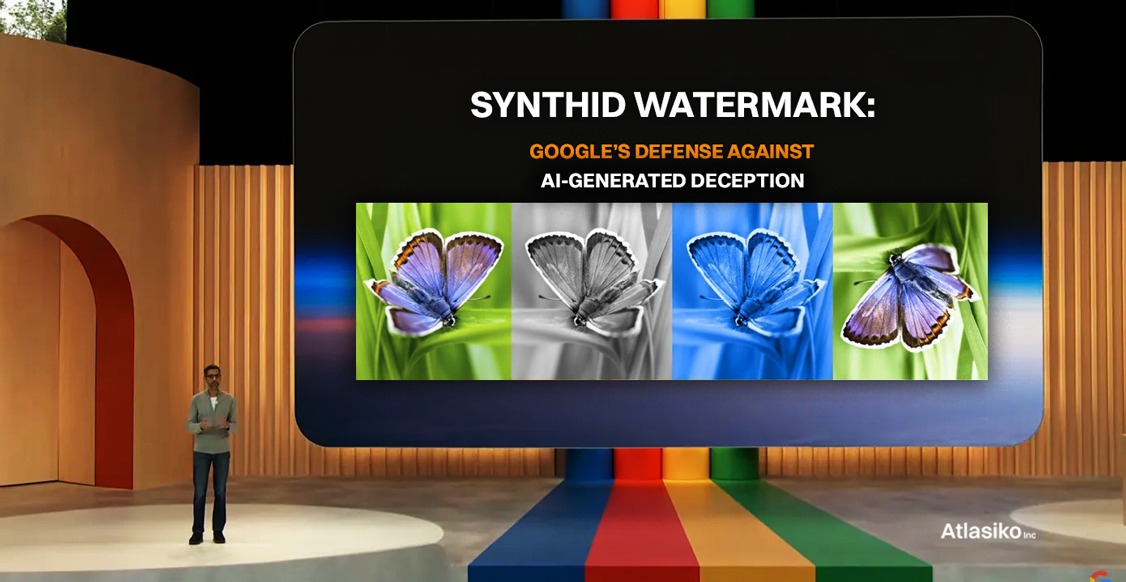
Let’s be precise about the mechanics here, because the marketing spin relies on muddying the waters. Systems like Google’s SynthID do not just wave a flag saying an image came from an algorithm. They pack enough raw data density into a standard pixel grid to encode a unique 64-bit database identifier alongside heavy error correction payloads. That is not a stamp. That is a serial number. It is a cryptographic anchor that ties whatever you generate directly back to your identity, your IP address, your personal metadata, and your browsing history, all baked invisibly into the frequency domain of a compressed JPEG or an audio file.
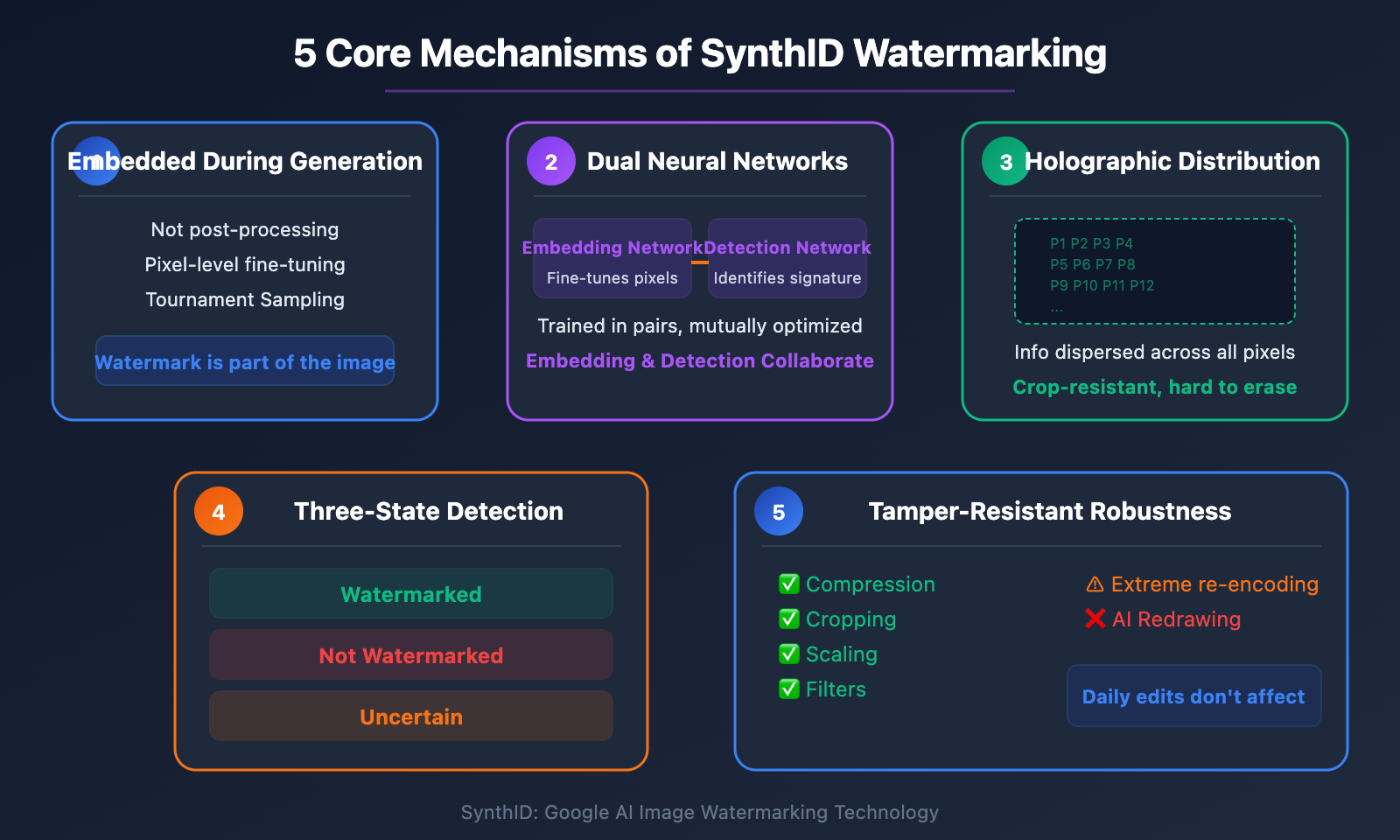
This is why the vocabulary shift matters so much. If we keep calling them watermarks, we buy into the polite fiction that this technology is purely about provenance and content verification. The moment you swap the label and call them spymarks, the entire framing changes instantly. The prefix tells the honest story: clandestine surveillance, involuntary tracking, and hidden data collection wrapped up in a polite technical wrapper. It strips away the PR gloss and forces everyone in the room to confront the actual privacy trade-offs we are sleepwalking into as cameras, smartphones, and generation tools get these algorithms baked directly into their silicon.
Software should respect the person running it. When tools start smuggling covert tracking payloads into your creative work without your explicit consent or knowledge, we have crossed a very dark line from utility into telemetry. We don't need more clever ways for massive platforms to index our lives under the guise of safety. We call for transparency, straightforward engineering, and the courage to name these surveillance mechanisms for what they actually are before they become an inescapable default of the modern internet.