Protests Against OpenAI Are Shifting From Tweets to Street-Level Craft
Silicon Valley's favorite narrative is hitting a wall of papier-mâché and cardboard right outside developer conferences....
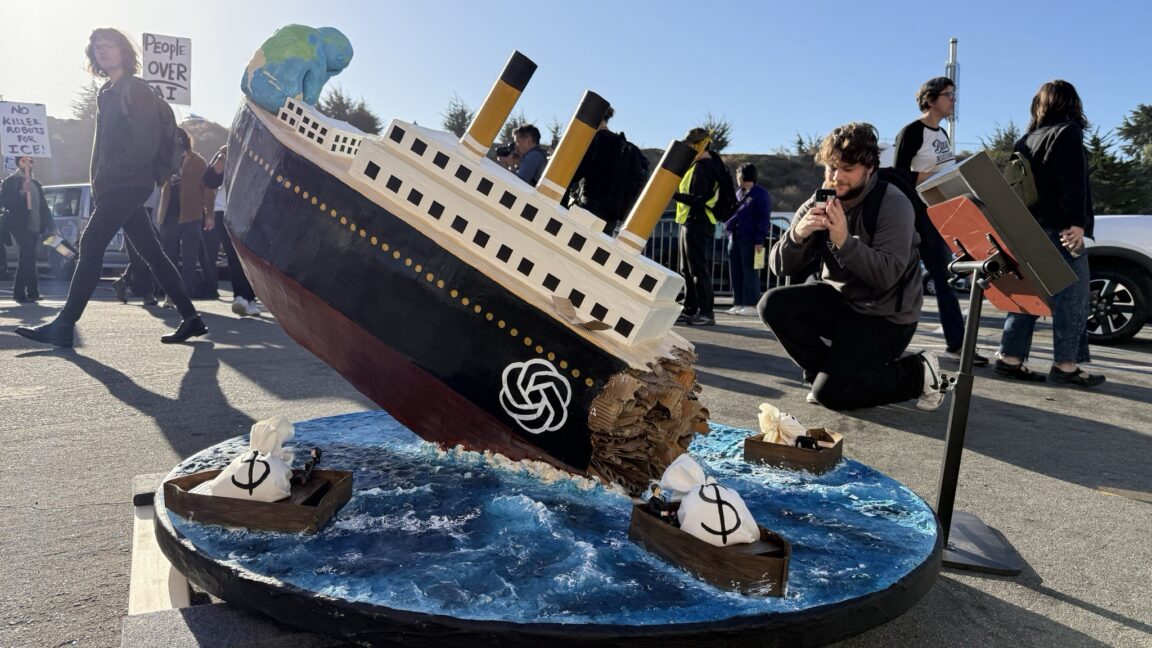
Silicon Valley loves a clean abstraction. We talk about parameters, inflection points, and inevitable futures as if technology descends from the heavens without human hands or messy societal trade-offs. But reality has a funny way of interrupting the keynote. Outside a recent OpenAI developer gathering in San Francisco, a couple of Bay Area artists dragged that abstraction right out into the open air. They built a literal sculpture out of cardboard, paint, and a repurposed table to make a point about who actually pays the tab when the tech bubble bursts.
Dubbed "What Iceberg?," the five-foot installation depicts leadership and venture capitalists scurrying onto lifeboats loaded with obscene wealth while the steerage passengers get left behind in the freezing dark. It is clever, handcrafted, and entirely built by hand over five sleepless days. No venture funding. No PR agency steering the messaging. Just raw frustration translated into physical form. I respect the hustle. When software eats the world, sometimes you have to fight back with papier-mâché.

For too long, public dissent against big tech has been trapped inside the digital echo chamber. We write spicy threads on social media. We argue about alignment on niche forums. We roll our eyes at the latest breathless press release about artificial general intelligence saving humanity from itself. Yet none of that punctures the impenetrable bubble of a tech conference. A physical installation blocking the entrance? That forces people to look up from their MacBooks and confront the uncomfortable subtext of own industry.
The creators behind the piece hit on a deeper truth that the hype merchants desperately want us to ignore. The Titanic metaphor isn't about an unforeseen hazard lurking in the dark waters ahead; it's about the design of the ship itself. There was always a plan for the people in first class. Roughly speaking, everyone else was expected to shovel the coal and lock their own doors. As builders, we need to ask ourselves what kind of vessels we are actually launching into the world, and who ends up drowning when the iceberg finally hits.









