Meta Wants You to Wear Another Screen With Muse AI Gadget
Meta just previewed a chunky, strap-free wearable called Muse Charm to house its latest AI agent, proving big tech still believes we need more devices buzzing against our bodies....
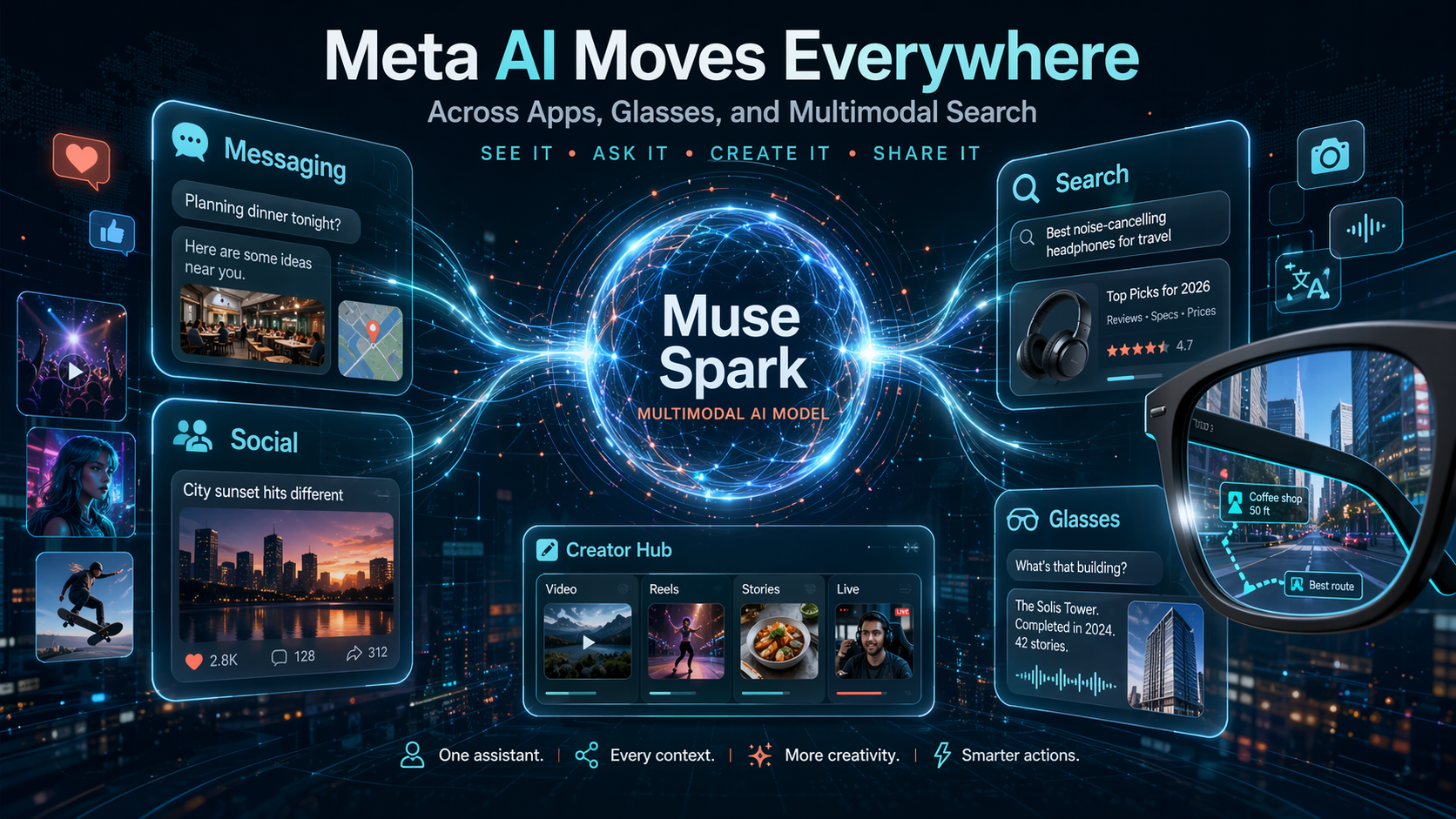
Just when you thought the industry had finally exhausted every possible permutation of useless hardware, Mark Zuckerberg took the stage at Meta Connect to flash a preview of the Muse AI gadget. The chunky little Muse Charm – which is essentially a smartwatch stripped of its wristband, bolted onto a lanyard. By the way, the chunky little Muse Charm – which is essentially a smartwatch stripped of its wristband, bolted onto a lanyard. Because it seems, your phone — This bloated to an awkward thickness simply to give an artificial intelligence agent a dedicated physical home. Your laptop, your actual watch — and your smart glasses weren't quite enough digital tethers demanding your fragmented attention throughout the day. Why; because.
The tech press will inevitably frame this as a bold new frontier in ambient computing, but let's call it what it actually is: an answer in search of a problem while trillion-dollar corporations throw hardware at generative models simply because software margins alone cannot satisfy Wall Street's insatiable appetite for growth. Forcing us to carry around chunky little trinkets that listen, process, and ping us constantly when real engineering is supposed to solve friction rather than inventing entirely new categories of annoyance so an LLM has a dedicated physical vessel to inhabit outside your pocket. Madness.

Consider the sheer redundancy of the concept.
Your smartphone already runs these agents with vastly superior processing power, better connectivity, and screens you can actually read without squinting at a dangling pendant around your neck, yet here we're sliding backward into the era of specialized single-purpose devices that duplicate feature we spent a decade with ease consolidating into pocket computers. Completely missing the point of what makes good tools work because tools stay out of your way until you need them instead of demanding a lanyard and a dedicated charging dock.
Speaking of which, at some point the people designing these products need to stop asking what technology can possibly build and start asking what humans actually want to live with. Realizing that nobody asked for a screen-heavy talisman that dangles against their sternum just to chat with an algorithm, meaning real craftsmanship in the end comes down to knowing when to respect the physical peace of the user and quitting the obsession with adding features.









