Bill Gates Is Pouring Billions Into AI, But His Diagnosis Misses the Point
Bill Gates is dropping a billion dollars to fix AI equity, but throwing capital at closed systems won't solve the structural bias baked into modern language models....

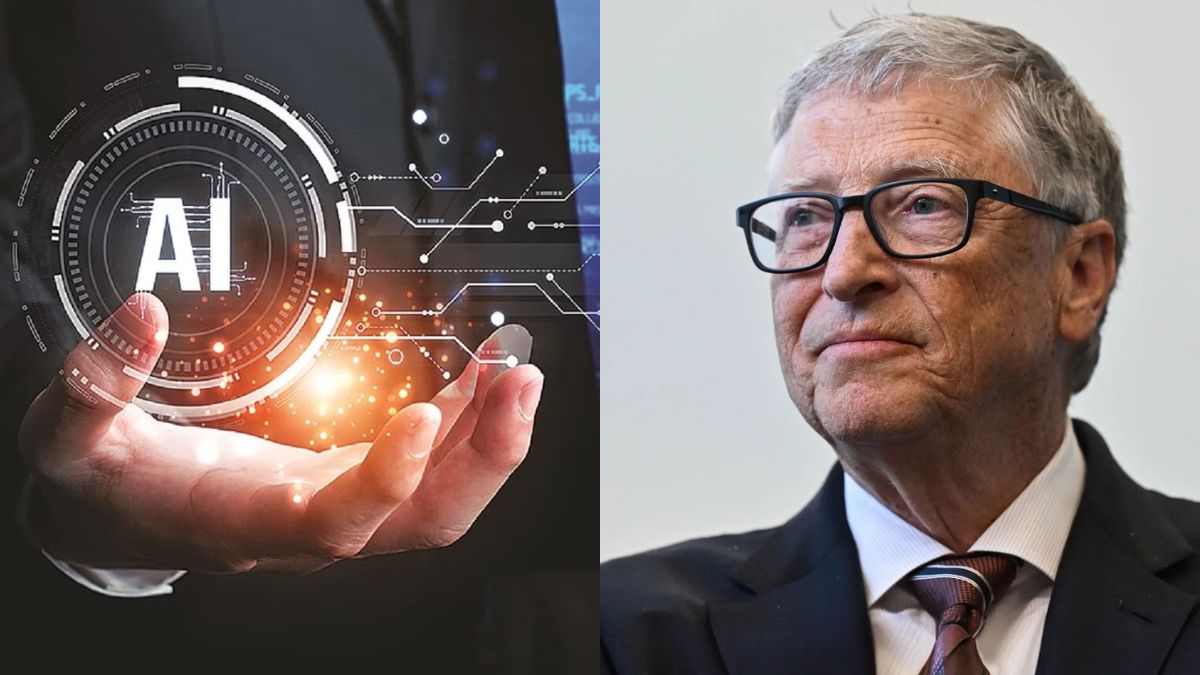
It is always fascinating to watch billionaires pivot from doomsday prophets to benevolent patrons of the machine age. Bill Gates recently announced that his foundation is dropping at least a billion dollars over the next two years to inject AI tools into global health, agriculture, and education. He is not entirely wrong about the diagnosis. He points out that early language models were trained almost exclusively on English, and that baseline speech recognition still fails miserably in regional dialects like Yoruba. The free market, as he bluntly notes, is a terrible guarantor of equal opportunity.
My issue isn't with the philanthropic impulse to fund agriculture or health tech in the Global South. It is with the naive assumption that pouring venture-scale capital into the current model will somehow fix its structural rot. The core problem with artificial intelligence right now isn't just a distribution issue that can be solved by buying more licenses or subsidizing access. The bottleneck is foundational. When your entire architecture relies on centralized training runs, hyper-expensive hardware clusters, and data pipelines scraped from the western internet, democratizing access just means onboarding more people into a walled garden built by someone else.
If we actually care about building technology that serves the other ninety percent of the planet. The answer isn't handing out API keys subsidized by a foundation. It requires radical decentralization. We need smaller, more efficient models that can run on commodity hardware, fine-tuned by local communities using their own localized data. Crafting software for small teams and underserved markets means respecting local context, not forcing a monolithic model trained in Seattle onto a farmer in Sub-Saharan Africa.
Throwing a billion dollars at the problem makes for great headlines! It but it mostly acts as, oddly, a band-aid on a broken system of proprietary software output. It true equity in tech doesn't come from top-down philanthropy driven by tech royalty. Why does this matter? Roughly speaking, it comes from empowering local builders with the right open tools to solve their own problems on own terms. Roughly speaking, it comes from empowering local builders with the right open tools to solve their own problems on own terms, at least in theory. Until we shift our focus from scaling hype to honoring actual engineering utility for everyone. These well-intentioned bets will keep missing the mark.









