Why Generative Recommenders Are Finally Fixing Broken RecSys
Traditional recommendation systems are buckling under petabytes of messy data. Enter generative recommenders, borrowing transformer DNA to rewrite how we predict what users want next....
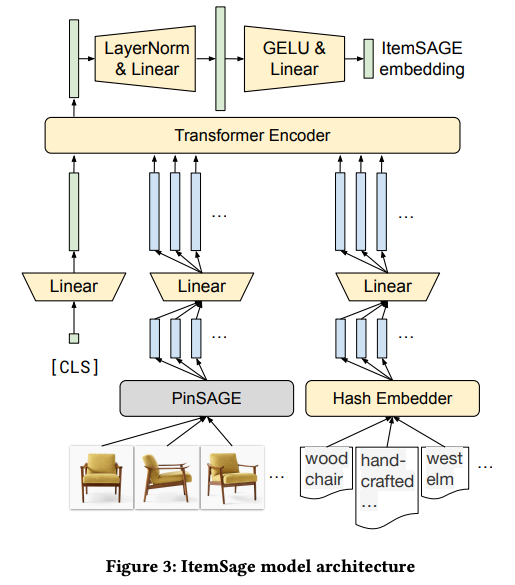
For years, building a recommendation system felt like duct-taping geometric math to a fragile, groaning database. You took user histories, compressed them into embeddings, calculated dot products, and prayed the latency gods smiled upon your production servers. But modern scale has broken that playbook completely. We are drowning in petabytes of chaotic, highly fragmented user data every single day. The old embedding-similarity models were never built for this kind of pressure, buckling under the sheer weight of sparsity, long-tail items, and the dreaded cold-start problem.
Then came the model shift inspired by large language models. Instead of treating recommendation as a static geometric search, engineers are reframing it as a sequence modeling problem. Generative recommenders look at a user's entire chronological journey and ask a much smarter question: what is the absolute most logical next action given everything that happened before? Into, by adopting transformer-like architectures, these systems can finally tap legitimate scaling laws. They trade rigid spatial approximations for dynamic, autoregressive probability distributions.
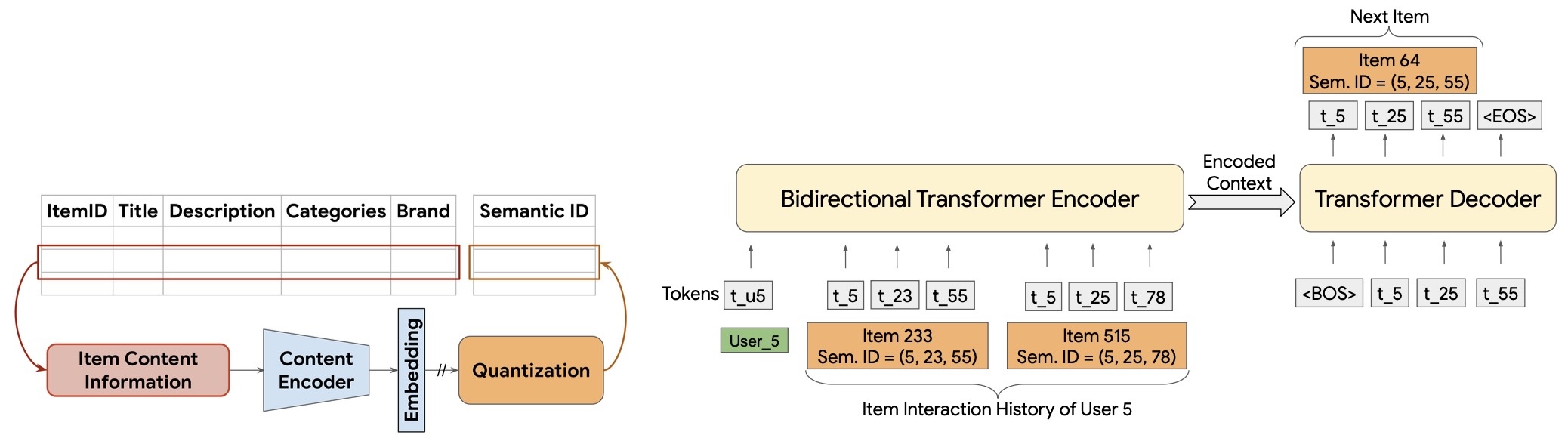
Of course, shipping this in the real world is a completely other beast than training it in a pristine lab notebook. The recSys workloads operate under brutal microsecond SLAs that would make an LLM engineer break out in a cold sweat. Hard to believe? When millions of users are waiting for candidate ranking in authentic-time, you cannot casually wait around for sluggish autoregressive decoding. Realistically, beneath, overcoming these hardware. And memory bottlenecks requires serious engineering discipline, clever caching layers! And memory bottlenecks requires serious engineering discipline, clever caching layers. And a deep respect for the metal your models.
Ultimately, this transition represents a mature turn for machine learning in production. We are moving past the naive hype of slapping deep learning onto every legacy pipeline and actually rethinking the core objectives from the ground up. If you are building discovery engines today, ignoring the shift toward generative recommenders is a losing bet. The craft has leveled up. It is time our systems did, too.









