Training Cross-Embodiment Robot Navigation Policies Without Losing Your Mind
Teaching robots how to navigate new environments shouldn't mean starting from scratch every single time. Here is how modern agentic workflows are finally fixing that....
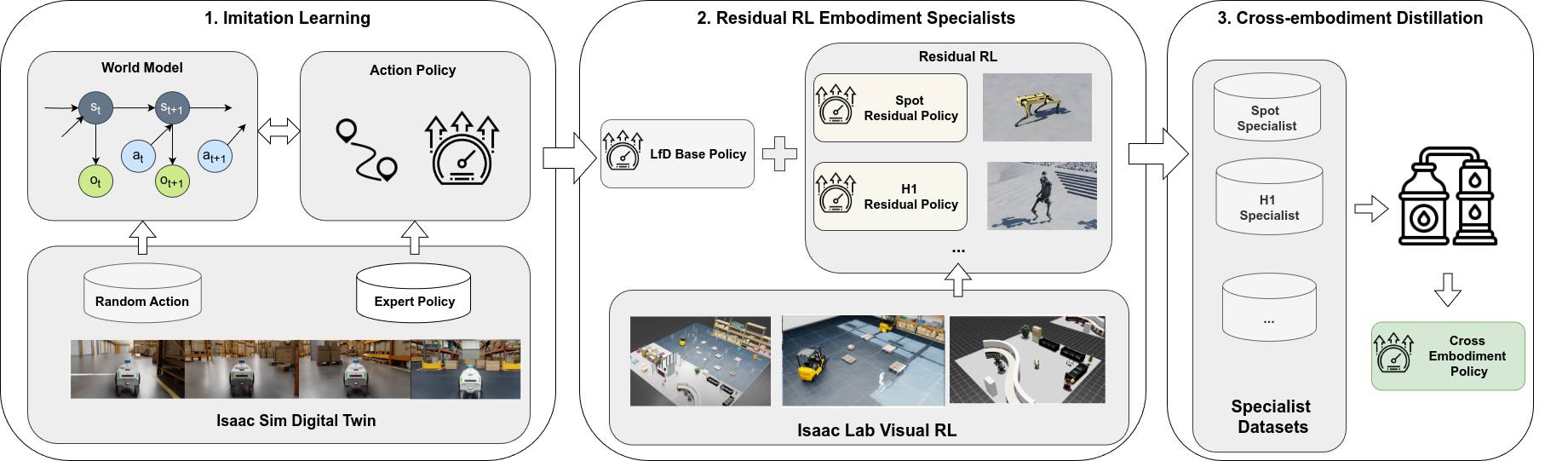
Every time you drop a navigation policy onto a new robotic chassis or into an unfamiliar environment, the engineering tax is brutal. The but not only. You end up drowning in custom simulation assets, fighting brittle interfaces, — oddly. And rewriting data pipelines just to get a differential drive or a quadruped to walk across a room without crashing into a wall. It's expensive, intensely repetitive, and frankly a terrible use of human talent. The robotics industry has treated this bespoke friction as an unavoidable cost of doing business, but I think we are finally reaching a breaking point.
Enter agent-driven steps paired with smart models like COMPASS. Instead of manually tuning factors or retraining models from absolute zero for every single robot-scene pair. You let coding agents handle the heavy lifting. It you define the target robot, — oddly — point the system to a scene source, and set the navigation goal. The agent steps in to prove dependencies, cook up simulation assets, execute smoke tests, spin up training runs, and carefully compare checkpoints. Humans stay firmly in the loop for critical approvals – like greenlighting the scene or promoting a solid checkpoint. While the automation handles the mechanical grind of repository management.
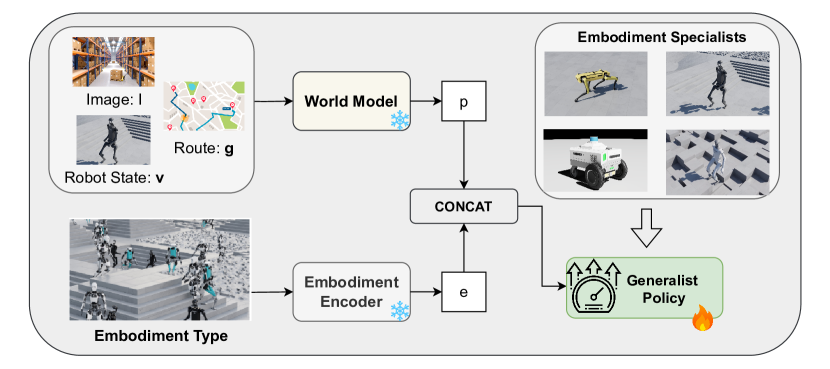
The secret sauce here is residual reinforcement learning. Rather than forcing a model to relearn how to navigate the physical world, it takes a pretrained base policy and trains a small specialist to correct those baseline actions for the quirks of your specific hardware and terrain. Over time, you can even distill multiple specialists back into a unified policy. [IMAGE]
This approach deeply changes how small teams ship (surprisingly) physical AI. When you combine agentic tooling with advanced reconstruction tools like NVIDIA Omniverse NuRec and strong localization stacks such as cuVSLAM. Building autonomous machines starts looking a lot more like modern software engineering. You still need decent hardware – think a beefy RTX GPU with — oddly — plenty of VRAM. But you no longer wanted an army of specialists just to teach a robot to walk down a hallway.
We are moving past the era of pure hype and into the messy, practical reality of making robotics repeatable. If we want small teams to build remarkable things, this is the exact kind of plumbing we need to fix.









