When AI Solves Math: Why the Advisory Group on Mathematics and Artificial Intelligence Matters
OpenAI claims its latest internal model just cracked over 100 open mathematical problems, including Navier–Stokes. Now, an independent advisory group is stepping in....
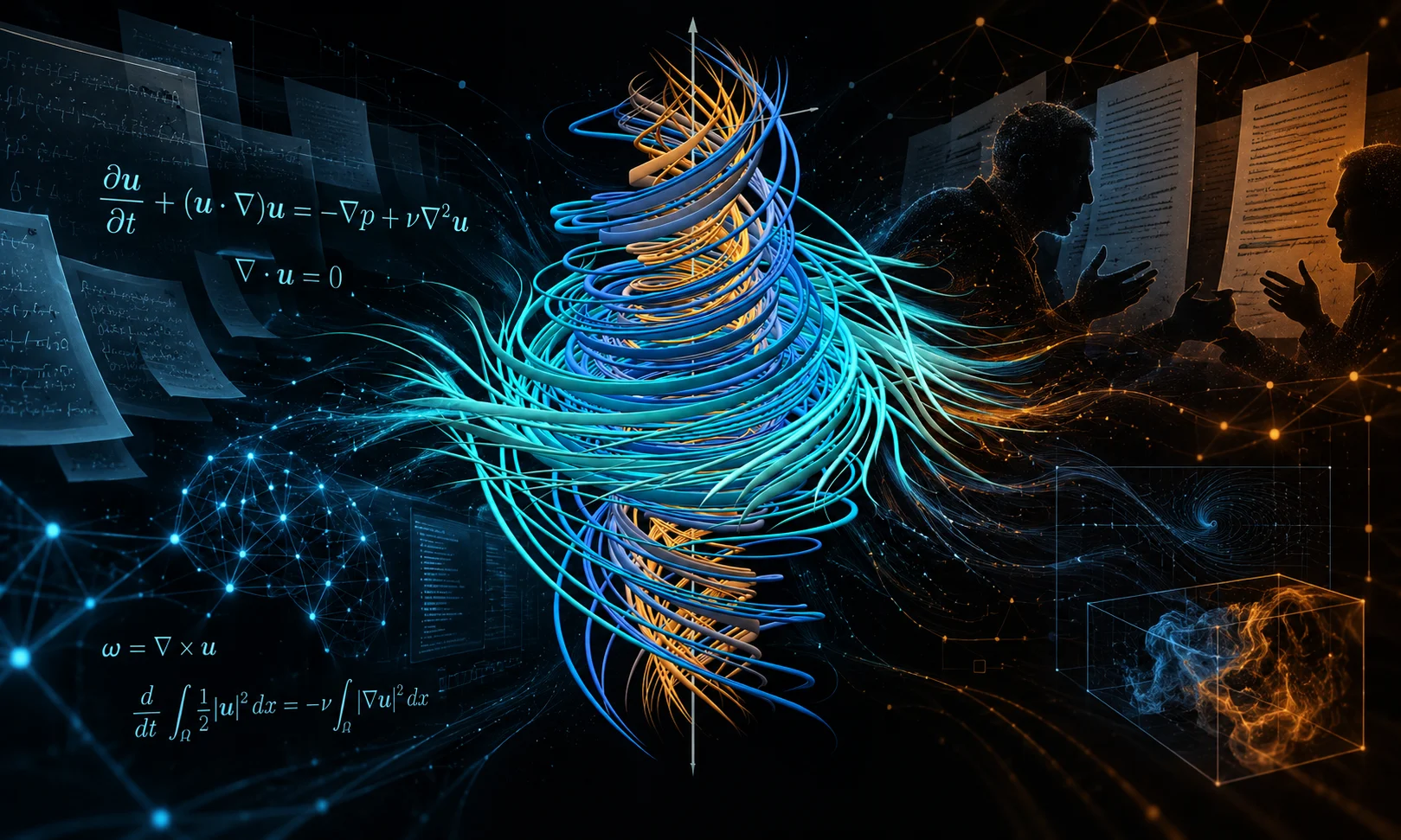
Let's be honest about the tech industry for a second, so we are drowning in incremental hype cycles and glorified auto-completes. Every week brings another breathless press release about a new model that can write mediocre poetry or generate slightly better pixels. But every so often, something genuinely major happens beneath the surface, forcing us to stop and recalibrate our assumptions about machine reasoning. That exact shift is happening right now in pure mathematics.
Quietly, according to recent disclosures, a heavily guarded internal model has blasted past a century's worth of intellectual roadblocks. It we aren't just talking about a clever parlor trick here! So what changed? This system reportedly conquered the notoriously brutal Navier–Stokes Millennium Prize problem alongside a staggering tally of over one hundred long-standing open mathematical proofs. Mathematicians inside the lab — to be fair — were reportedly stunned by the sheer velocity of the breakthroughs. When machines start doing the heavy lifting in formal logic and theoretical science, the ground beneath our feet shifts — or something like that. Makes sense, right.

As expected, this kind of accelerated progress triggers rightful anxiety across academic institutions. It solving foundational proofs as mere benchmarks for software creates serious negative externalities, upsetting the delicate ecosystem of human research, peer review, and academic validation. That friction explains the formation of the Advisory Group on Mathematics and Artificial Intelligence, anchored by heavyweights like Timothy Gowers and Martin Hairer at the Institute for Advanced Study. By building a completely independent bridge between Silicon Valley labs and the global math group. These minds are trying to ensure that raw data capability doesn't entirely steamroll human intuition, institutional standards. The deeply personal craft of tough proof.
What fascinates me most isn't just the raw computing power required to untangle these equations. It's the governance model. This independent committee retains the freedom to criticize, publish unprompted advice, and operate without corporate paychecks or scheduling oversight. That independence is rare in an industry desperately trying to self-regulate while moving at breakneck speed. If we want tools that genuinely amplify human genius rather than rendering it obsolete, letting the people who understand the domain shape the deployment strategy is the only rational path forward. The math is changing. We better make sure the humans guiding it stay firmly in the loop.









