Robotics in Europe Is Finally Getting Real
Big tech is throwing weight behind European physical AI, and for once, it might actually move the needle beyond the PowerPoint decks....

For years, European robotics lived in a frustrating purgatory. We had world-class academic labs spinning out brilliant kinematics research, yet watched the commercial value hemorrhage straight to Silicon Valley or Shenzhen. Everyone loved talking about the potential of robotics in Europe, but capital and infrastructure were always playing catch-up. Now, the terrain is shifting. Google DeepMind just rolled out a selective accelerator dedicated to early-stage physical AI startups across the continent, dragging some genuinely gritty engineering out of the university basements and into an intensive London bootcamp.
Look at who made the cut. This isn’t a collection of yet another generic chatbot wrapper or speculative metaverse play. We are talking about hardware-agnostic physical AI layers from Greece, automated microfactories deploying directly to UK construction sites, and subsea autonomous vessels mapping the ocean floor from France. These founders are tackling messy, expensive, grinding physical realities – metal welding, waste sorting, automated quality assurance, and heavy manufacturing. They aren't trying to optimize ad clicks. They are trying to move atoms.
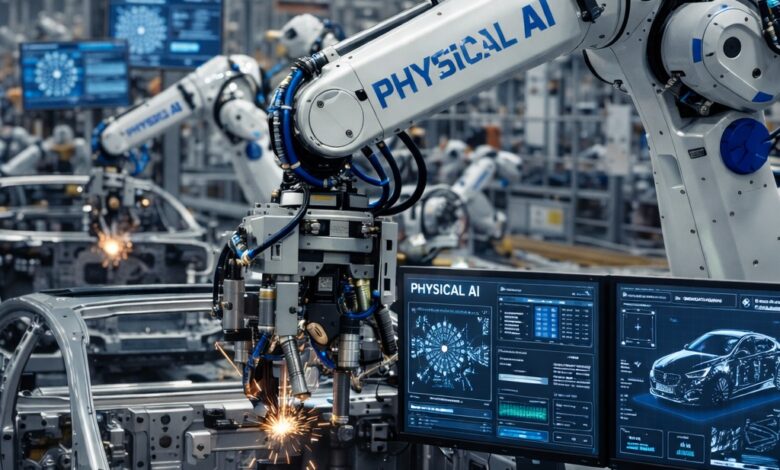
There is a broader lesson here about where software meets the physical world. For a long time, the tech industry fell into a collective delusion that everything could be solved by throwing a transformer at it from a cozy server rack in Oregon. But reality has friction. Building intelligent machines that can manipulate physical objects without destroying themselves or their surroundings requires a brutal feedback loop between custom hardware, edge compute, and real-world sensor data. When tech giants open up their proprietary stacks and vision-language-action models to small teams, it cuts down the R&D runway significantly.
I'm cautiously optimistic. Hype cycles usually ruin everything good in tech, turning promising engineering disciplines into bloated marketing exercises within six months. Yet the sheer grit of these European startups suggests something more enduring is happening beneath the surface. If these teams can successfully bridge the gap between latest AI research and the factory floor, the center of gravity for intelligent hardware might finally start looking a little more distributed. Craft matters. And right now, the craft is heading back to the workshop.









