Why Agentic AI Fleets Keep Breaking Standard Hardware Assumptions
Real-world agent workloads are wildly unpredictable. Designing CPU fleets for them requires throwing out traditional server metrics....
Let's talk about the dirty secret of agentic AI. Everyone obsesses over the GPUs, the parameter counts, and the raw tensor throughput, but they completely ignore the silicon doing the actual heavy lifting behind the scenes: the CPU. We are building massive AI factories on the assumption that workloads look like traditional cloud apps. They don't. They are chaotic, unpredictable, and entirely resistant to neat capacity planning.
Look at the telemetry. Over ninety-seven percent of real-world agent sessions exhibit completely unique trajectory profiles. You cannot right-size a fleet when every single user interaction carves its own bizarre path through orchestration loops, sandboxed executions, and tool calls. Traditional servers operate on stable runtime profiles. Agentic workflows live in a state of perpetual statistical anomaly.
Here is the fundamental tension. Execution flows in long, agonizingly sequential chains of reasoning, punctuated by sudden, violent bursts of parallel computation. That primary sequential path is strictly latency-bound. If your single-thread performance is weak, your entire session stalls. Yet the moment you design strictly for raw core density, you sacrifice the per-core muscle needed to blast through those critical paths.
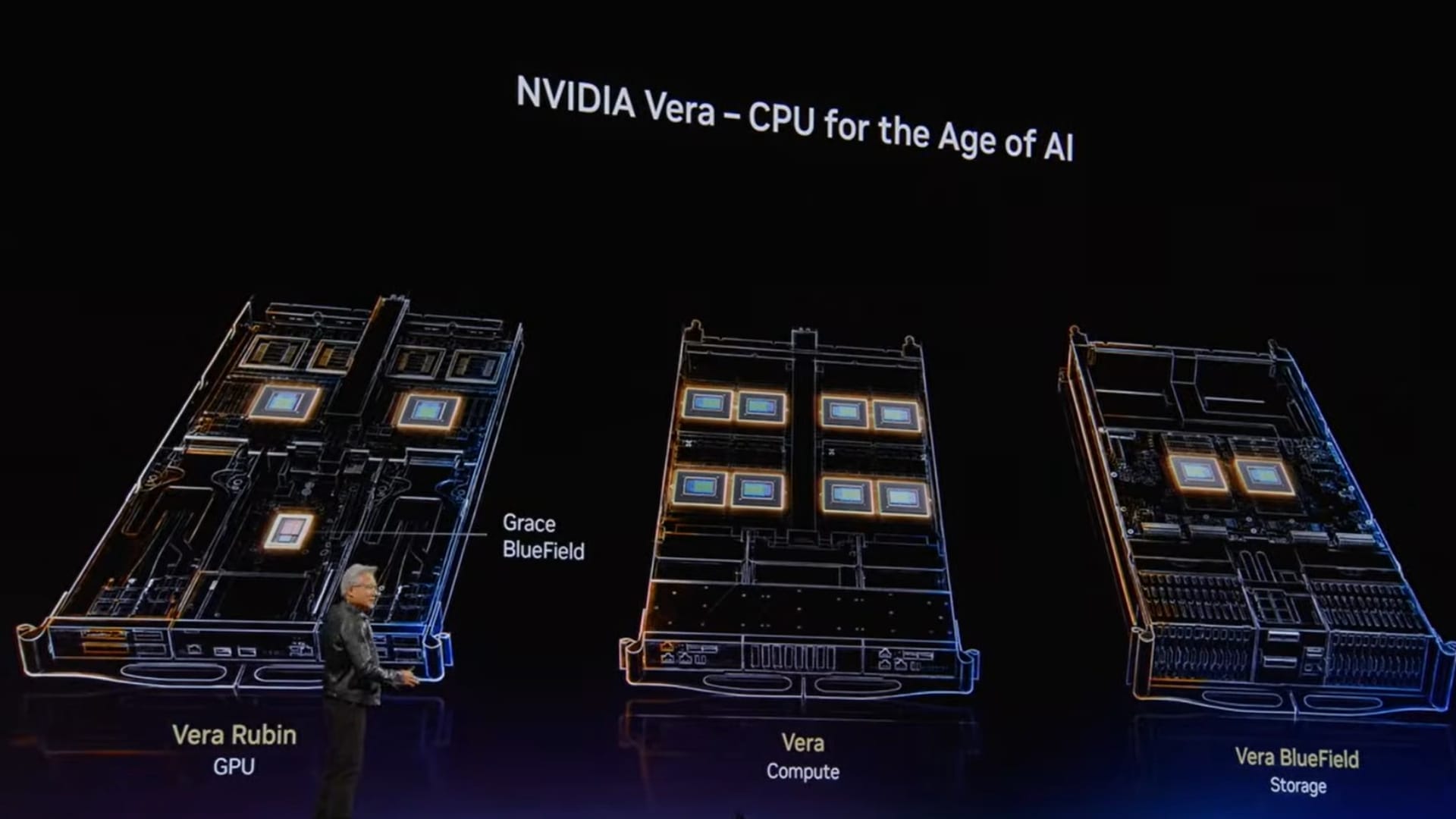
This is why the hardware calculus has to shift. We need to stop optimizing for raw core counts that look impressive on a spec sheet and start looking at what actually moves the needle: completed user sessions per dollar. When your CPU can't handle the sporadic fan-out while keeping the main reasoning chain moving at a sprint, your entire fleet economics collapse. Good engineering isn't about buying the biggest chip. It's about matching the silicon to the actual, messy shape of the problem.