Ten Years of AlphaGo: What the Hype Missed About Real AI Progress
A decade after AlphaGo shocked the world, the real lesson isn't about beating games—it's about how machines actually learn to solve hard problems....

Ten years have vanished since a room in Seoul went dead silent as an algorithm played a stone no human would ever dare touch. Move 37 broke the game of Go. Commentators scoffed, assuming a glitch in the matrix, until the board told a very different story a hundred turns later. That single play marked the birth of modern artificial intelligence. Suddenly, machines stopped merely regurgitating our past patterns and began inventing entirely new ones.
Most retrospectives will drone on about the sheer scale of the board – more possible positions than atoms in the observable universe, a staggering calculation that supposedly required divine computational intervention to untangle. But let us be honest for a moment. The true magic wasn't the brute-force processing power thrown at a wooden grid. It was the shift from supervised mimicry to self-directed reinforcement. When AlphaGo Zero tossed out centuries of human knowledge to learn strictly through brutal trial and error against itself, the model shifted permanently.
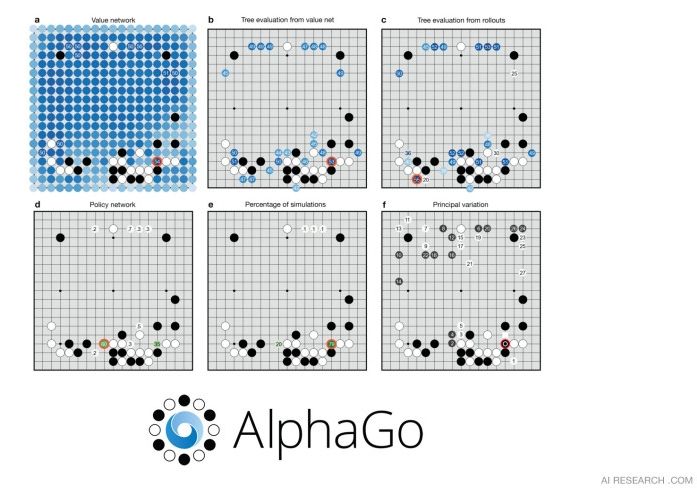
That is where the promo spin usually takes over, painting a breathless picture of sentient superintelligence lurking just around the corner. This i look at it through a much more grounded lens. What happened in 2016 wasn't the dawn of an omniscient digital god; it was a masterclass in elegant system design. Finally, deep learning crossed paths with reinforcement loops, creating a blueprint for solving bounded. High-complexity problems without needing a human hand to hold the steering wheel.
Realistically, today, we watch the ripple effects bleed out from board games into messy biological puzzles like protein folding and materials science. Proving that the underlying architecture had genuine merit. The yet, building real software reminds me daily (and this is key) that raw computation is cheap while clear problem definition is rare. AlphaGo didn't change the laws of physics or solve human creativity. When you strip away human ego and let a system tweak fiercely for a singular, it just proved that. No surprise there. Well-defined goal, the results can genuinely alter the map.