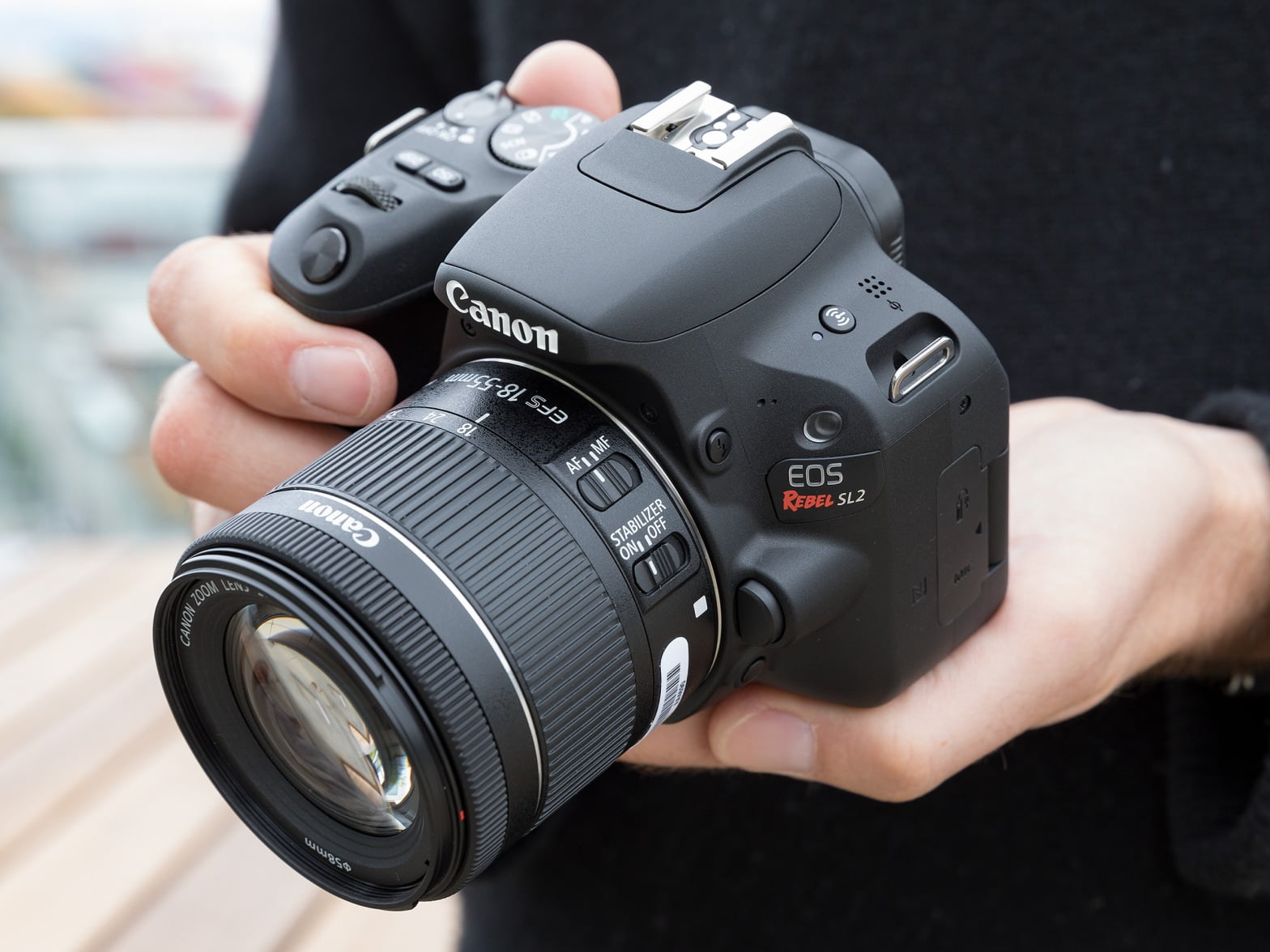

So, we’re talking about the Canon EOS 200D II, not the EOS 200D. A lot of people get confused by that. Another thing, about this camera, it’s also called the EOS Rebel SL3 in North America, and this name “EOS 200D II” is assigned for Southeast Asia and Europe. We don’t know why but it is what it is.
Its sensor has the same 24-megapixel resolution as the previous model but comes with the new Dual Pixel CMOS AF3 system and sensors that cover 88% of the image frame horizontally and 100% vertically for Live View autofocusing. The EOS 200D II is the first Canon DSLR to support Eye Detection AF with Live View shooting.
Like its predecessor, the EOS 200D Mark II is targeted at novice photographers who want something better than their smartphones for taking pictures. People who want a bit more than just their smartphones for taking images. There’s this selfie mode, Guided UI display and Creative Assist functions, which are designed for snap shooters, you can obviously tell that, it’s designed for people who don’t know much but remember ITS NOT A TOY there’s still features available that are pretty useful and pretty neat, for someone who’d use them if they’d get interested in Photography/Videography, it gives the user some potential and really doesn’t hold them back.
Like its predecessor, the Mark II model is modestly specified and probably won’t appeal to serious enthusiasts – unless they’re looking for a light and compact second body to go with an existing system.

Physically, the Mark II is almost identical to the original EOS 200D and similar in design to Canon’s other entry-level DSLRs. The main changes appearing in the new model are the upgrade to the DIGIC 8 processor and improvements to the AF system such as the addition of Eye Detection AF for Live View shooting and a peaking display in manual focusing mode and the addition of 4K video recording. The main changes to the physical design of the EOS 200D Mark II are removal of the red-eye reduction/self-timer LED from the front panel and the absence of an AF-assist LED.s
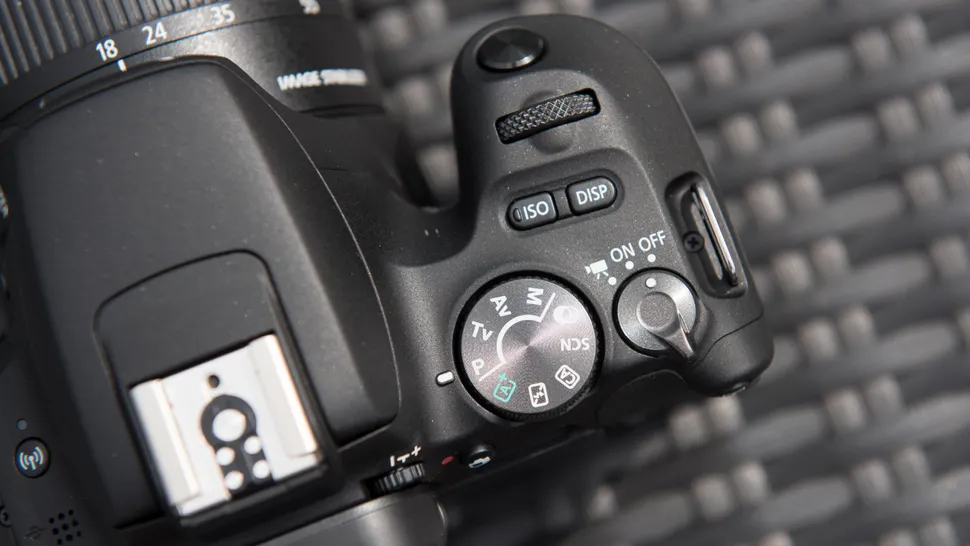
The dedicated Wi-Fi button is gone so Wi-Fi connections must be initiated via the menu, which has a dedicated section for this function. The usual Wi-Fi capabilities are supported, including remote control of the camera and transfer of files to a smart device. Once the Camera Connect app is installed on the interfacing smart device, the system is easy to use. But, kind of a bummer.
Nothing has changed in the layout of the rear panel and as is usual for entry-level cameras, the battery and memory card share a compartment, which is accessed via a lift-up panel in the base plate. A metal-lined tripod socket is located nearby in line with the axis of the lens.

Internally, a new Smooth Skin mode has been added to the SCN (Scene presets) sub-menu. It provides five levels of adjustment for skin smoothing. While the Dual Pixel AF system isn’t new, Eye Detection AF should improve its performance for portraiture. Again, another feature that you know, an influencer or a tiktoker could use.

In line with most recently-released cameras, the EOS 200D Mark II can record 4K video footage. This is additional to the existing Full HD (1920 x 1080 pixel) capabilities offered by the previous model. this is a nice little (actually big) feature which a budding video creator could use, the 4K capabilities are pretty basic, as you’d expect from an entry-level camera. PAL format shooters are restricted to consumer-level, 3840 x 2160-pixel resolution plus 25 fps frame rates. Individual frames can be captured from 4K movies and saved in the camera as 8.3-megapixel JPEGs.

ISO is restricted to the 100-6400 range, except in the Highlight Tone Priority mode, where FHD and HD movies can be recorded between ISO 200 and ISO12800. The P, AV, TV and M shooting modes are available and ISO expansion is available for FHD and HD movies. This feature is pretty cool but a higher range could be better.
Contrast detection is the only focusing method available when recording 4K video and clips are limited to 4GB in size. A general recording time limit of 29 minutes and 59 seconds applies to all movie recordings. HDR (High Dynamic Range) movies can also be recorded in FHD size at 25p. Five Creative Filters (Dream, Old Movies, Memory, Dramatic B&W and Miniature effect) can also be applied to movie clips. Time-lapse movies can also be recorded in 4K and FHD resolution, Which isn’t pretty bad, if you’d ask me. The overall quality of JPEGs is good enough to satisfy entry-level buyers but the kit lens is a fairly average performer so that’s to be expected.

Subjective assessments of image noise at high ISO settings in both long exposures and with flash shots showed them to be similar to equivalent shots taken with the EOS 200D. Night exposure levels were consistent throughout the camera’s sensitivity range and, as before, there was little apparent noise in long exposures taken at up to ISO 3200. there’s also grain at ISO 6400 and traces of noise at ISO 12800.
Video quality was similar to the clips we obtained from the EOS 200D, with the improved resolution of the 4K setting providing a welcome benefit. However, 4K quality was just average, when compared to the current crop of mirrorless cameras, particularly those from Fujifilm, Panasonic and Sony.