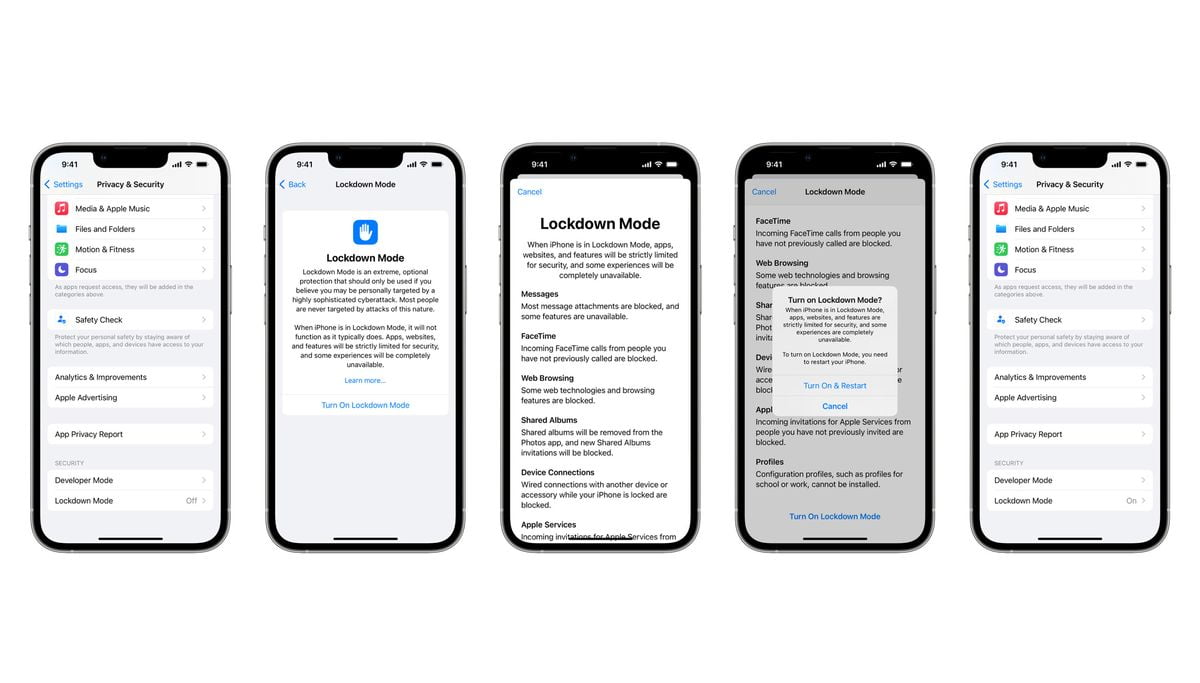

Apple is now announcing a new feature called Lockdown Mode that will provide extreme levels of security which will be designed for a very small number of users who face targeted threats. This feature will be available this fall when the company rolls out iOS 16, iPad OS 16, and Mac OS Ventura. This feature was built to protect high-profile people who, because of their status or job, might be personally targeted by malware. This feature will severely restrict the functions of an iPhone, iPad, or Mac to limit any possible entry points for spyware.

For instance, no user will ever be able to send any attachment other than images on iMessage. The same thing goes for link previews as well. This feature will also prohibit incoming FaceTime calls and invites unless it’s from a person you’ve previously contacted before. Wired iPhone connections will be disabled when the device is locked. Apple is also going to be blocking web tech like in-time JavaScript compilation unless you manually approve a site for it, you will also be not able to install any configuration profile or add any device to mobile device management when lockdown mode is enabled.
The company says that these protections will be available when this new model launches. The company does say that they plan to add more features to this mode over time, expanding more security bounty programs For researchers who find weaknesses in this mode and helping Apple make it more secure with rewards of up to $2 million.
Apple’s Head of Security Engineering and Architecture, Ivan Krstic said, “Apple makes the most secure mobile devices on the market. Lockdown Mode is a groundbreaking capability that reflects our unwavering commitment to protecting users from even the rarest, most sophisticated attacks. While the vast majority of users will never be the victims of highly targeted cyberattacks, we will work tirelessly to protect the small number of users who are. That includes continuing to design defenses specifically for these users, as well as supporting researchers and organizations around the world doing critically important work in exposing mercenary companies that create these digital attacks.”