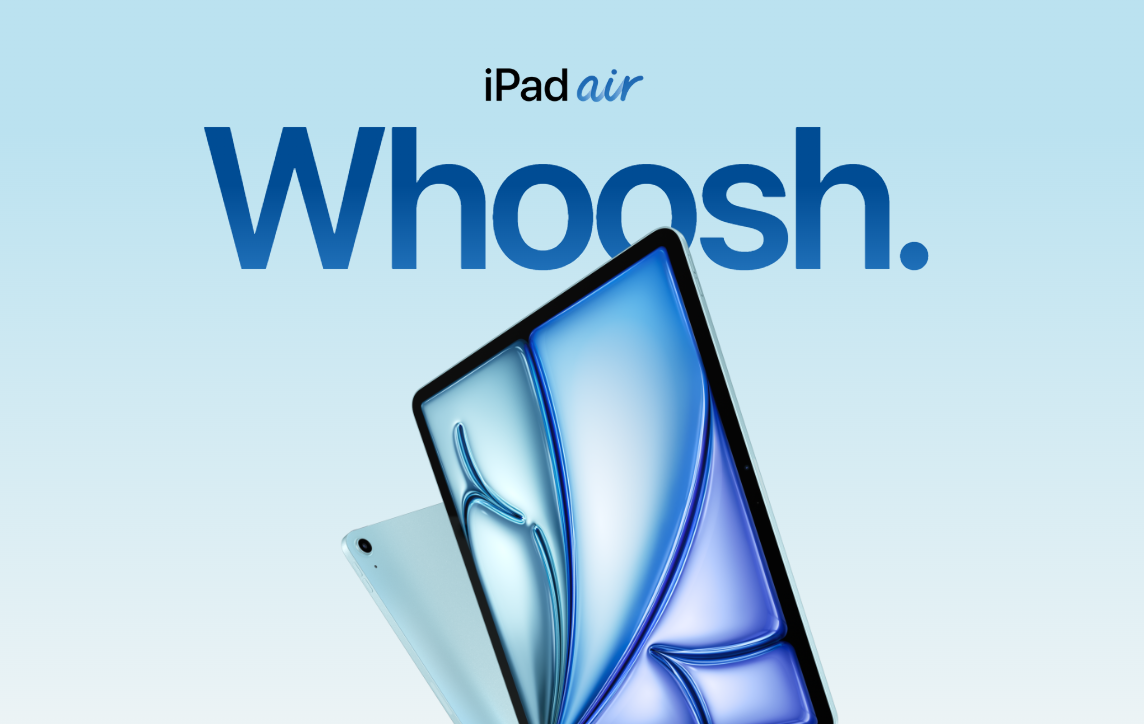

There’s a particular kind of disappointment that arrives when you refresh the news page at 9 AM on a Monday and find exactly what you expected. Apple announced the iPad Air with M4 yesterday, alongside the iPhone 17e. No event. No keynote. Just a press release that materialized like clockwork, documenting what is essentially a processor swap.

The new iPad Air features the M4 chip and increased memory, bringing what Apple calls “blazing performance” to their mid-range tablet. The chassis remains identical to last year’s model. The display is the same 60Hz Liquid Retina panel. The cameras haven’t moved. Even the starting price holds steady at $599 for the 11-inch and $799 for the 13-inch version. It’s the iPad Air you already know, but faster on paper.
I don’t like this.
Not because the device itself is bad (it’s not), but because this feels symptomatic of something broader happening at Apple in 2026. The M4 chip delivers 30% faster performance than the M3 version, which is legitimately impressive silicon engineering. But when your entire product announcement can be summarized as “same tablet, different processor,” you’re not selling innovation anymore. You’re selling incremental maintenance.
The thing is, I understand it. Apple’s in a position where they don’t really have much to show off right now. Their events used to be cultural moments, the kind of thing people would clear their calendars for, where you’d genuinely wonder what revelation was coming next. Remember when the iPad itself was announced? Or when the M1 chip first appeared and rewrote what we thought Apple Silicon could do? Those were events that mattered because they introduced ideas, not just faster versions of existing ideas.
But marginal updates with chip upgrades and no chassis changes? That’s not groundbreaking. That’s a footnote in a product cycle. And releasing it via press release rather than an event feels like Apple knows it too.
What’s strange is watching the aura fade. Apple events used to be appointment viewing, the kind of cultural phenomenon that transcended tech circles. Now we’re getting staggered press releases across three days, with a “Special Experience” for media rather than a traditional keynote. It’s a very different energy. The magic of anticipation has been replaced by the predictability of a product roadmap.
This is part of Apple’s broader strategy, of course. These March 2026 launches, the iPad Air M4 and iPhone 17e, are positioned as budget-conscious devices. The iPhone 17e starts at $599 with doubled storage to 256GB, maintaining the same entry price as its predecessor while technically offering more value. It’s a smart play for generating media coverage and reaching price-sensitive customers. But there’s something almost cynical about it. These aren’t products designed to inspire. They’re products designed to fill SKUs and capture market segments.
And then there’s the advertising. Have you noticed the shift in Apple’s recent commercials? There’s this specific vibe they’ve been cultivating, a sort of cluttered, organic feeling with punchy audio and what I can only describe as deliberately amateur design choices. Their recent holiday ad featured practical effects and puppets rather than polished CGI, which is admirable in its own way, but it’s a marked departure from the pristine, aspirational aesthetic that defined Apple marketing for decades. It feels like they’re trying to appeal to the masses by looking less corporate, less untouchable. Whether that succeeds, whether it helps them capture whatever demographic they’re targeting with this shift, remains to be seen. But watching Apple try to look scrappy when they’re a trillion-dollar company is a bit like watching your design professor show up to critique in ripped jeans. We see what you’re doing, and it’s not quite landing.